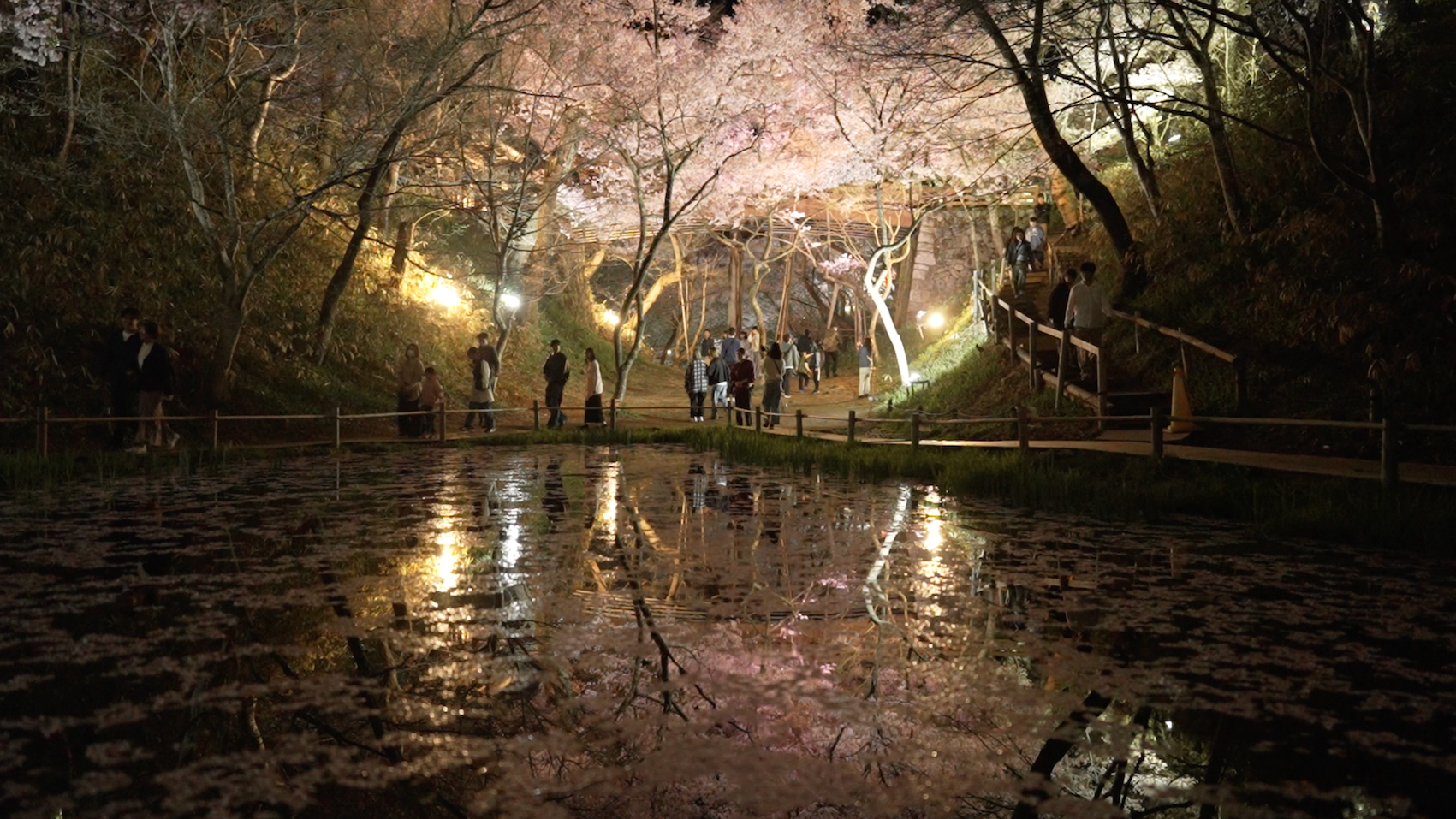
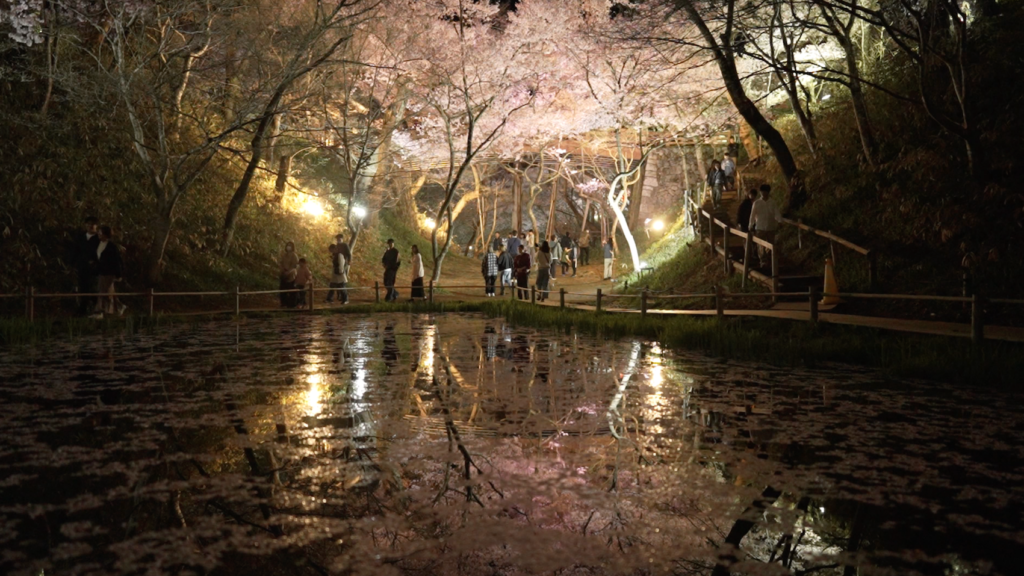
Takato Castle is one of Japan’s most beautiful cherry blossom viewing spots, especially famous for its 1,500 Takato Kohigan cherry trees.
This guide introduces everything you need to know before visiting Takato Castle, including:
・Recommended local food
・How to get there
・Parking information
・Walking time and recommended routes
・Clothing and equipment
・Visiting with pets
・Entrance fees
・Nearby historical sites
About Takato Castle
Takato Castle is a historic mountain castle located in Ina City, Nagano Prefecture.
- The castle was built in 1547 by Takeda Shingen, one of Japan’s most famous Sengoku-period warlords.
- The castle’s design is traditionally attributed to Yamamoto Kansuke, one of Takeda Shingen’s most trusted strategists.
- In 1582, during Oda Nobunaga’s invasion of the Takeda territory, Takato Castle fell after a fierce one-day battle.
- During the Edo period until the Meiji Restoration, the castle was controlled by several important families, including the Hoshina, Torii, and Naito clans.
Today, the castle no longer has its original buildings, but the beautiful stone walls, moats, and landscape remain. The ruins are now preserved as Takato Castle Ruins Park.
Access to Takato Castle
By public transportation
Buses are available from JR Ina City Station.
・JR Ina City Station → Takato Station: approximately 25 minutes by bus
・Takato Station → Takato Castle Ruins Park: approximately 15 minutes on foot
By car
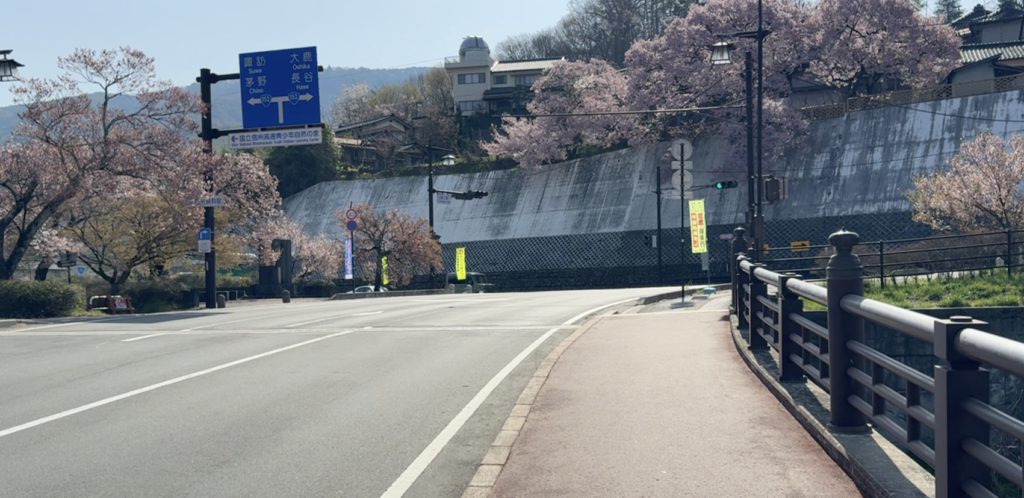
When approaching from Ina City via National Route 361, you will reach the Takato Park intersection where Route 361 meets National Route 152.
For cars:
Turn right toward the Tonosaka slope.
For pedestrians:
The Jibunn-zaka slope on the left is a shorter walking route.
The pedestrian route is recommended because you can enjoy the traditional streetscape of the former castle town along the way.
Map
Parking Information
During the Takato Sakura Festival, parking can become one of the biggest challenges for visitors.
The official festival website provides a parking map showing both paid and free parking areas around the park. I recommend checking or downloading the map before your visit.
In general:
- Parking close to the park costs ¥1,000 for a standard car.
- Free temporary parking lots are available farther away.
The information below is based on my own visit during the peak cherry blossom season, showing how busy each parking area actually was at different times of the day.
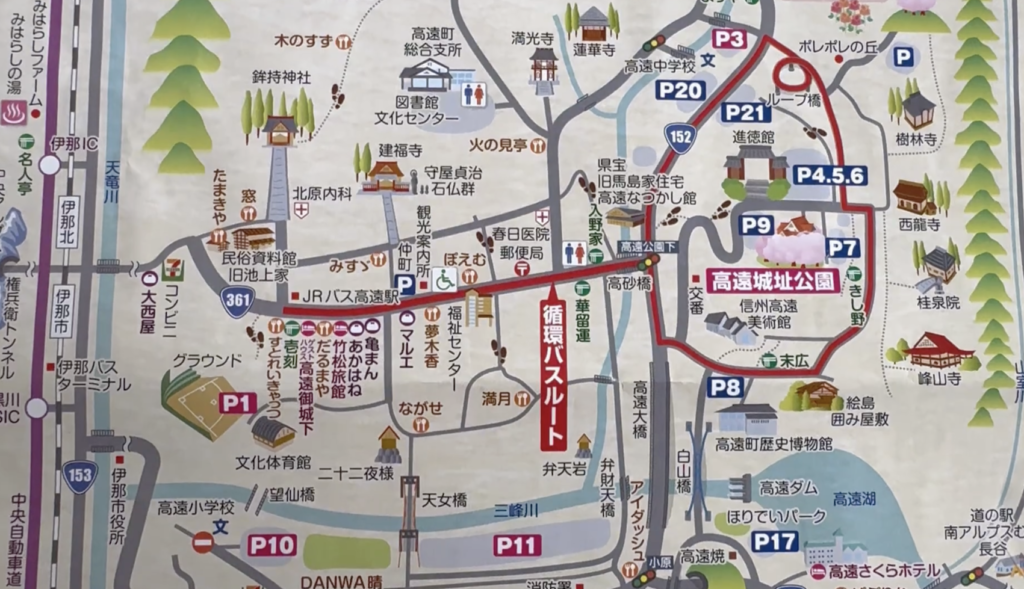
Photo: Official parking map for Takato Castle Ruins Park.
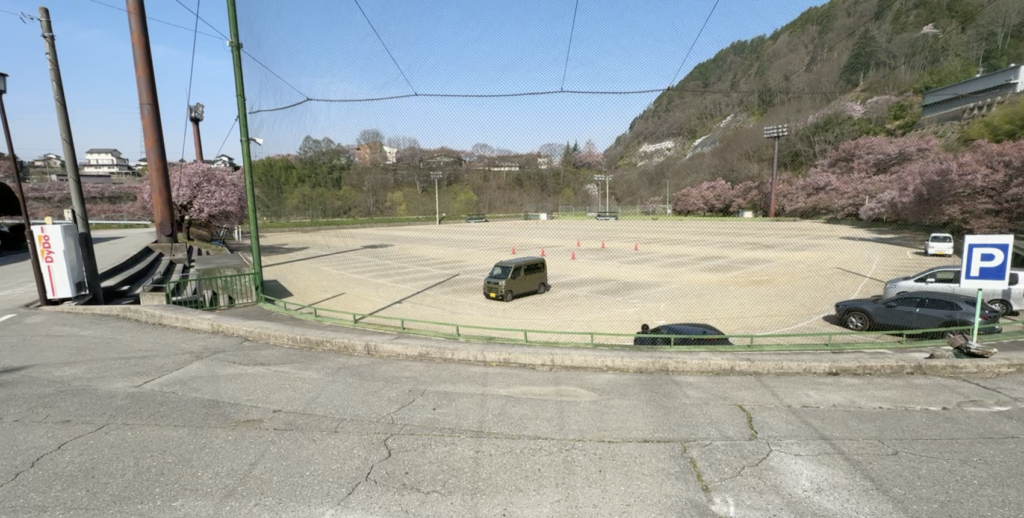
Photo: Free Parking Lot P1 at 8:30 a.m. on a Monday. Even during peak cherry blossom season, there were still plenty of empty spaces.
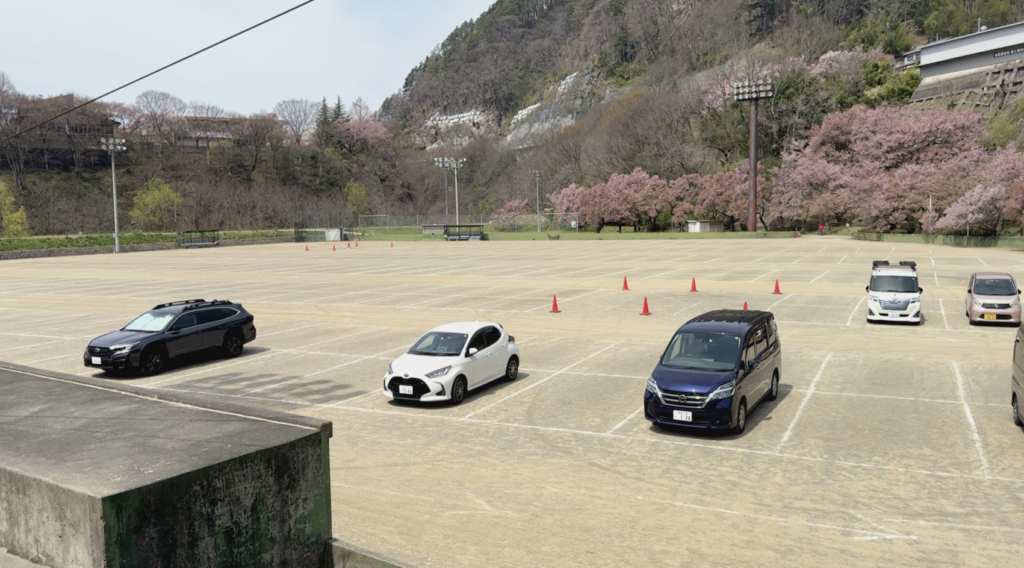
Photo: The same P1 parking lot at 11:30 a.m. It was still far from full.
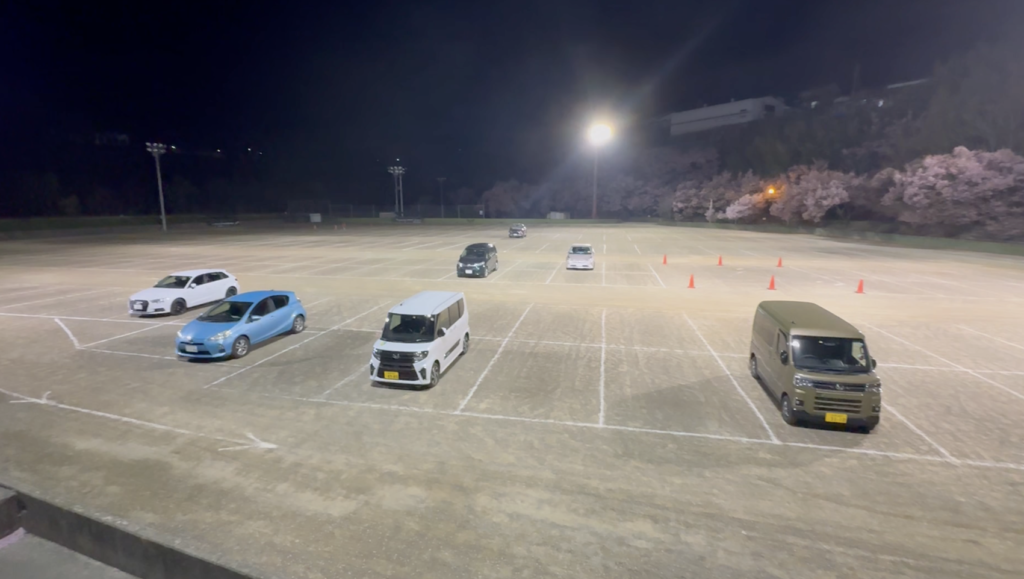
Photo: P1 at 6:30 p.m. on Sunday. Surprisingly, there were still many vacant spaces. Although it is one of the farthest parking lots from the park, I actually recommend it. The walk along Route 361 through the historic castle town is enjoyable and takes only a short time.
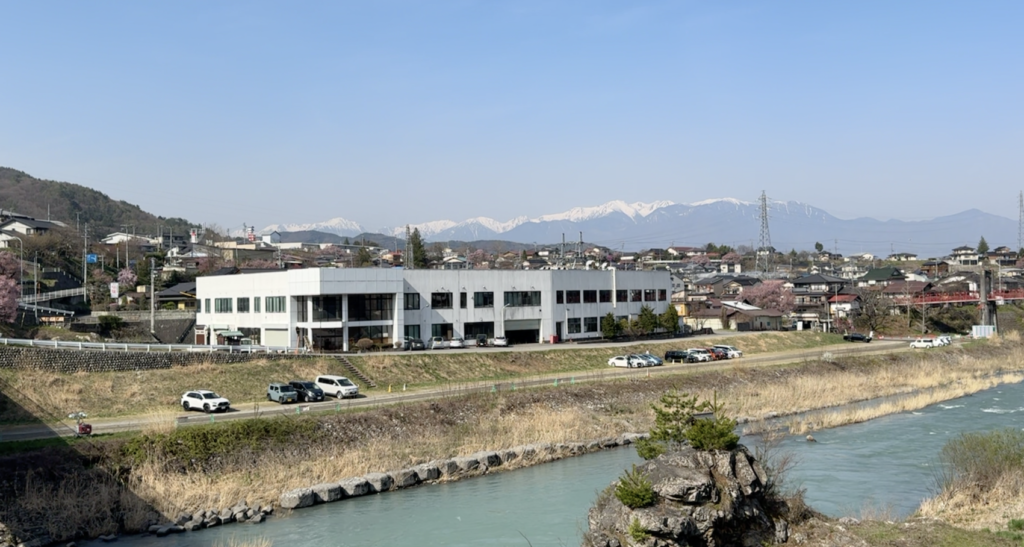
Photo: Free Parking Lot P11 beside the Mitsumine River at 8:36 a.m. on Monday. There were still plenty of spaces available.
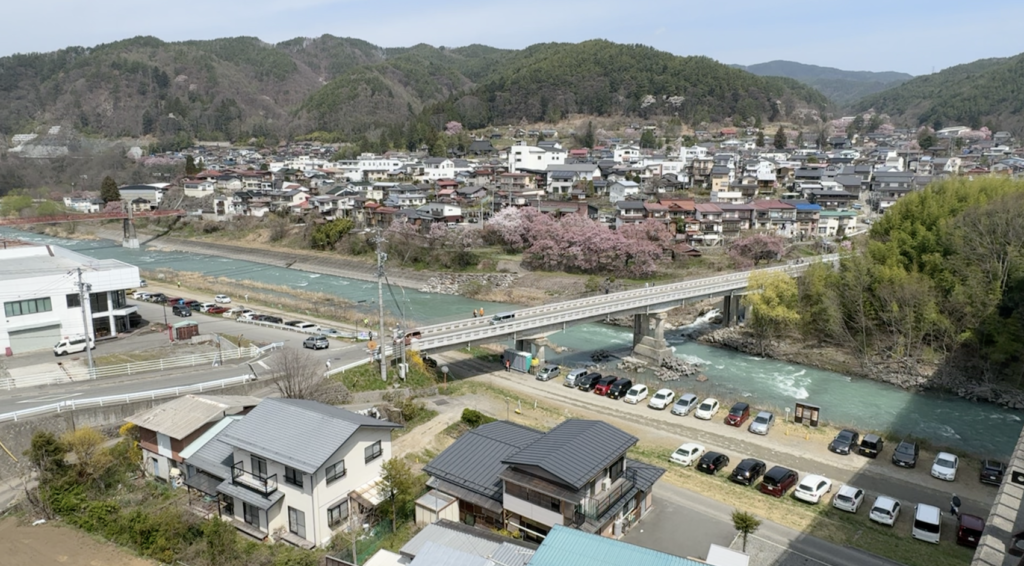
Photo: P11 viewed from Takato Ohashi Bridge at 10:30 a.m. It was almost full.
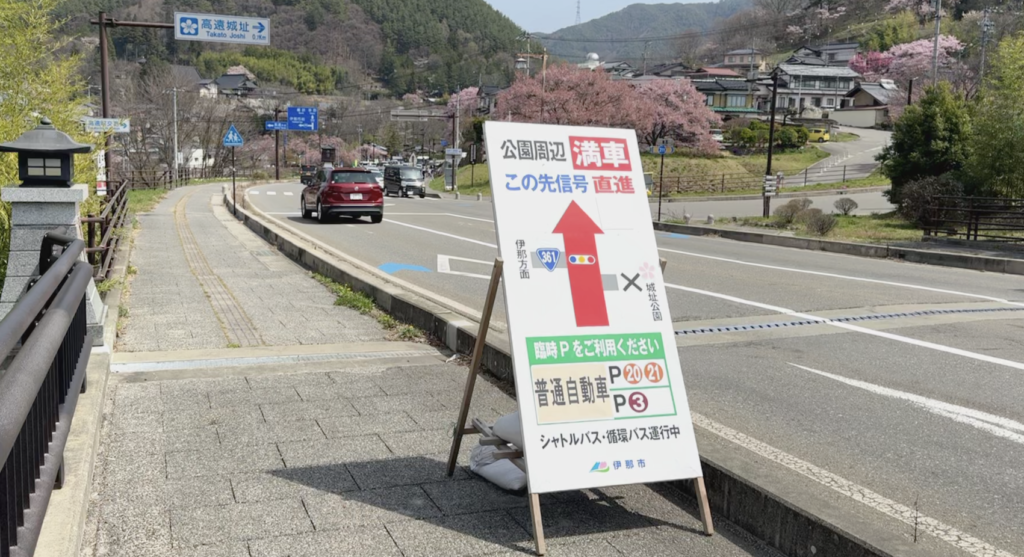
Photo: At the same time, signs on Takato Ohashi Bridge indicated that many parking lots near the park were already full.
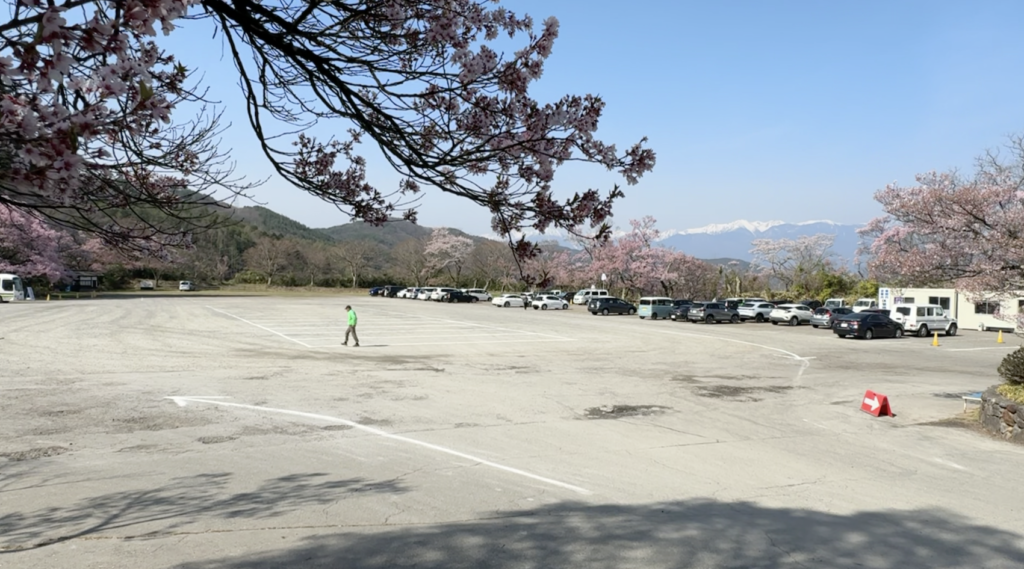
Photo: Parking Lot P9, located near the Kansuke Kuruwa area, at 8:47 a.m. on a Monday. There were still a few spaces available.
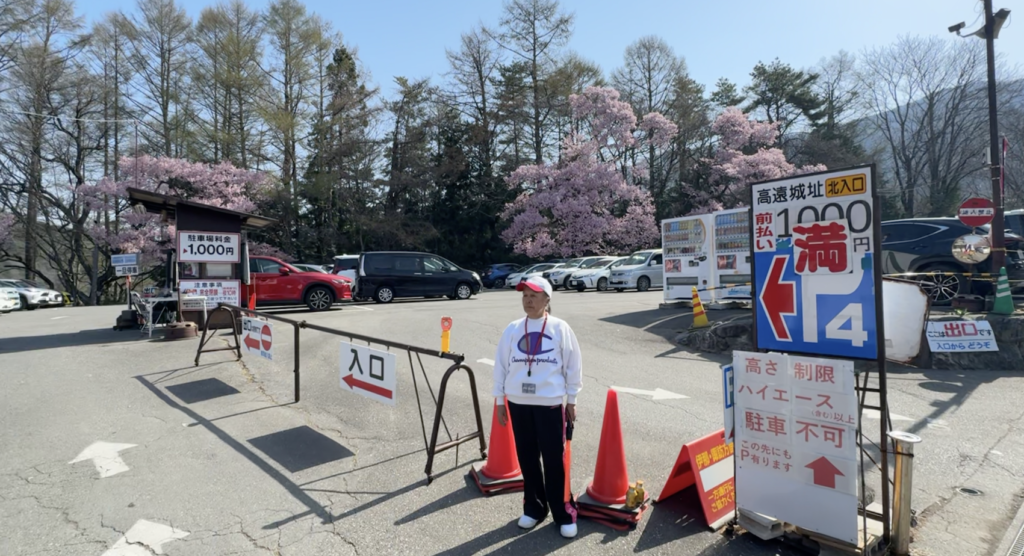
Photo: Paid Parking Lot P4, directly in front of the main entrance to Takato Castle Ruins Park. Although it was only 8:54 a.m. on a weekday, the parking lot was already full.
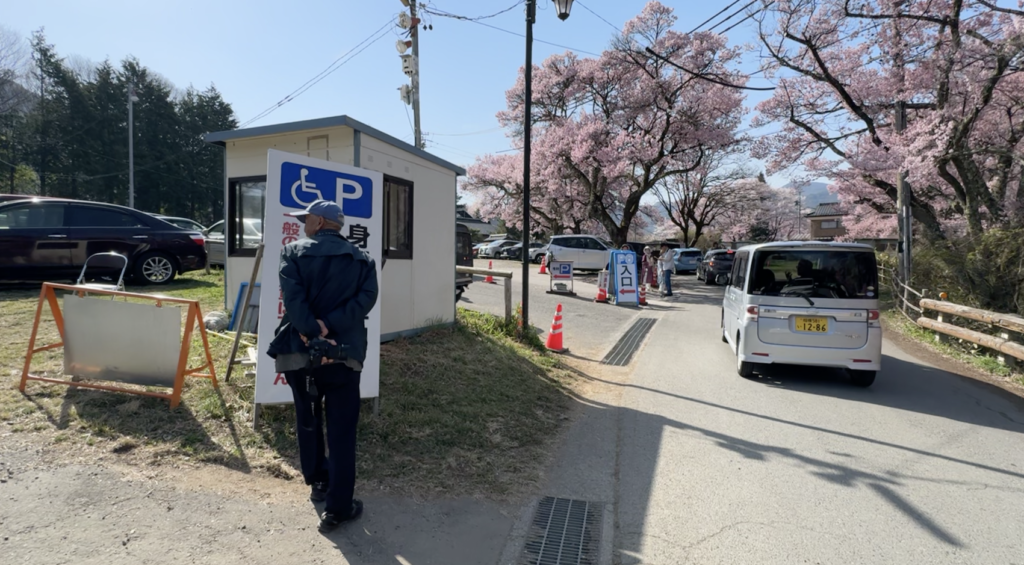
Photo: Parking Lots P5 and P6 were also completely full before 9:00 a.m. This shows just how popular Takato Castle becomes during the cherry blossom season.
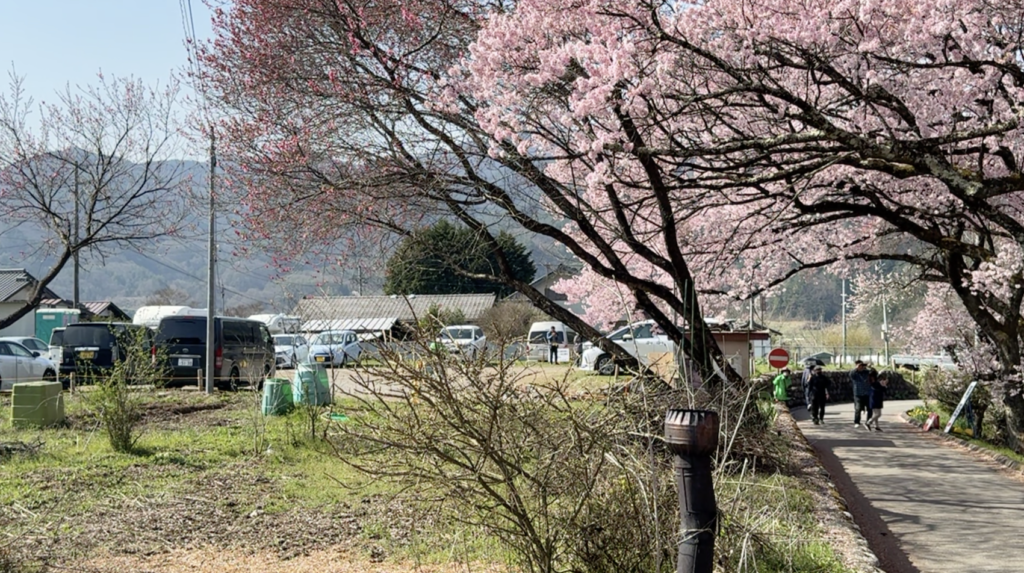
Photo: Parking Lot P7 was almost full.
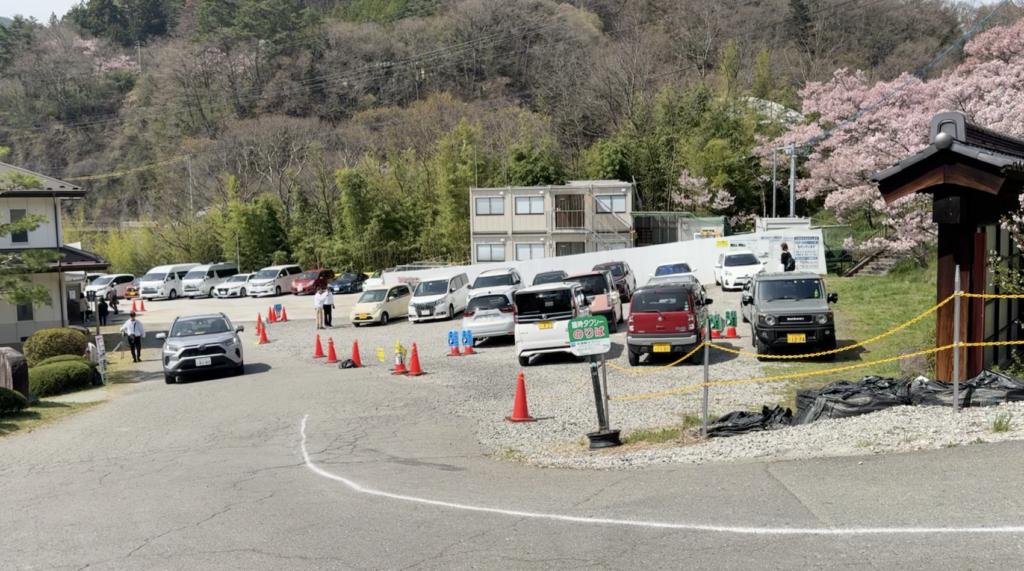
Photo: Unlike the other parking areas, P8 is located near the South Gate. Visitors must walk uphill from the parking lot to reach the park, which may explain why it was less crowded. Even at 10:00 a.m., spaces were still available.
Personally, if I had to choose between paying ¥1,000 for P8 and using a free parking lot, I would recommend P1 or P11. Although they are farther from the park, the walk is pleasant and costs nothing.
What to Wear, How Long to Visit, Admission & Visitor Information
What to Wear
Takato Castle is a historic mountain castle located at an elevation of about 800 meters above sea level.
During spring, especially in cherry blossom season, temperatures can be noticeably cooler than in nearby cities. Bringing a light jacket is recommended.
The castle park has well-maintained walking paths, so comfortable sneakers or walking shoes are sufficient. No special hiking equipment is required.
How Long Does It Take?
The amount of time you need depends on how much you want to explore.
- Takato Castle Park only: about 1 hour
- Castle Park + Shintokukan + Otemon Gate ruins: about 1 hour 15 minutes
- Including the Eshima Enclosure and Takato History Museum: around 2 hours
- Full experience (castle, local food, shopping, walking from P1 parking): about 3 hours
For the evening illumination during the Cherry Blossom Festival, expect to spend around 1.5 hours from the P1 parking area and back.
Admission Fees
- Adults (High school students and older): ¥600
Children (Elementary & Junior High): ¥300 Cashless payment, including PayPay, is accepted.Your admission ticket also gives discounts at several nearby attractionsParking near the park costs ¥1,000, while several temporary parking lots farther away are free.
Japan’s Top 100 Castles Stamp & Castle Seal (Goshuin)
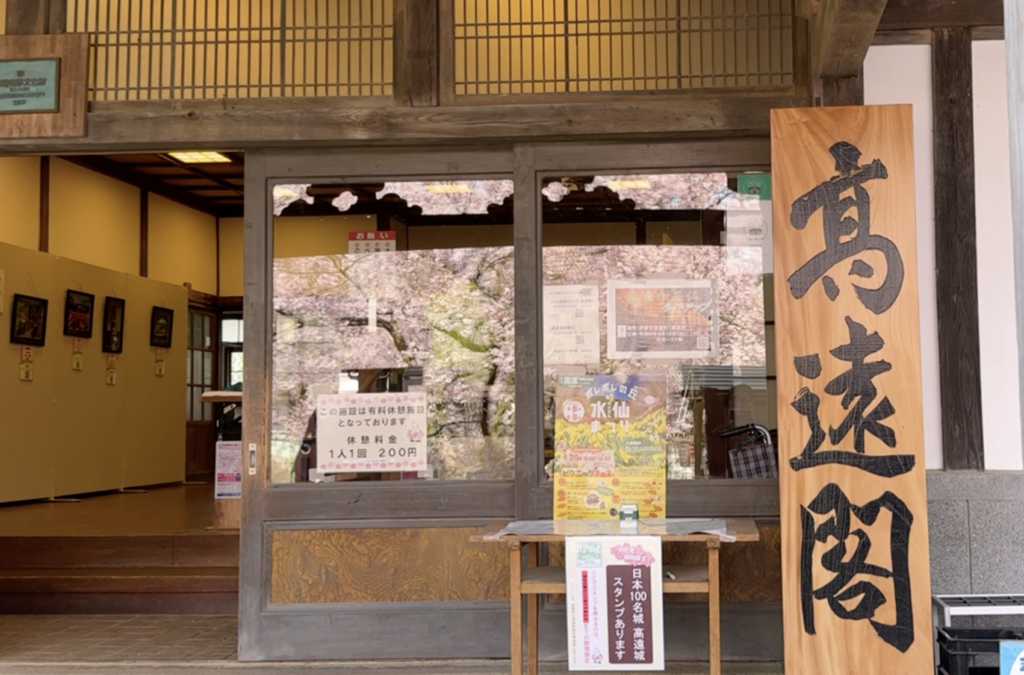
Photo:During the Cherry Blossom Festival, the Japan’s Top 100 Castles Stamp is available in front of Takato-kaku Hall from 8:00 AM to 5:00 PM.
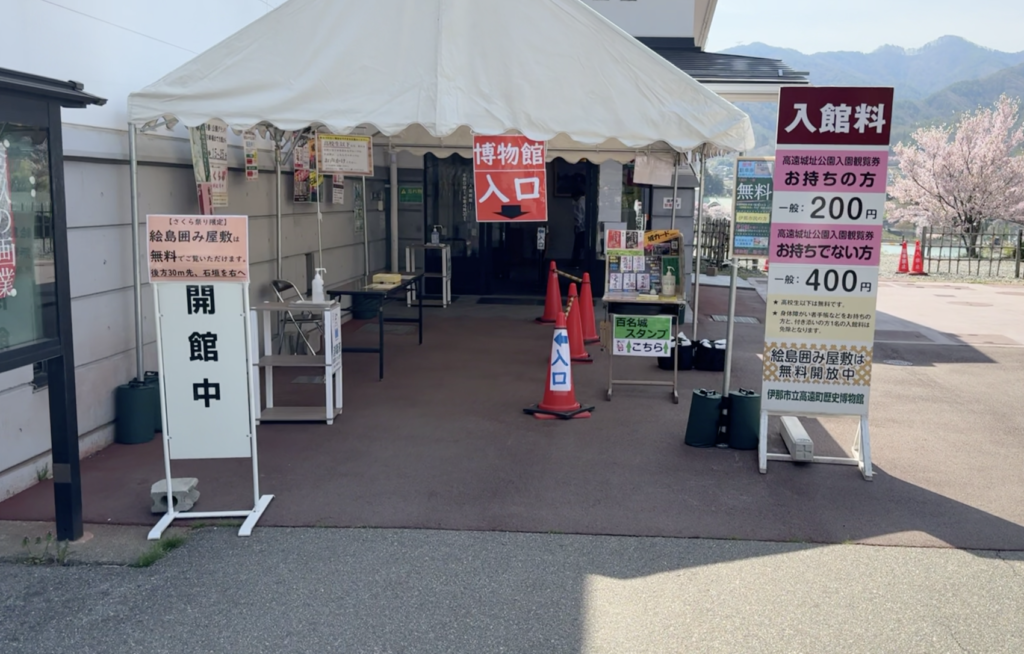
Photo:The same stamp is permanently available at the Takato History Museum, where visitors can collect it 24 hours a day throughout the year.
Castle seals (Goshuin) are also sold at the History Museum and Natsukashi-kan.
Are Pets Allowed?
Dogs and other pets are welcome inside Takato Castle Park.
Please keep them on a leash and clean up after them.
Walking Around Takato Castle Park (Daytime)
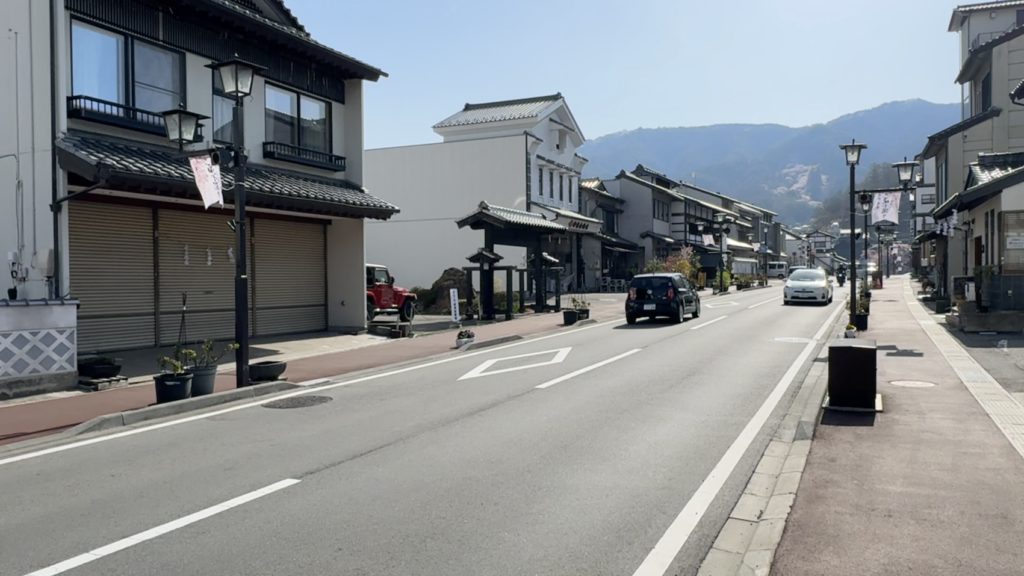
Photo: Walking from the free P1 Parking Lot toward Takato Castle Ruins Park.
The walk through the old castle town is one of my favorite parts of visiting Takato Castle.
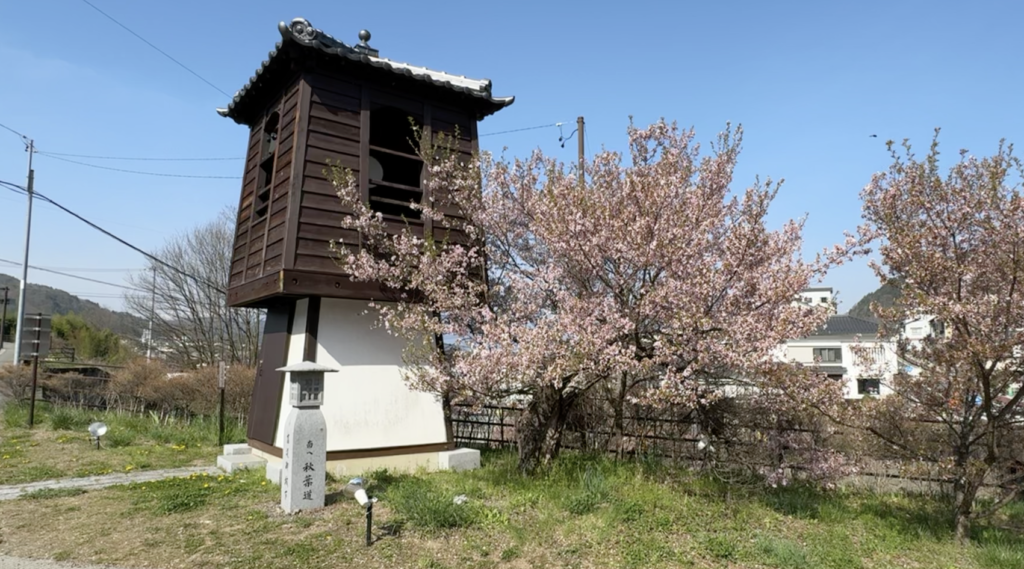
Photo: A replica of the Taiko Yagura (Drum Tower) at the Takato Park Shimo Intersection.
This landmark stands where the old castle town meets the road to Takato Castle Ruins Park.
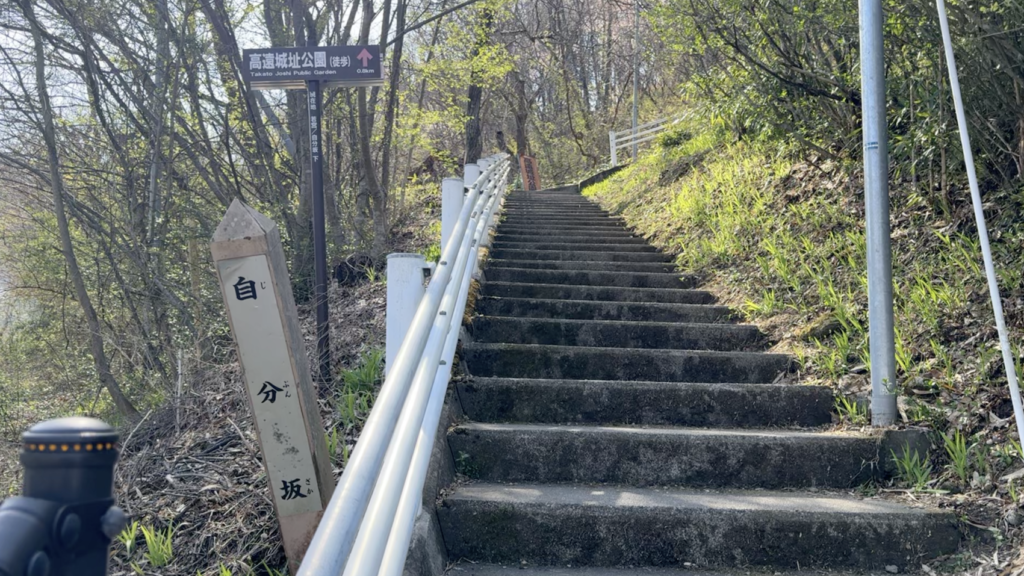
Photo: Jibun-zaka, a shortcut for pedestrians.
Drivers usually take Tono-zaka, but Jibun-zaka is the quicker route if you’re walking.
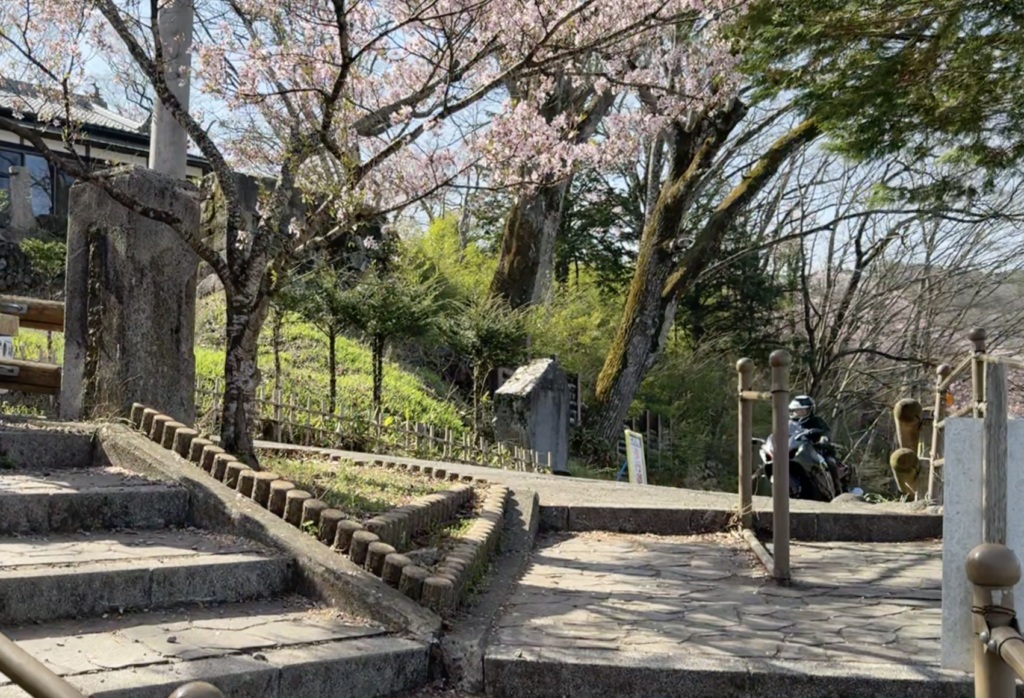
Photo: The Otemon Gate Ruins.
This was once the main entrance to Takato Castle.

Photo: The Sannomaru (Third Bailey).
Takato High School stood here until 1984.
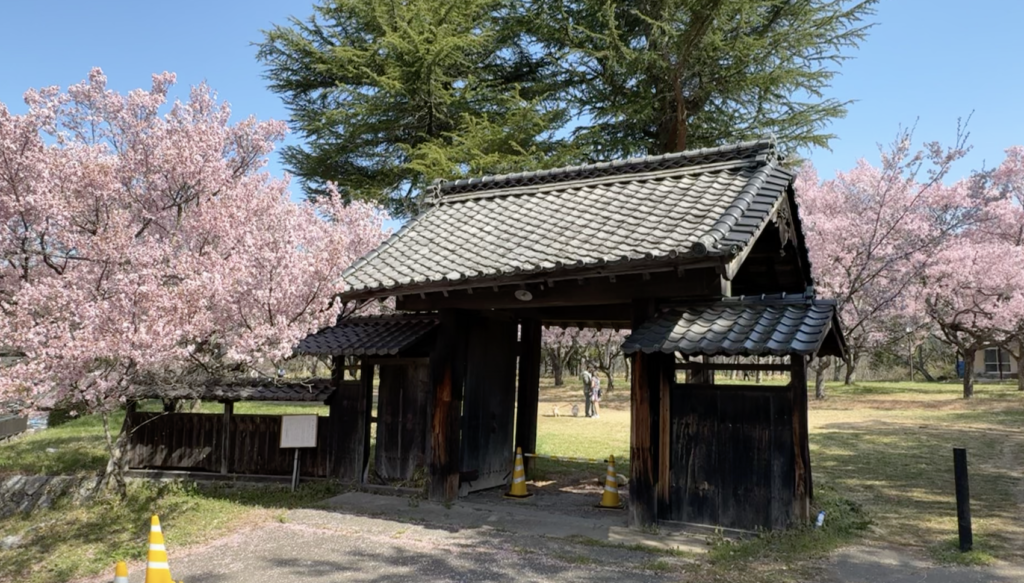
Photo: The reconstructed Otemon Gate.
This gate also served as the entrance to Takato High School until 1984.
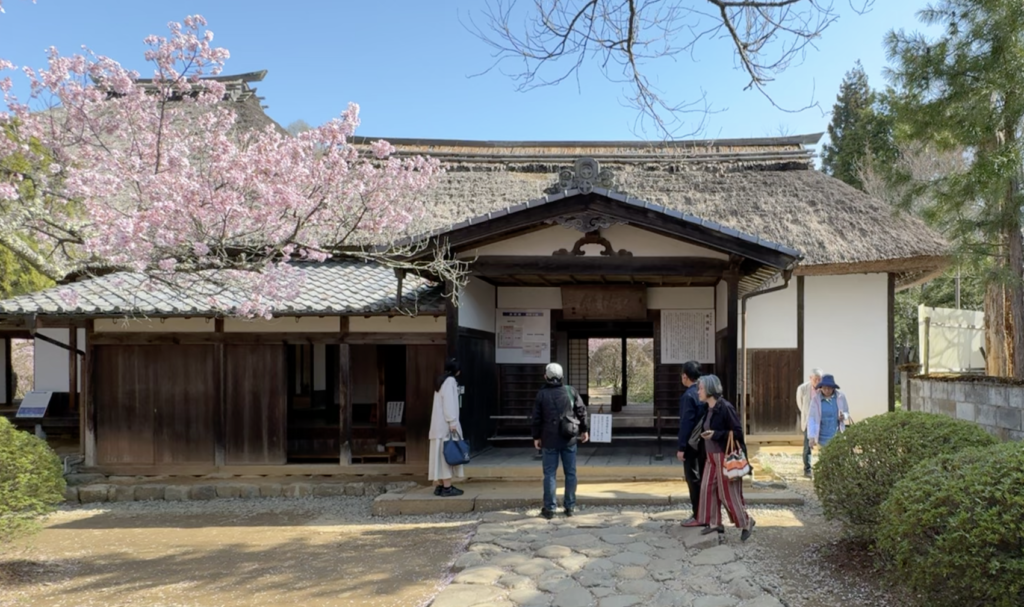
Photo: Shintokukan, the former school of the Takato Domain.
Admission is free. Although the interior is closed, you can walk around the outside of this historic building.
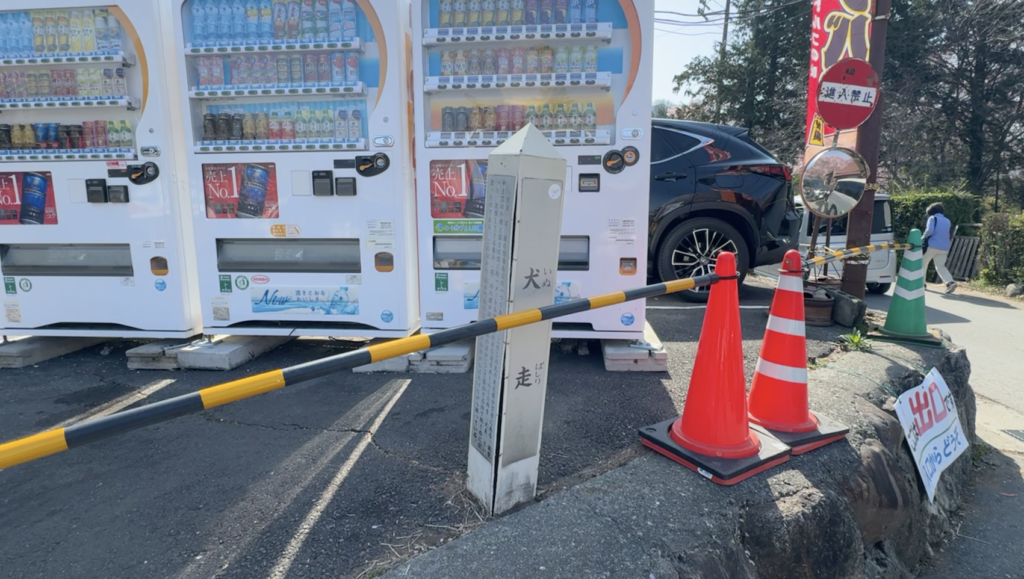
Photo: A stone marker marking the Inubashiri area near Parking Lot P4.
Some castle remains are said to survive near the Karamete Gate, although I couldn’t clearly identify them during my visit.
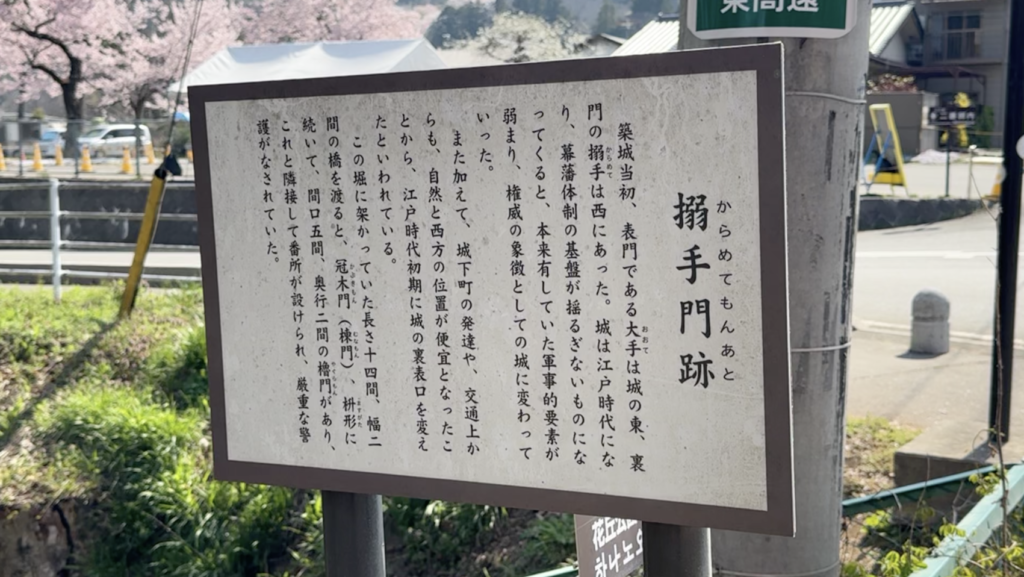
Photo: The Karamete Gate Ruins.
This was the castle’s main entrance until the early Edo period, when the castle town was located on the eastern side.
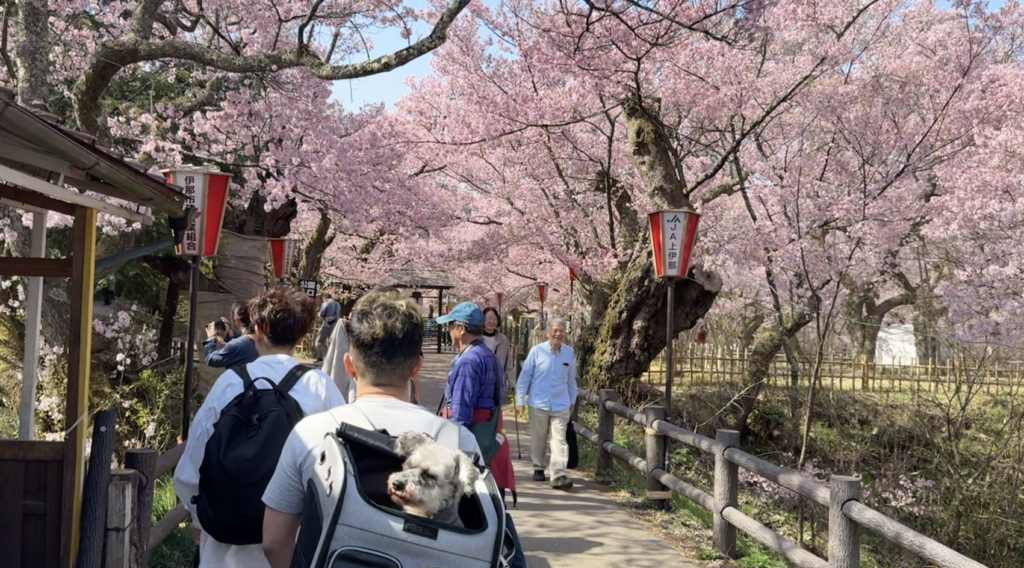
Photo: Crossing the bridge to the North Gate.
Now it’s finally time to enter Takato Castle Ruins Park.
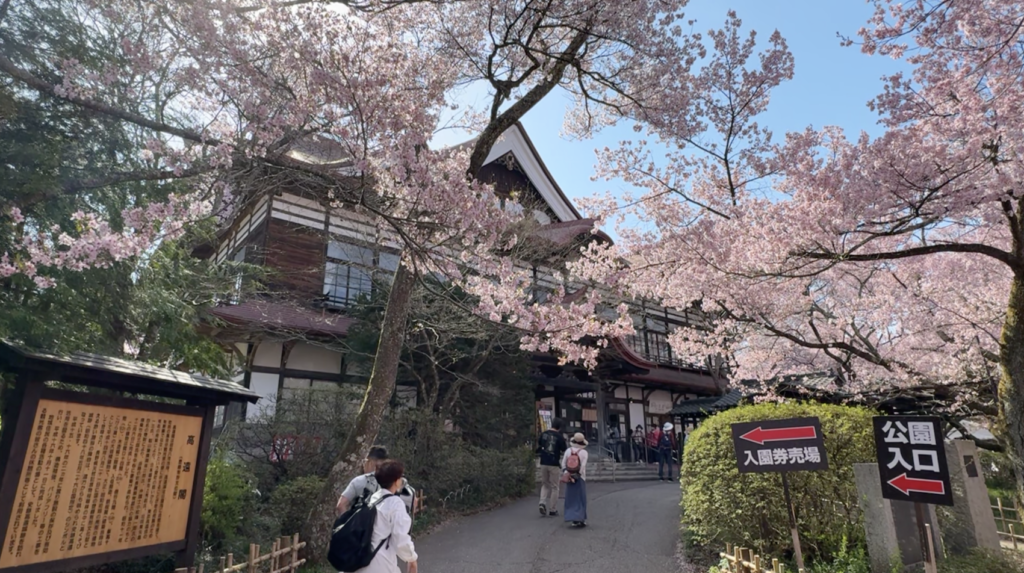
Photo: Takato-kaku, located beside the park entrance.
Built in 1936, this beautiful wooden building is a registered National Tangible Cultural Property. During the Cherry Blossom Festival, it serves as the ticket office and the location of the Japan’s Top 100 Castles stamp.
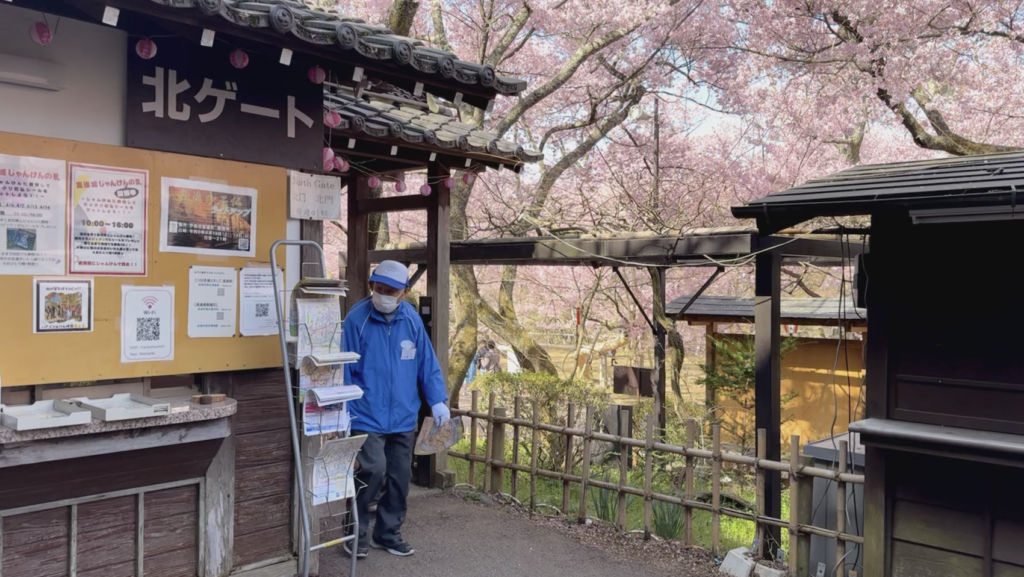
Photo: The North Gate of Takato Castle Ruins Park.
Rather than a modern entrance gate, it features a traditional tiled roof that perfectly matches the historic atmosphere.
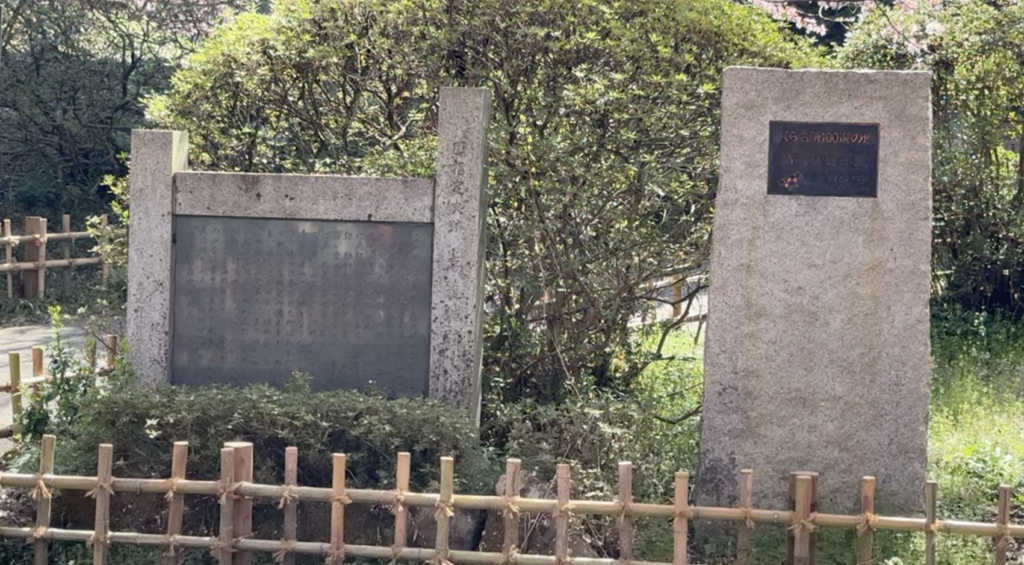
Photo: The monument marking one of Japan’s Top 100 Cherry Blossom Spots.
Takato Castle is famous throughout Japan for its spectacular spring scenery.
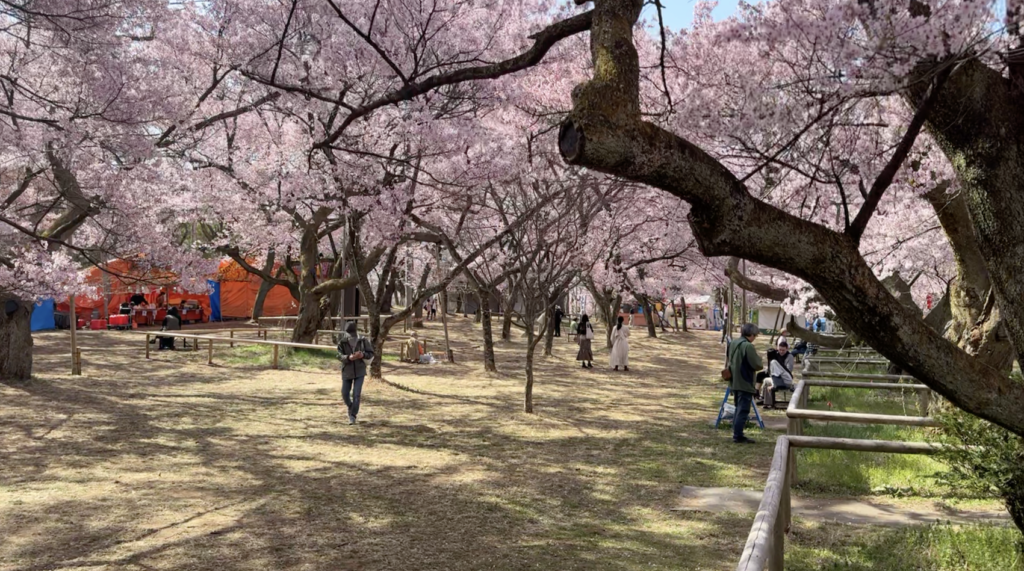
Photo: Food stalls inside the Ninomaru (Second Bailey).
During the Cherry Blossom Festival, this area is filled with vendors selling local food and festival snacks.
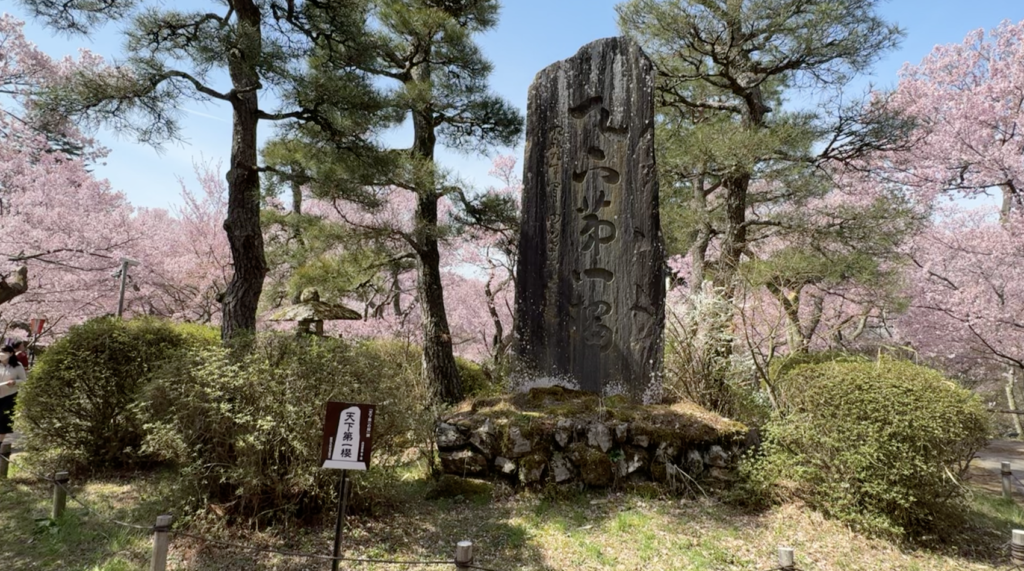
Photo: The monument reading “The Finest Cherry Blossoms in the World.”
One of the many landmarks celebrating Takato’s famous cherry blossoms.
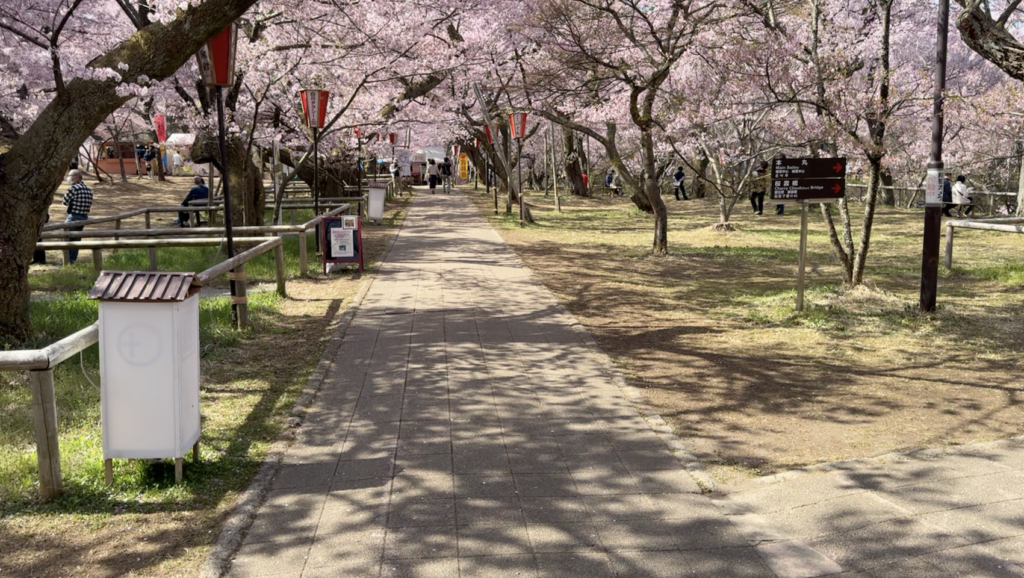
Photo: A walking path through the Ninomaru (Second Bailey).
The park has well-maintained paths, making it easy for visitors of all ages to explore.
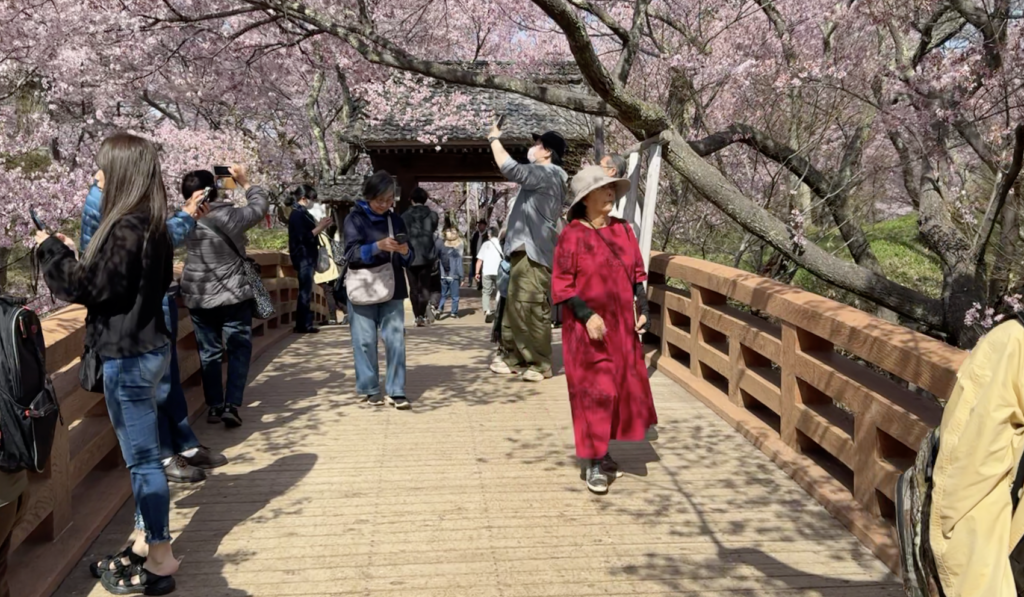
Photo: Oun Bridge, the most famous viewpoint in Takato Castle.
This bridge connects the Ninomaru and the Honmaru (Main Bailey). It becomes one of the busiest photo spots during the Cherry Blossom Festival.
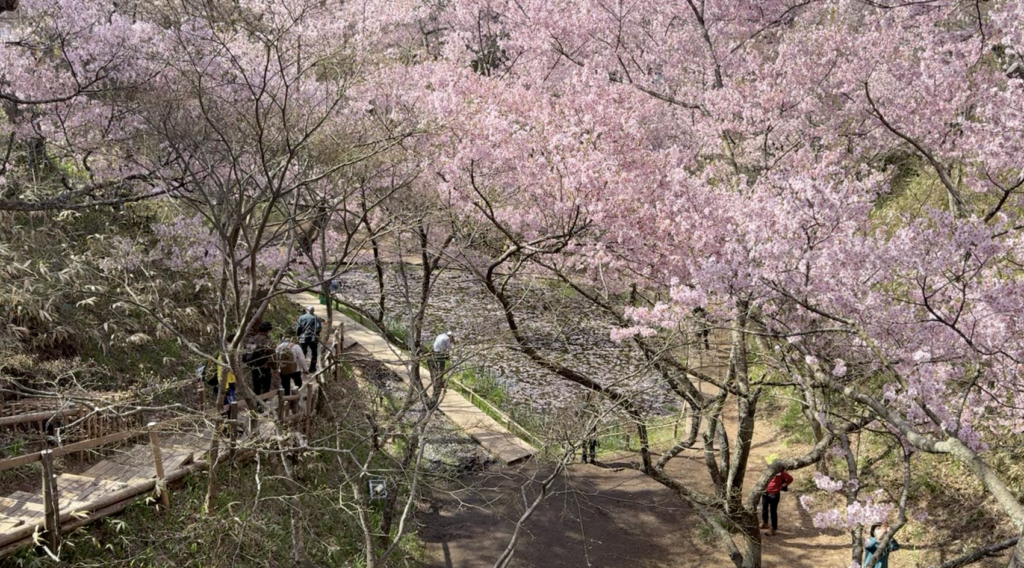
Photo: Looking south from Oun Bridge.
Below the bridge is the castle’s enormous inner moat, with Kagami Pond visible in the distance.
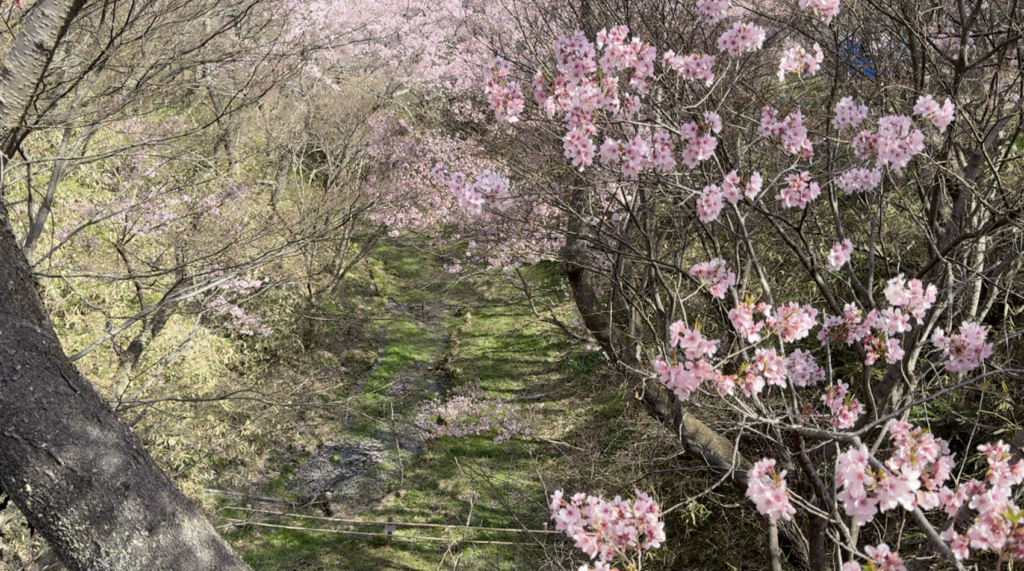
Photo: Looking north from Oun Bridge.
You can actually walk down into the moat for a completely different view of the castle.
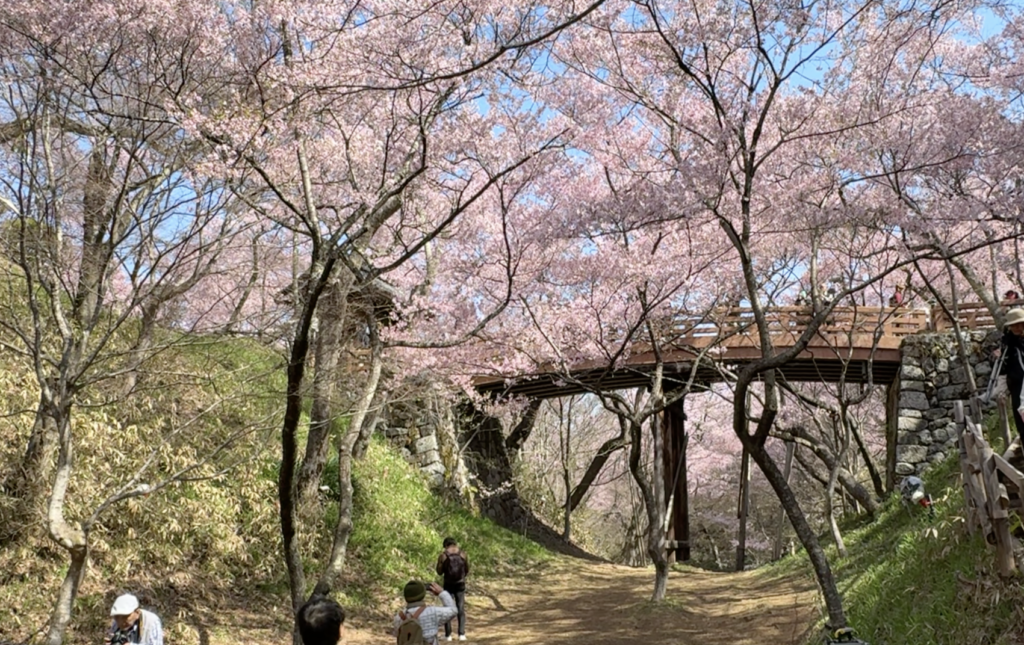
Photo: Oun Bridge viewed from the bottom of the moat.
This is one of the most iconic views of Takato Castle. From here, you can really appreciate the depth and scale of the moat.
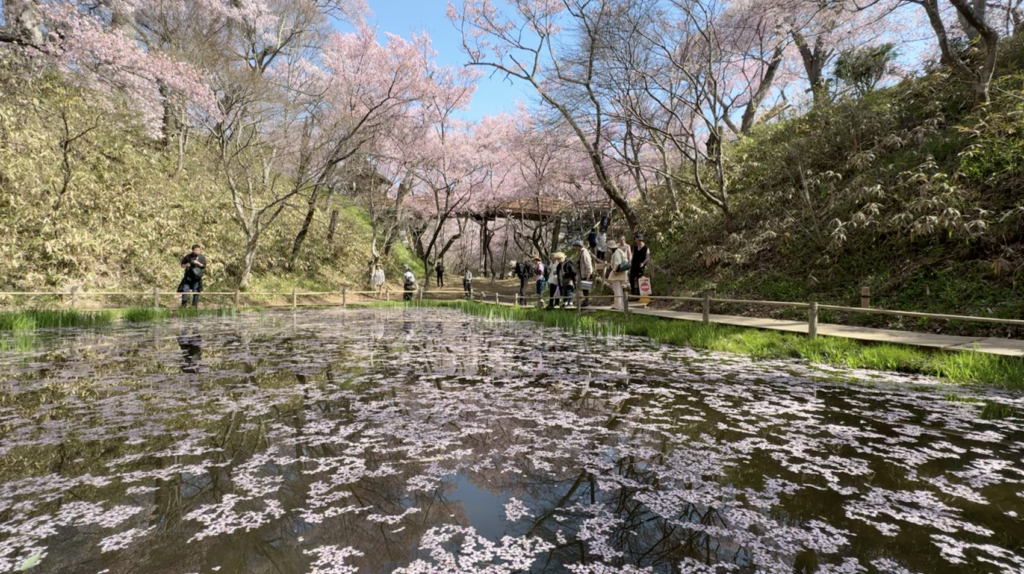
Photo: Oun Bridge reflected in Kagami Pond.
One of the most picturesque spots in the park.
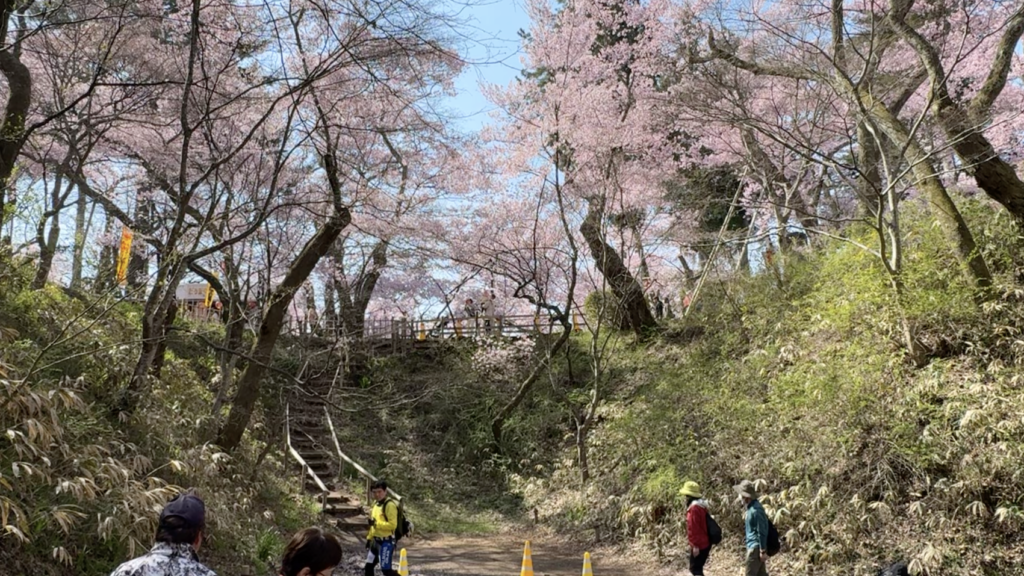
Photo: The earthen bridge connecting the Ninomaru and Minami-Kuruwa (South Bailey).
Unlike a modern bridge, this crossing is built entirely of earth.
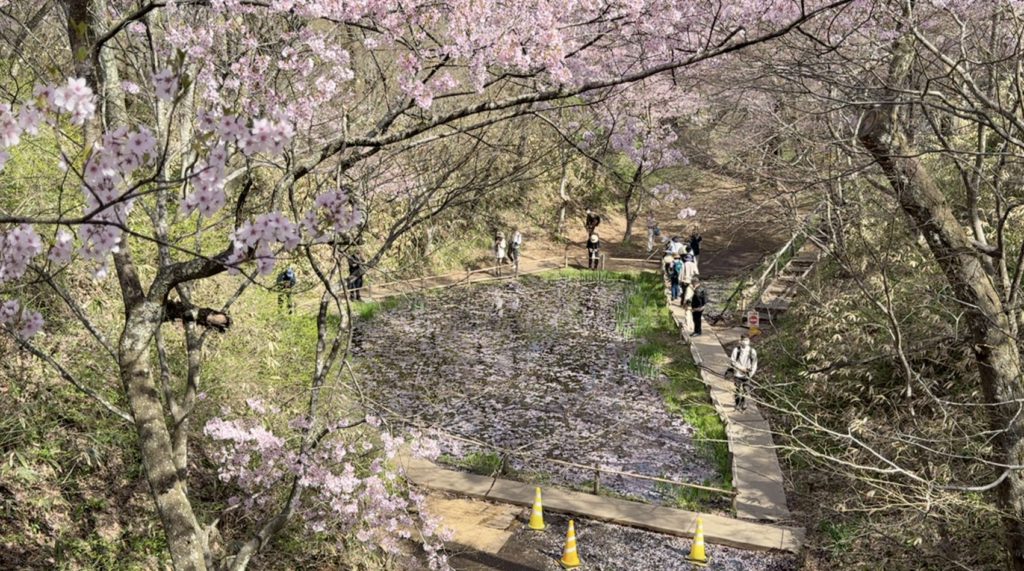
Photo: Kagami Pond viewed from the earthen bridge.
In spring, the pond is filled with the sounds of frogs. If you watch my YouTube video, you’ll be able to hear them.

Photo: You have now entered the Honmaru. Earthwork embankments remain on the eastern side of the enclosure.
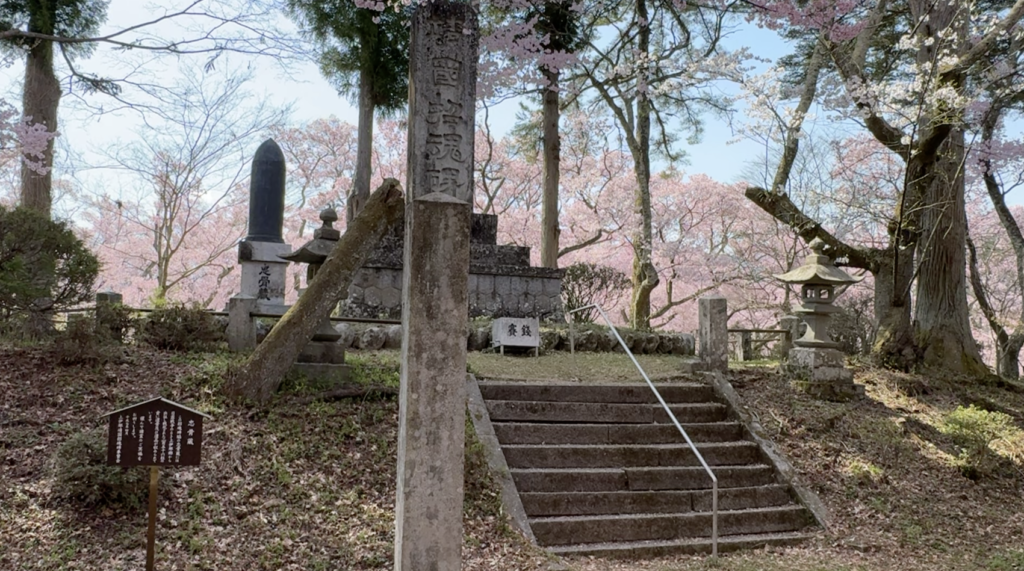
Photo: The Yasukuni Memorial Monument, dedicated to those who died in the First Sino-Japanese War, and the Chūkotsuzō (Bone Repository), which houses the remains and personal belongings of soldiers who died in the Russo-Japanese War, are located in the Minami-Kuruwa (South Bailey).
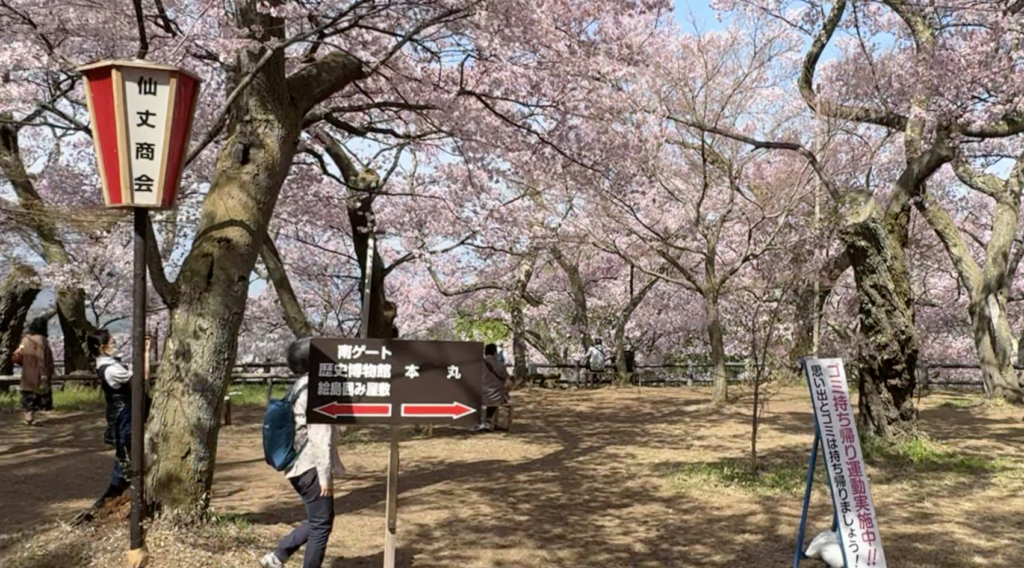
Photo: From the Minami-Kuruwa (South Bailey), head right to reach the Honmaru (Main Bailey), or left to visit the Hōdōin Kuruwa (Hōdōin Bailey).
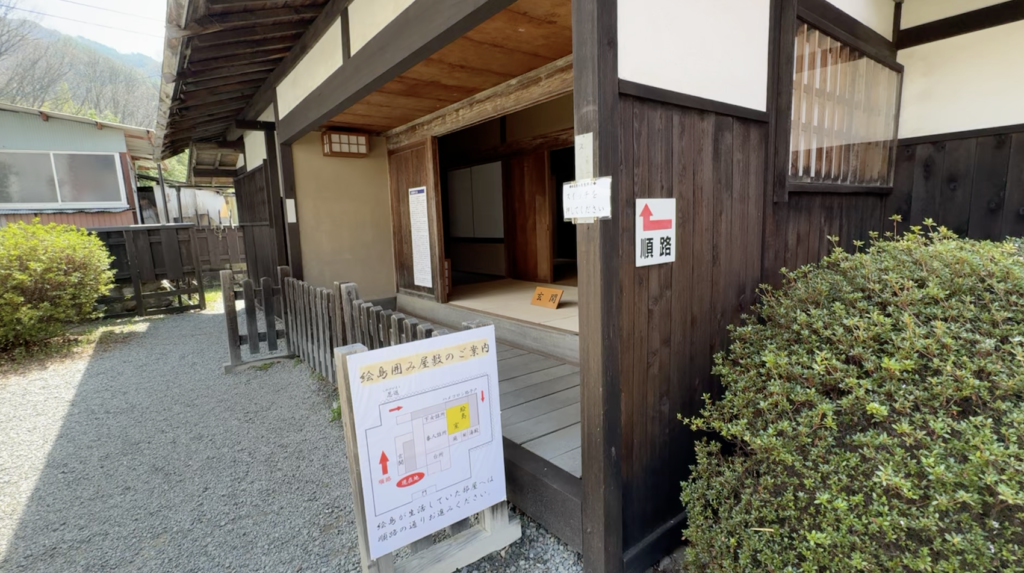
Photo: The Ejima Enclosure.
Lady Eshima spent her years of confinement here after the famous Ejima Ikushima Incident.

Photo: Cross the bridge connecting Minami Kuruwa and the Honmaru (Main Bailey).
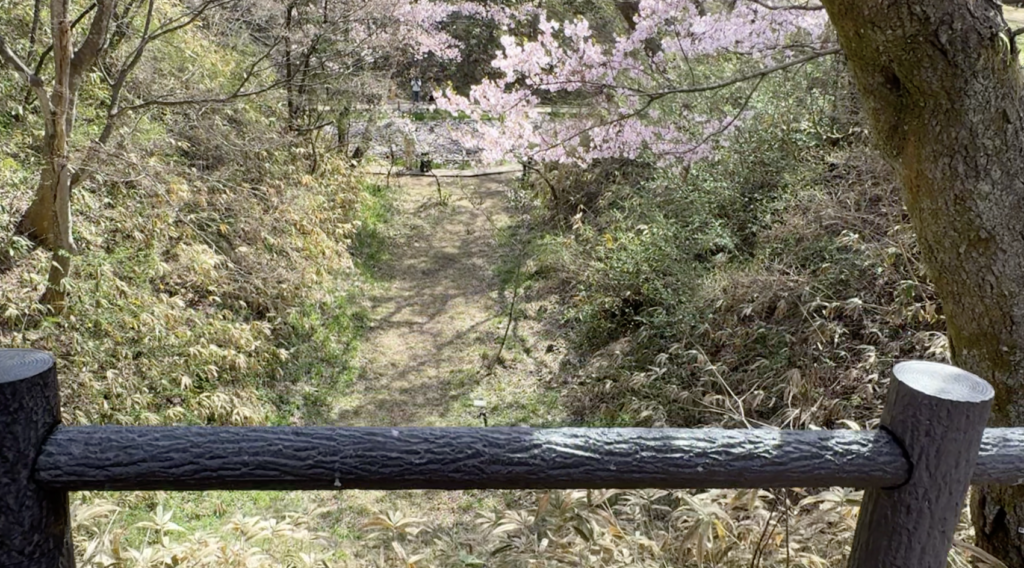
Photo: Like the previous bridge, this is an earthen bridge spanning another impressive moat. Kagami Pond can be seen in the background.
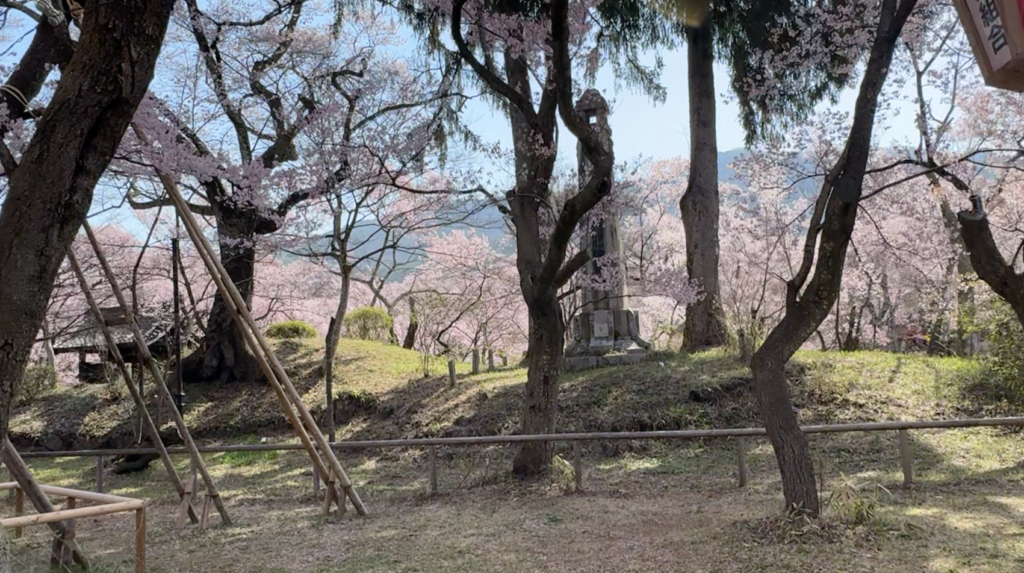
Photo: You have now entered the Honmaru. Remains of the original earthen ramparts can still be seen along the eastern side.
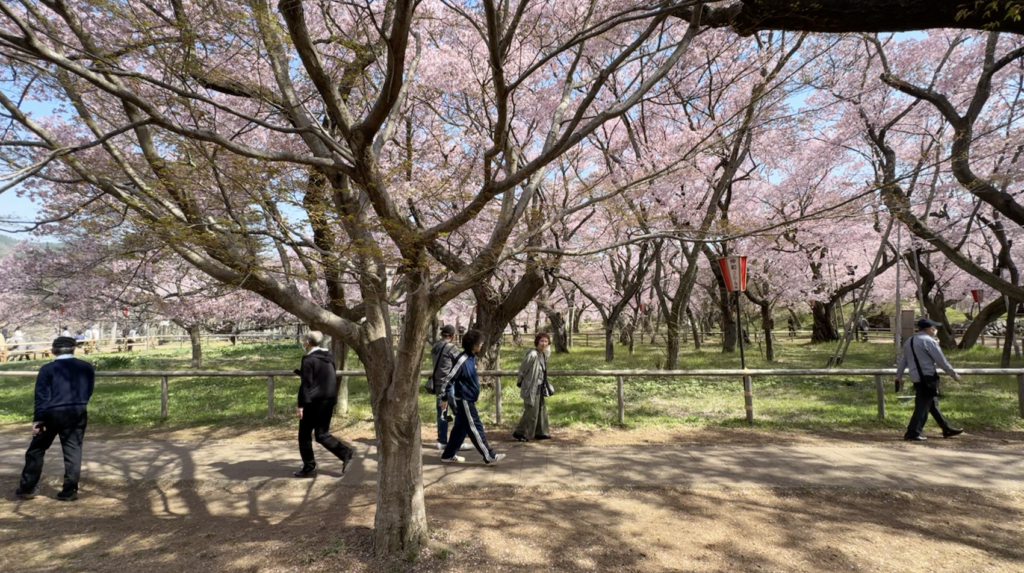
Photo: The Honmaru (Main Bailey), the heart of Takato Castle.
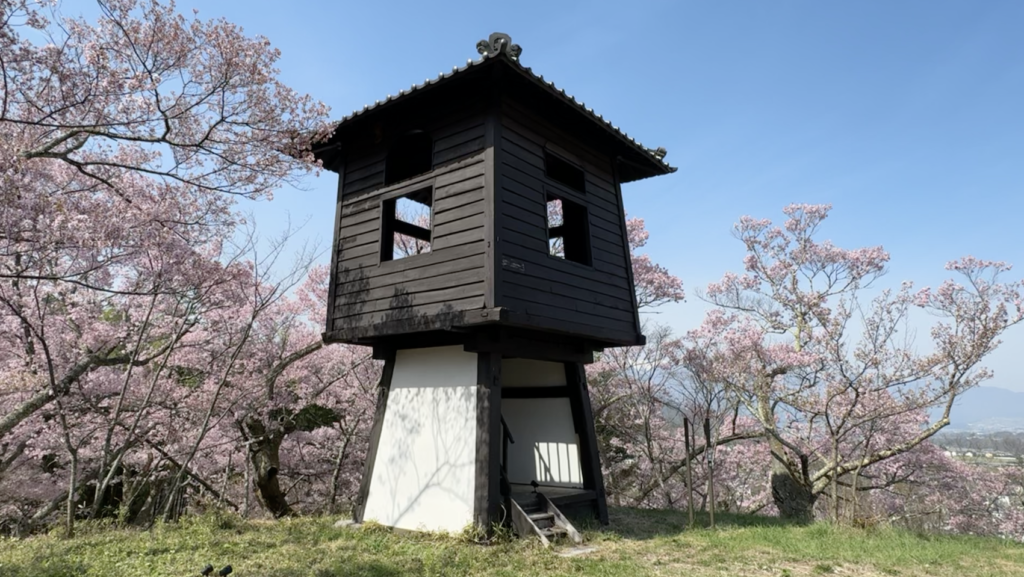
Photo: The Taiko Yagura (Drum Turret) stands in the southwest corner of the Honmaru. It is one of Takato Castle’s most iconic landmarks and is beautifully illuminated during the cherry blossom festival.
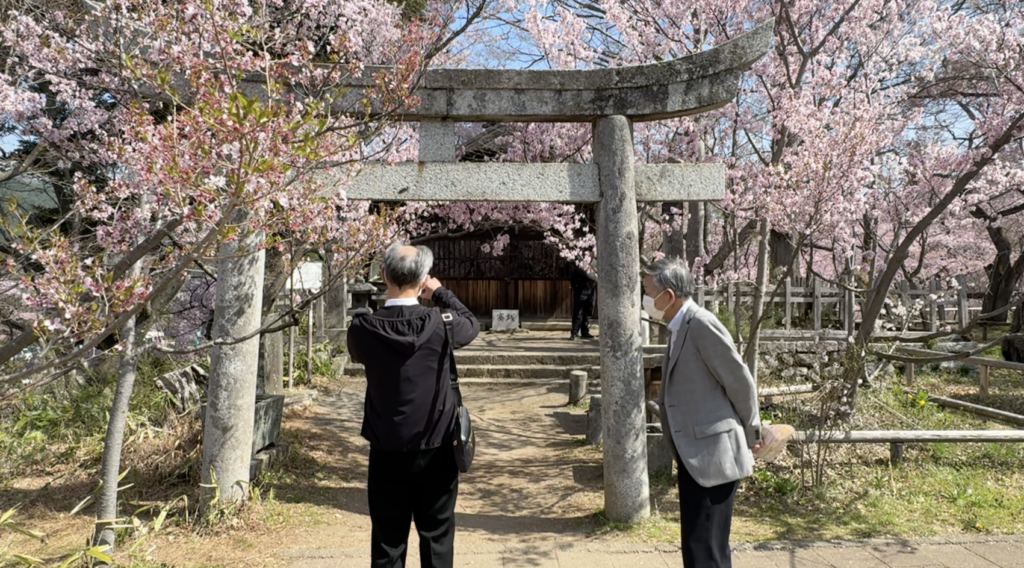
Photo: Shinjo Fujiwara Shrine, located on the western side of the Honmaru. The shrine enshrines Morinobu Nishina, who defended Takato Castle during Oda Nobunaga’s invasion, and Fujiwara no Kamatari, ancestor of the Naito clan that later ruled Takato Domain.
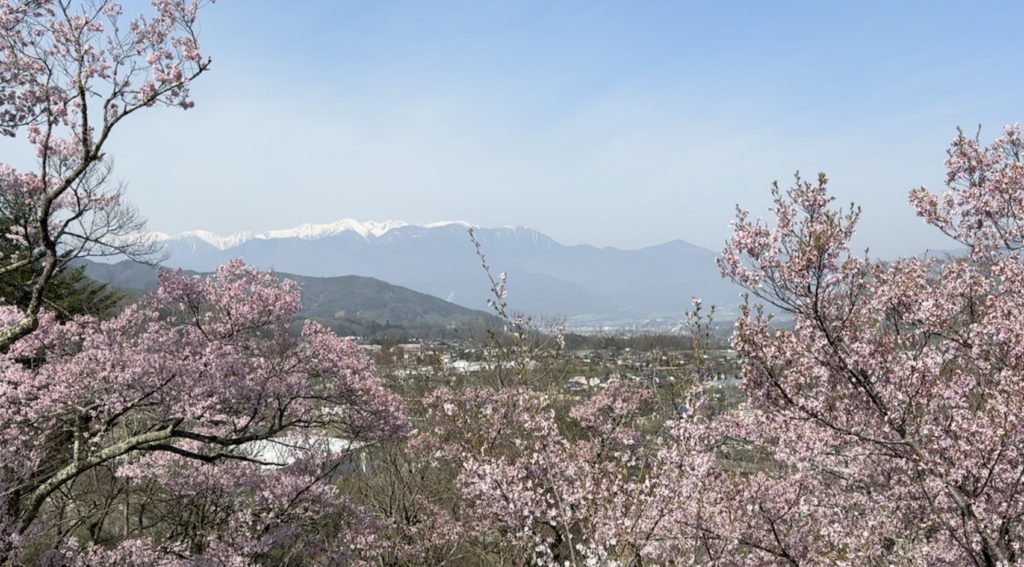
Photo: The view looking west from the Honmaru. The combination of the snow-capped Central Alps and the Takato Kohigan cherry blossoms creates a breathtaking spring landscape.
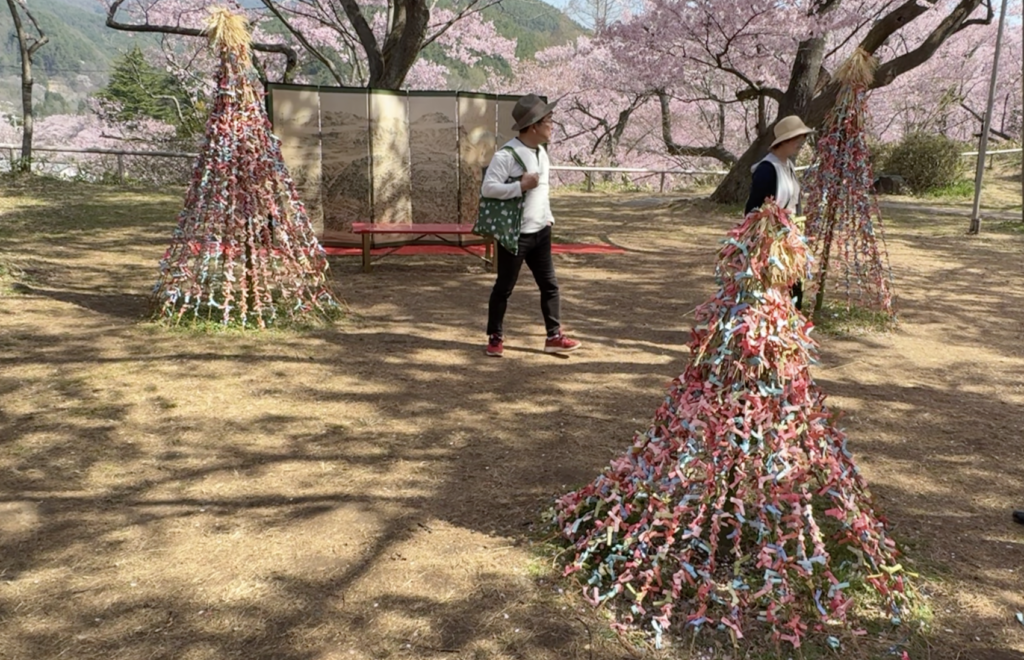
Photo: “Hanayui – Sakura Saku Mirai.” In 2024, visitors tied wishes and messages here to support those affected by the Noto Peninsula Earthquake.
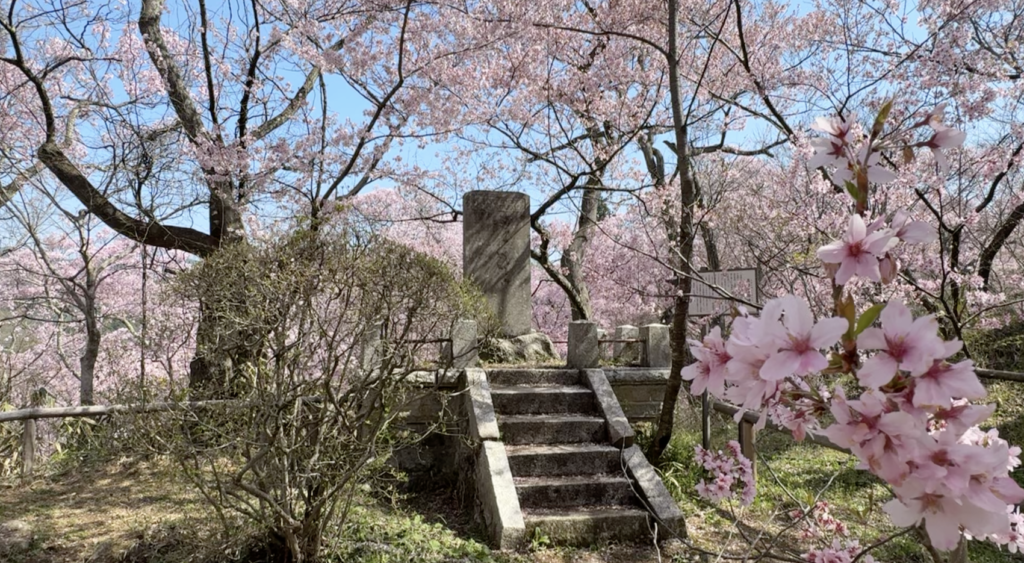
Photo: The Takato Park Monument, erected in 1881.
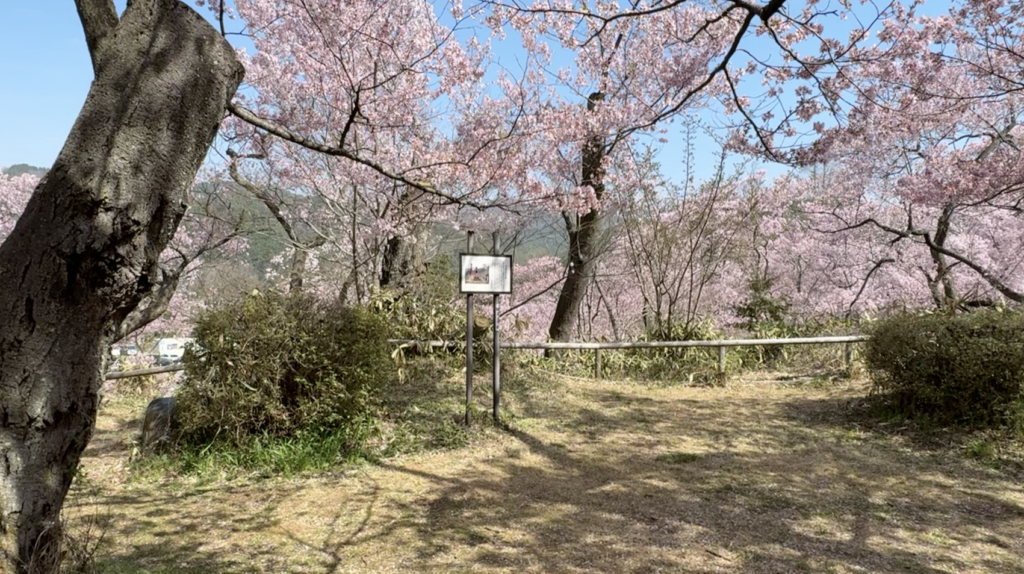
Photo: Statue of Nakamura Fusetsu, a renowned painter and calligrapher born in Takato.
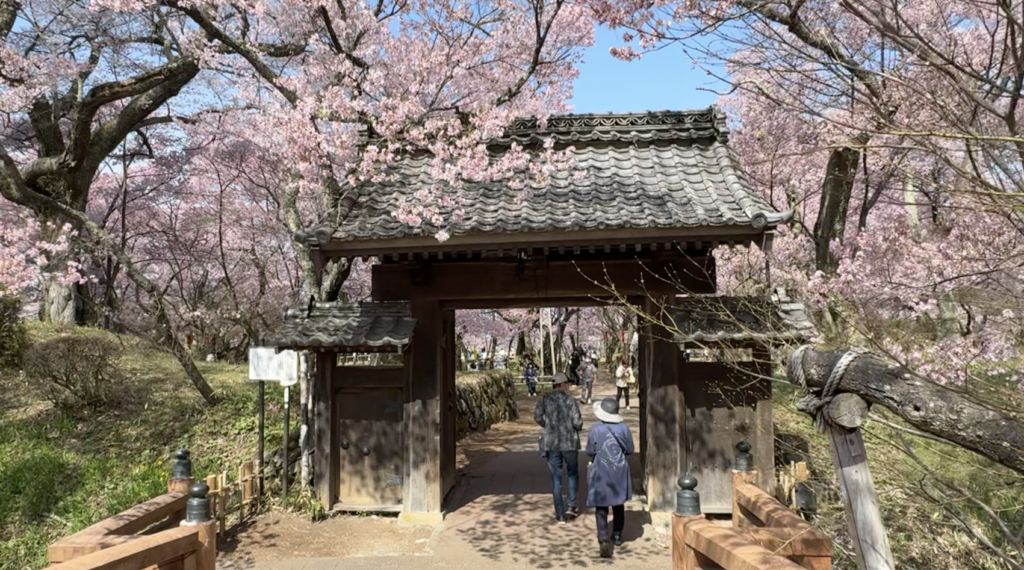
Photo: Tonya-mon Gate viewed from Ohun Bridge. Visitors entering the Honmaru from the east pass through this historic gate, one of the symbols of Takato Castle.
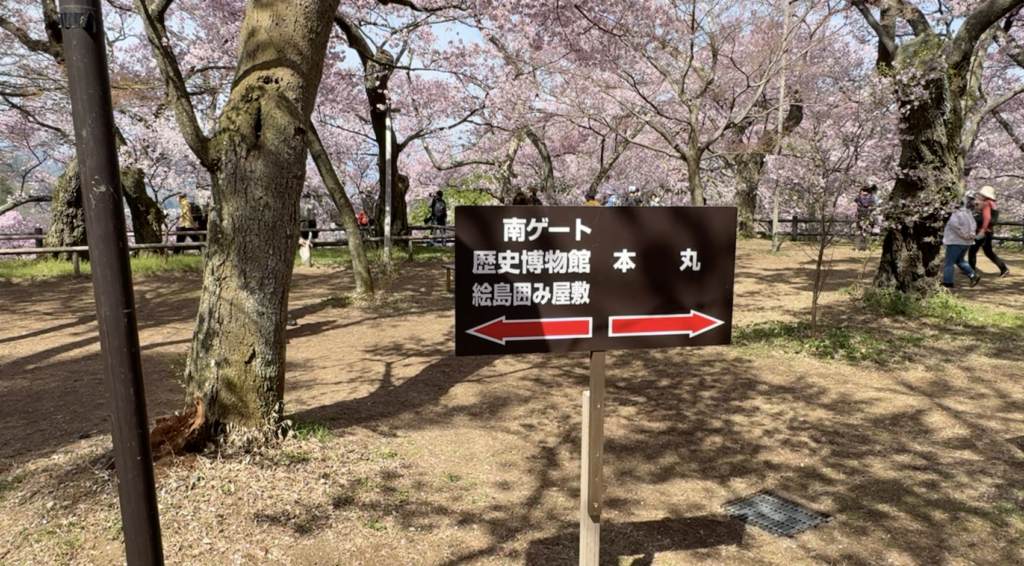
Photo: Back in Minami Kuruwa. This time, instead of heading toward the Honmaru, let’s continue toward Hodo-in Kuruwa.
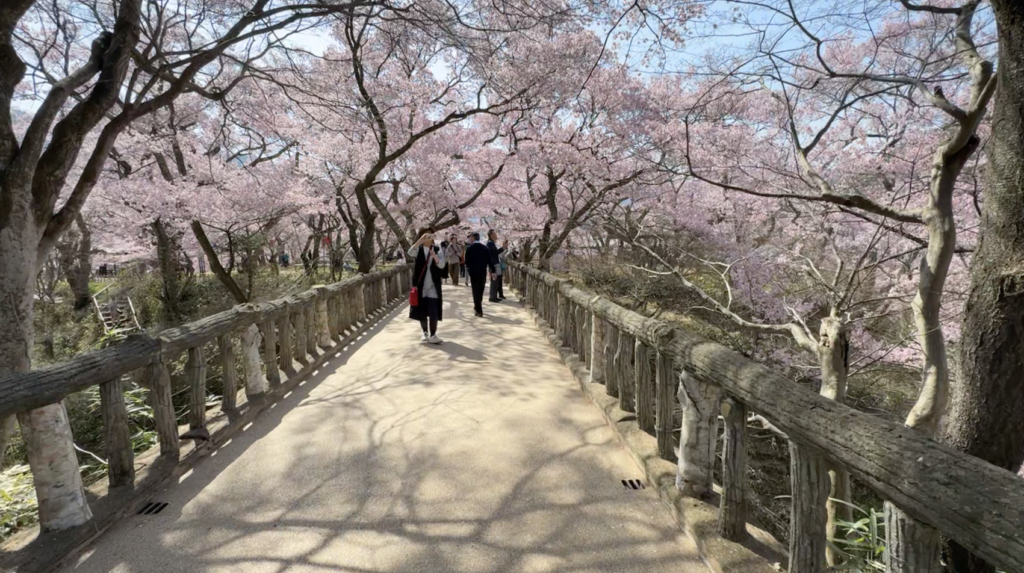
Photo: Hakuto Bridge connects Minami Kuruwa and Hodo-in Kuruwa. It was named after the pen name of the builder’s great-grandfather, who also devoted himself to the local community.
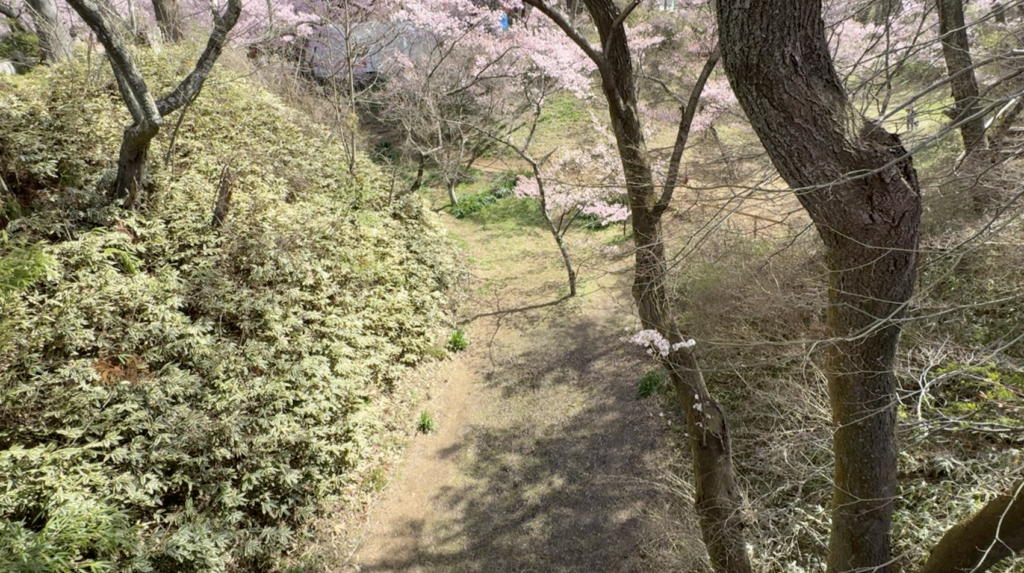
Photo: Looking down into the northeastern moat from Hakuto Bridge. Takato Castle’s moats are all remarkably wide and deep. Standing here, it is hard to imagine how the castle could have fallen in just one day.
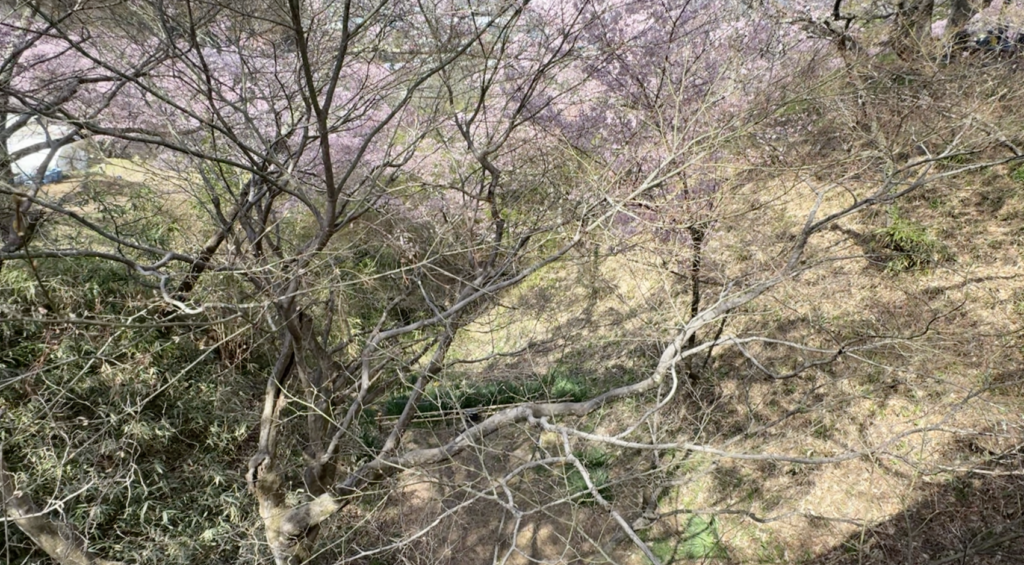
Photo: Looking toward the southwestern moat. This moat is believed to have extended down the steep slope toward the Mibugawa River as a defensive dry moat.
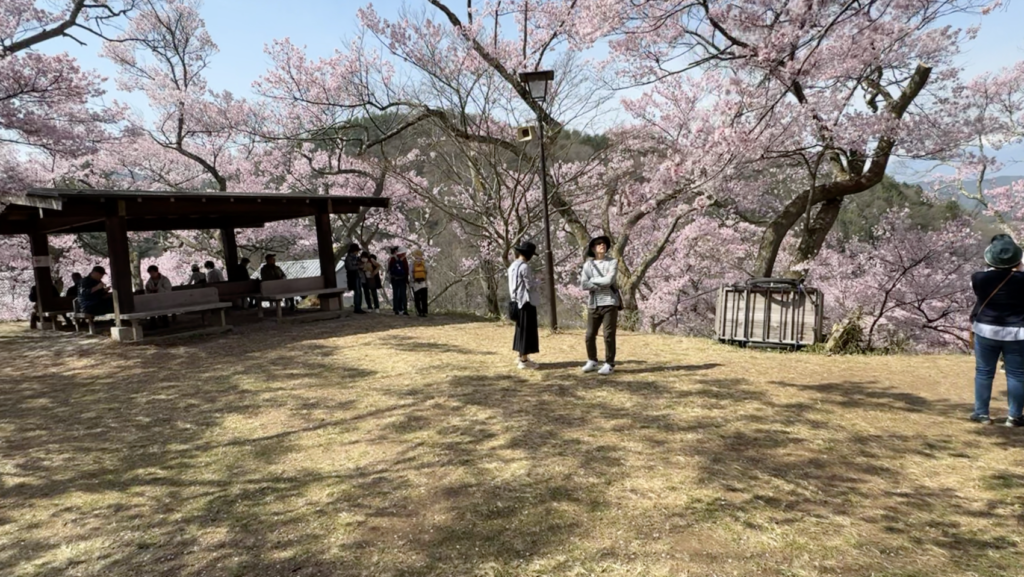
Photo: Hodo-in Kuruwa, named after Hodo-in Temple, which once stood on this site.
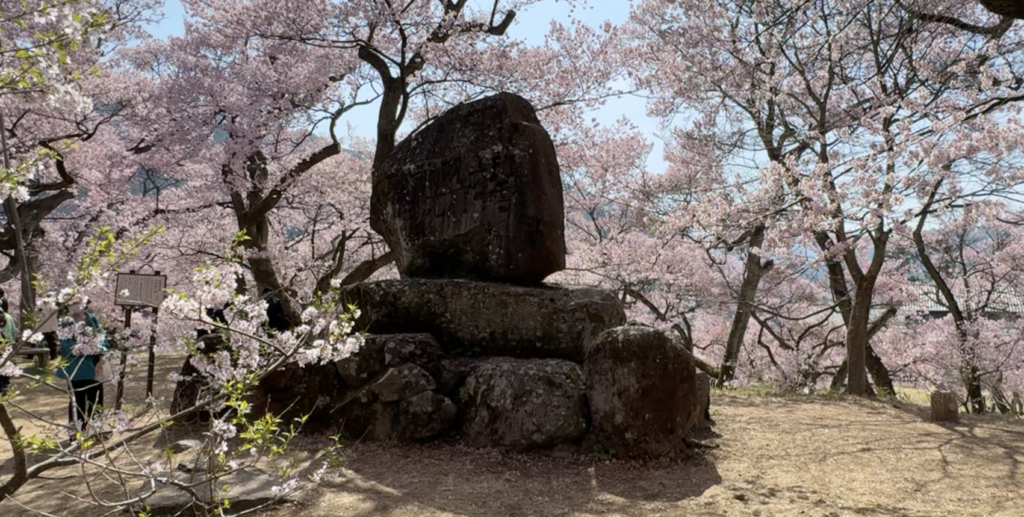
Photo: A monument engraved with poems by Hirose Kibeki and Kawahigashi Hekigoto, two poets closely associated with Takato.

Photo: Hodo-in Kuruwa is on the right, while Ninomaru is on the left. The broad moat separating the two enclosures demonstrates the castle’s impressive defensive design.
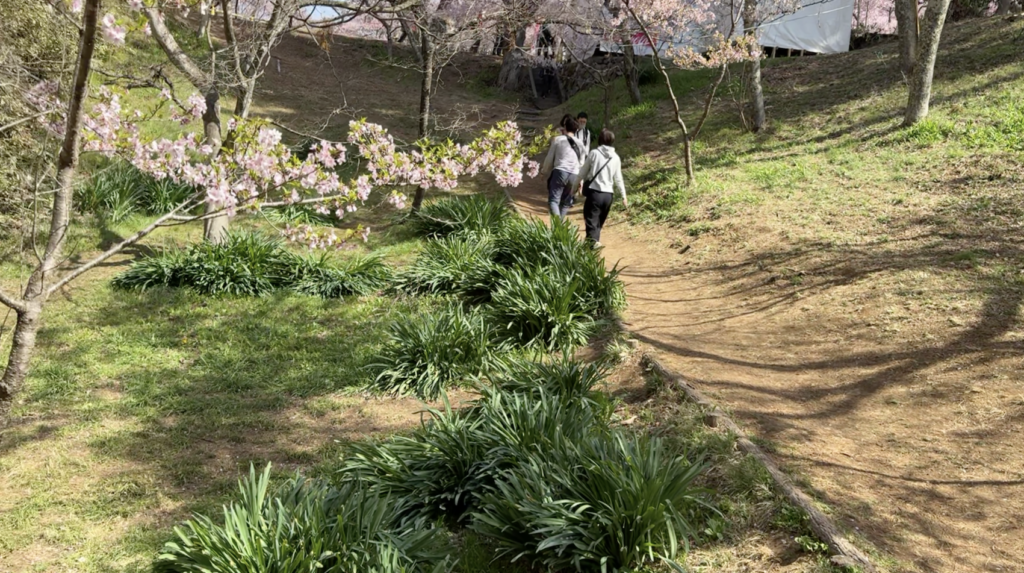
Photo: Hodo-in Kuruwa and Ninomaru were once connected by a passage through the moat. Today, visitors can still walk along the bottom of the moat before climbing back up to Ninomaru.
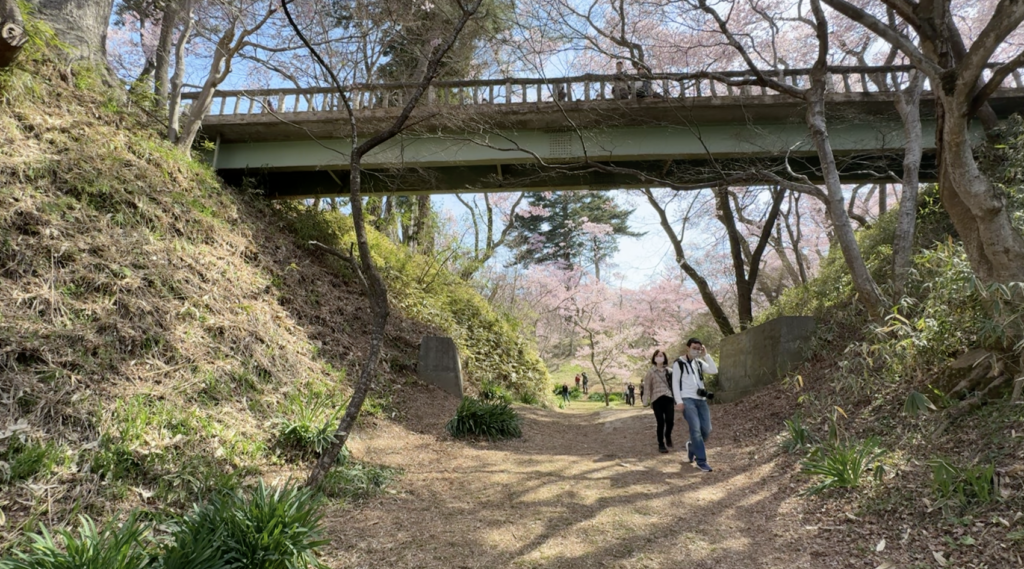
Photo: Hakuto Bridge and the steep defensive slopes viewed from the southwest. The earthen walls are so steep that it is difficult to imagine an attacking army climbing them.
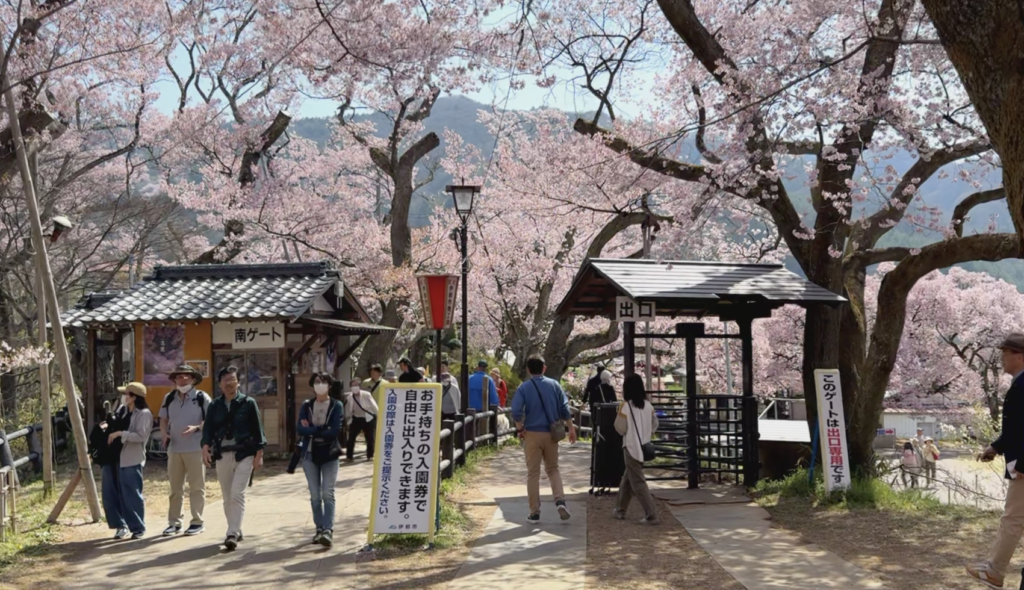
Photo: Having finished exploring the castle grounds, let’s head toward the Takato History Museum and the Ejima Confinement House. Exit through the South Gate and follow the downhill path toward the museum area.
Attractions Around Takato Castle Park
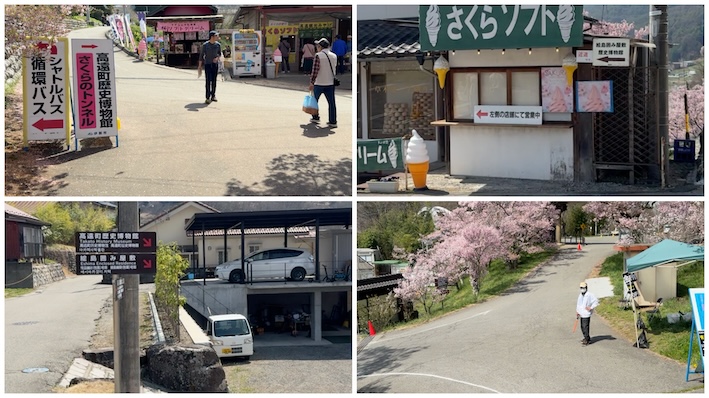
Photo: It takes about 7 minutes on foot to reach the Ejima Enclosure from Takato Castle Park. Direction signs are posted along the way, making it easy to find without getting lost.

Photo: Takato Town History Museum. As mentioned earlier, this is where you can collect the Japan’s Top 100 Castles stamp and purchase a castle stamp (Goshuin-style Castle Seal / Gojoin). Admission is ¥400, or ¥200 if you present your Takato Castle Park admission ticket.
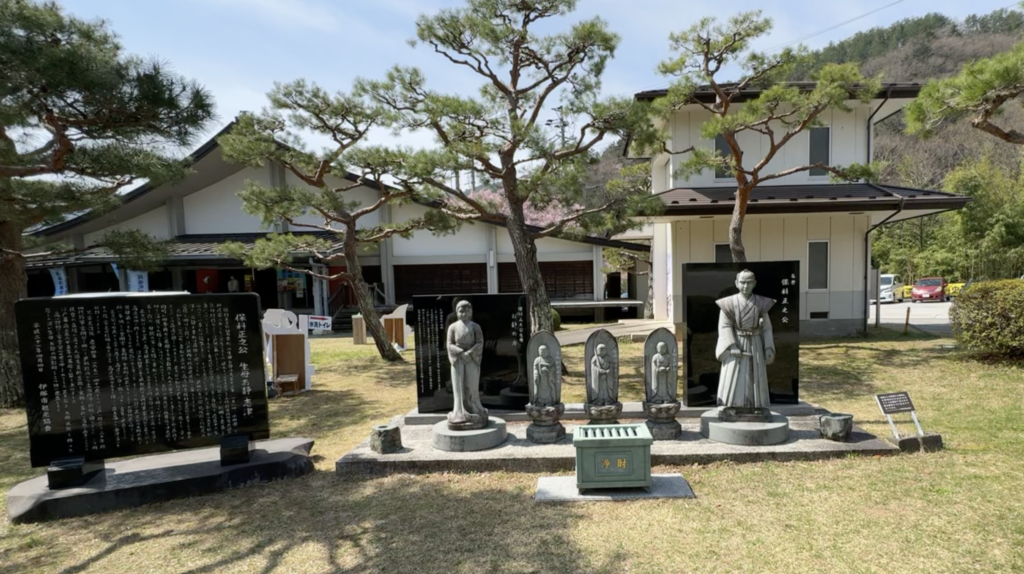
Photo: A statue of Hoshina Masayuki, one of Takato’s most respected lords, and his mother, Lady Oshizu, stands in front of the museum.
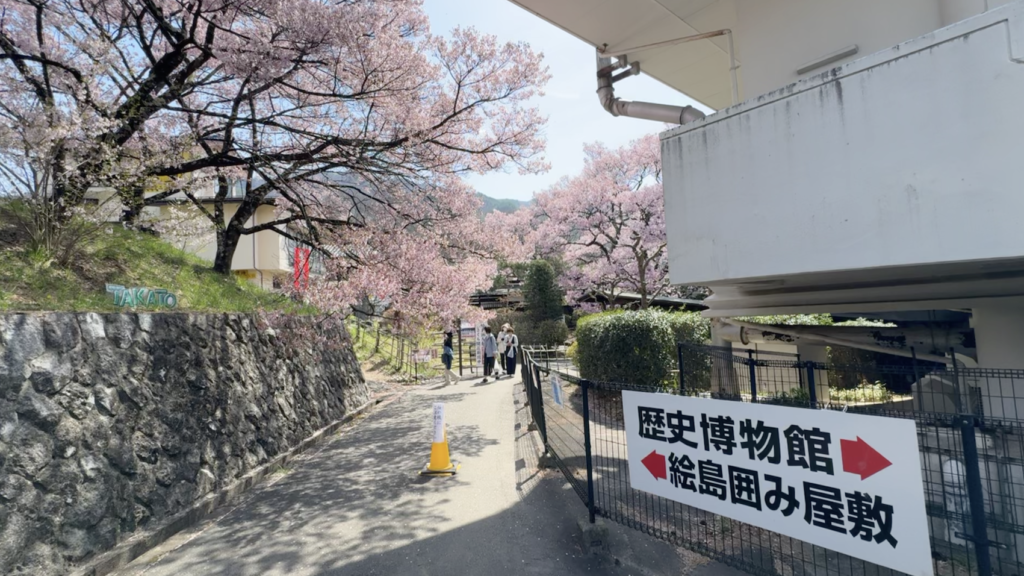
Photo: Behind the museum is the Ejima Enclosure, where Lady Ejima spent her years of confinement.
Photo: The Eshima Enclosure.
This is where Lady Eshima was confined after the famous Eshima Ikushima Incident, one of the best-known scandals in the history of Edo Castle’s Ōoku (the women’s quarters).

Photo: Ejima spent the final 27 years of her life in this small room.
If you have time, this site is well worth visiting. The exhibits explain not only the famous Ejima Ikushima Incident, but also the political rivalries and power struggles within the Tokugawa shogunate that lay behind it, offering a deeper understanding of this important chapter in Japanese history.
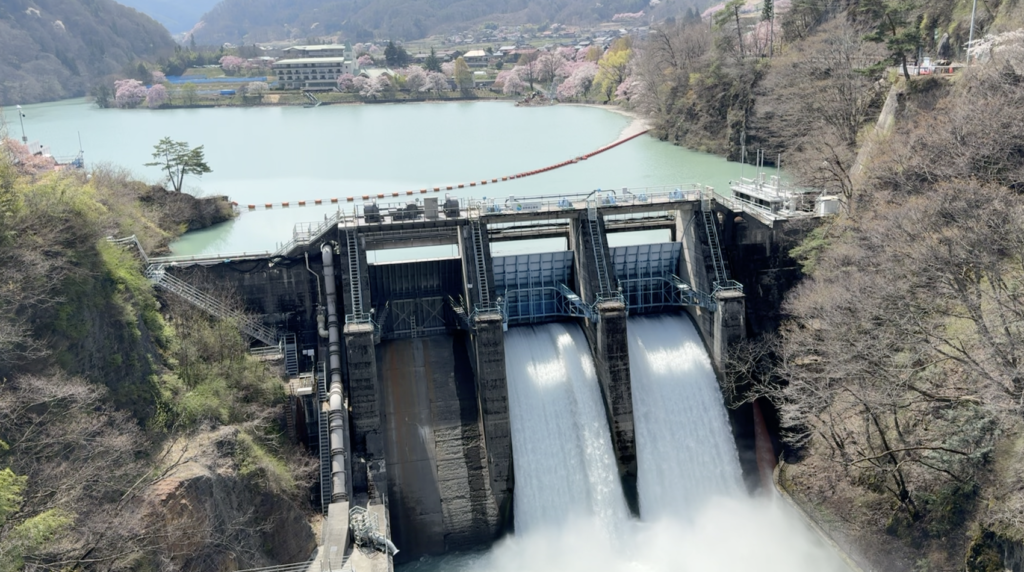
Photo: Takato Dam and Lake Takato. During the Cherry Blossom Festival, the dam is illuminated with pink lighting inspired by the cherry blossoms.
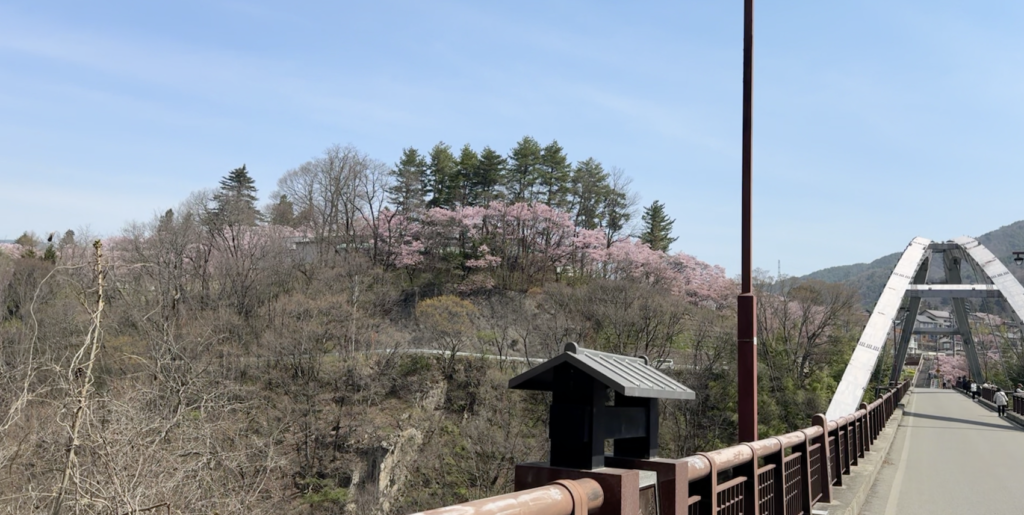
Photo: A view of Takato Castle from Hakusan Bridge.
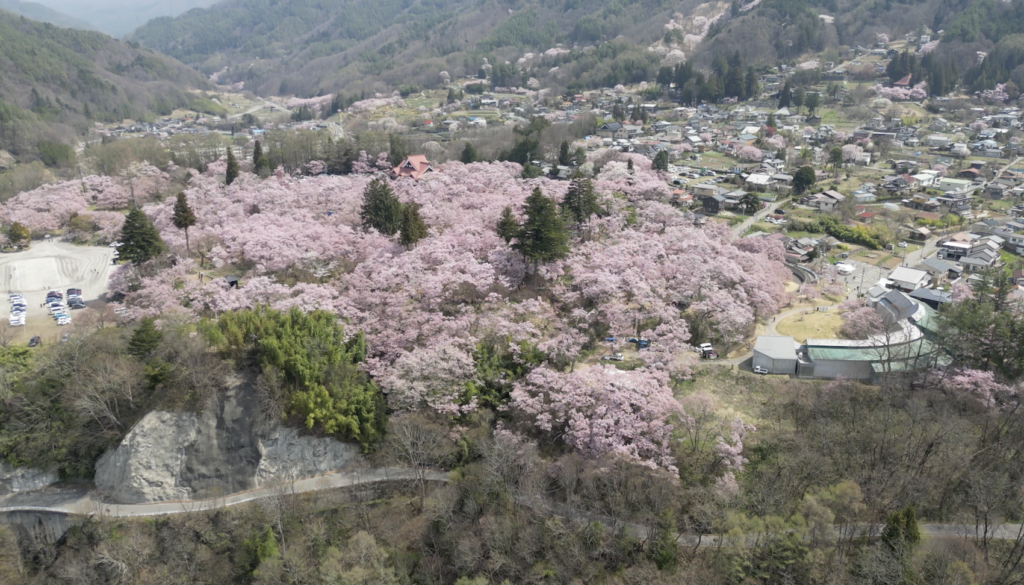
Photo: An aerial view of Takato Castle. Seen from the south, you can clearly appreciate the steep cliffs that drop dramatically toward the Mibu River, one of the castle’s natural defensive features.
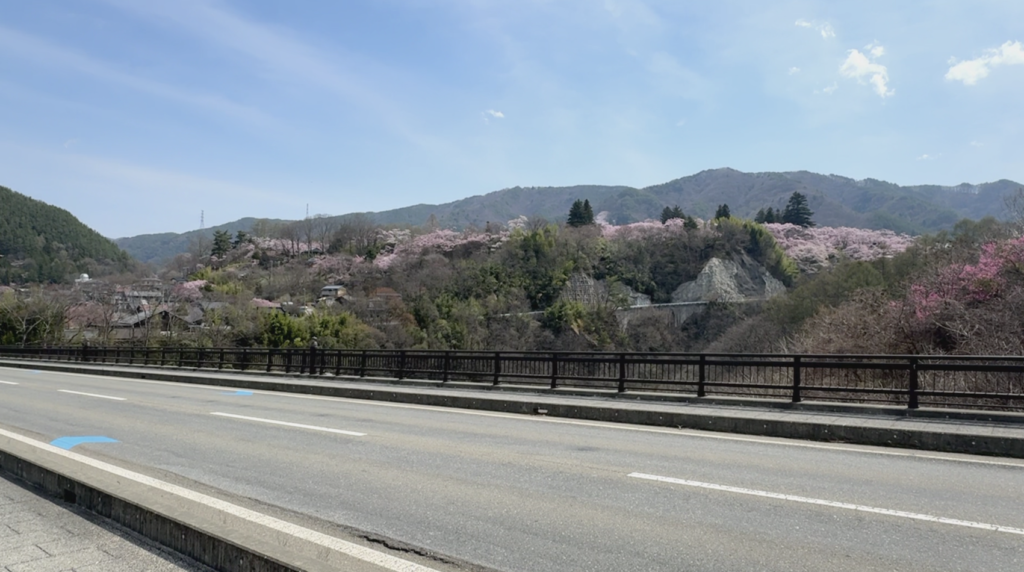
Photo: A view of Takato Castle from Takato Ohashi Bridge. Turning right at the end of this bridge leads to Tonosaka, the main road up to the castle park. At this point, you’ve completed a full circuit around the castle grounds.
Night at Takato Castle Ruins Park
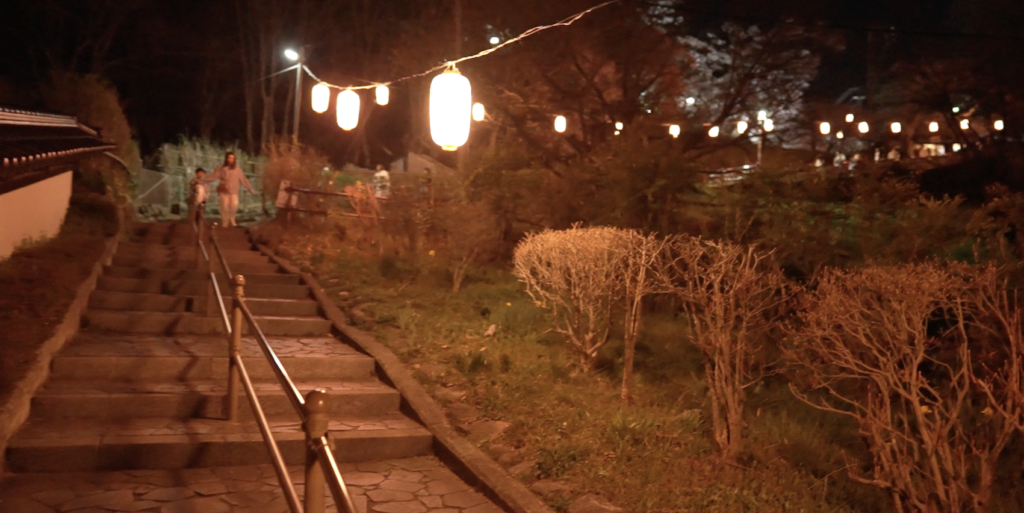
Photo: Takato Castle is beautifully illuminated during the Takato Sakura Festival.
The nighttime illumination is a must-see. Even Jibun-zaka is lined with lanterns, so you won’t need a flashlight when walking back after dark.
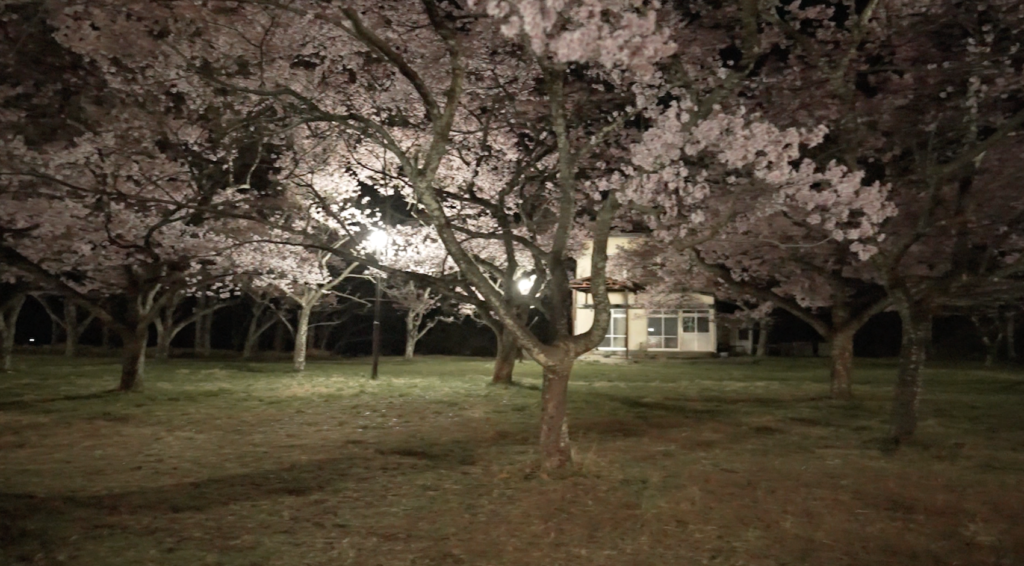
Photo: Sannomaru at night.
This area is lit by permanent lights rather than the seasonal illumination. It is quiet and almost empty after sunset.
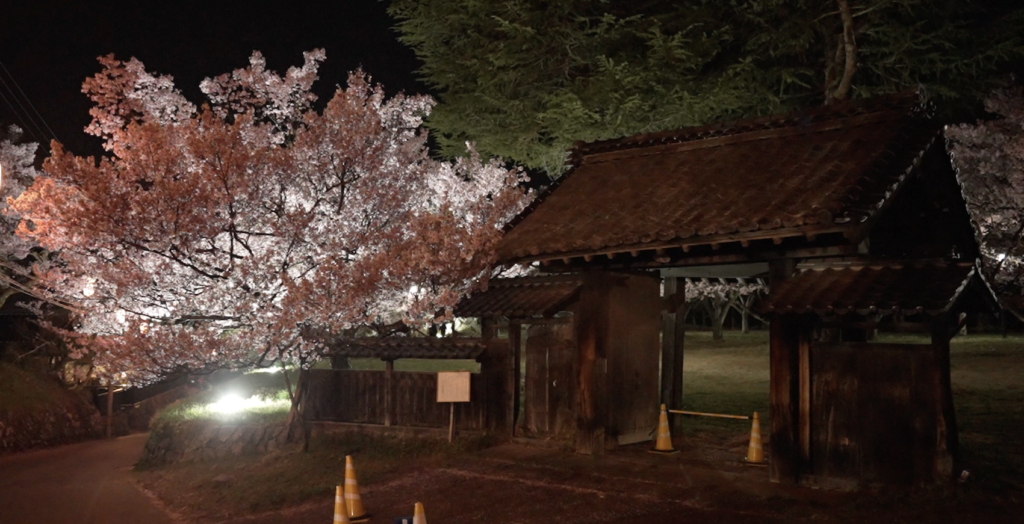
Photo: The Otemon Gate.
The historic gate looks especially impressive when illuminated at night.
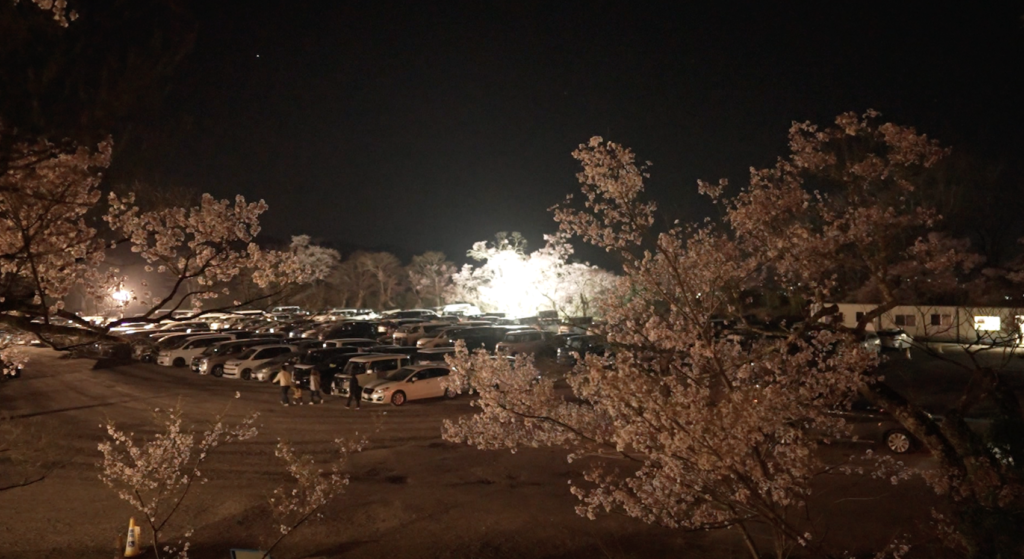
Photo: P9 Parking Lot.
Even at 8:37 p.m., the parking lot was almost full. Many visitors stay until the illumination ends at 10:00 p.m.
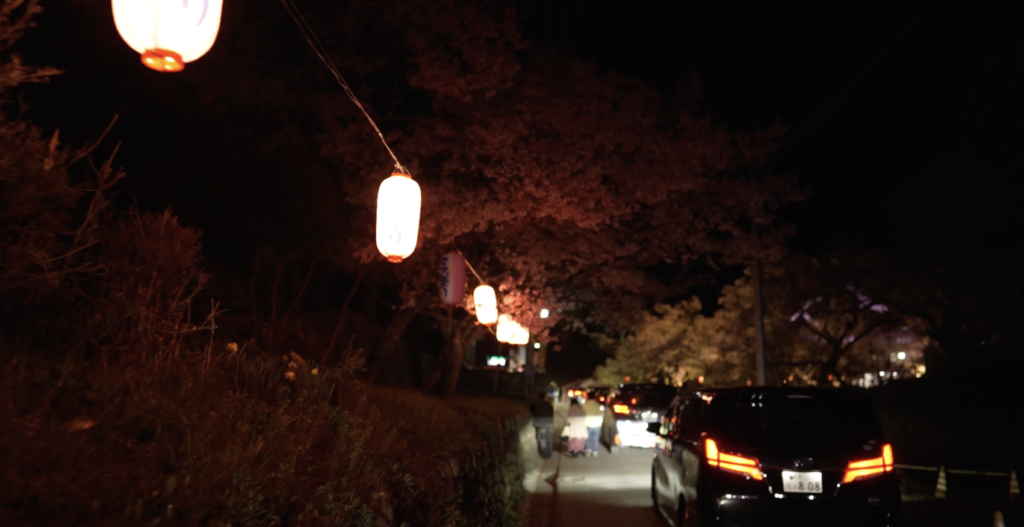
Photo: Traffic near the park.
Cars were lined up waiting for the parking lots closest to the entrance.
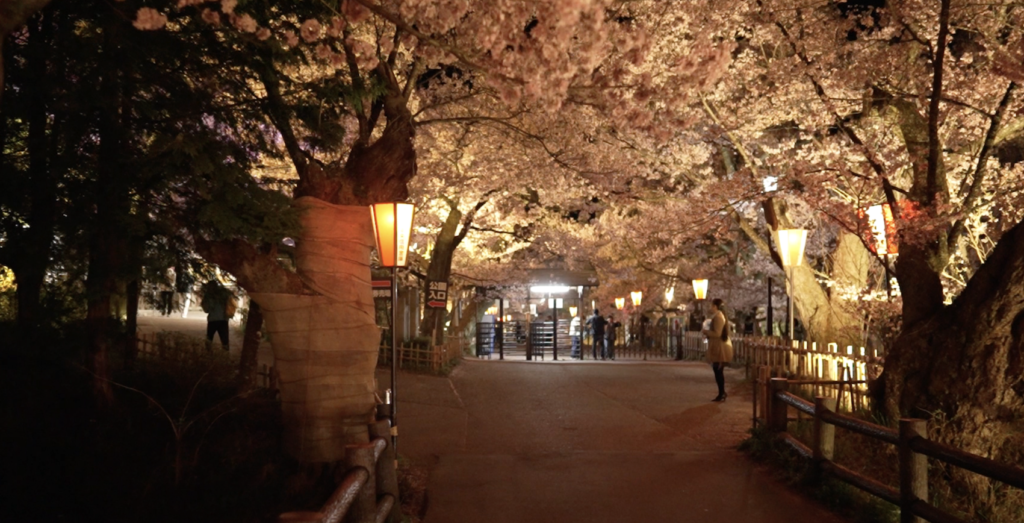
Photo: Park entrance.
Night admission is the same as daytime: 600 yen for adults and 300 yen for children.

Photo: Takato-kaku.
The historic building is beautifully illuminated in pink.
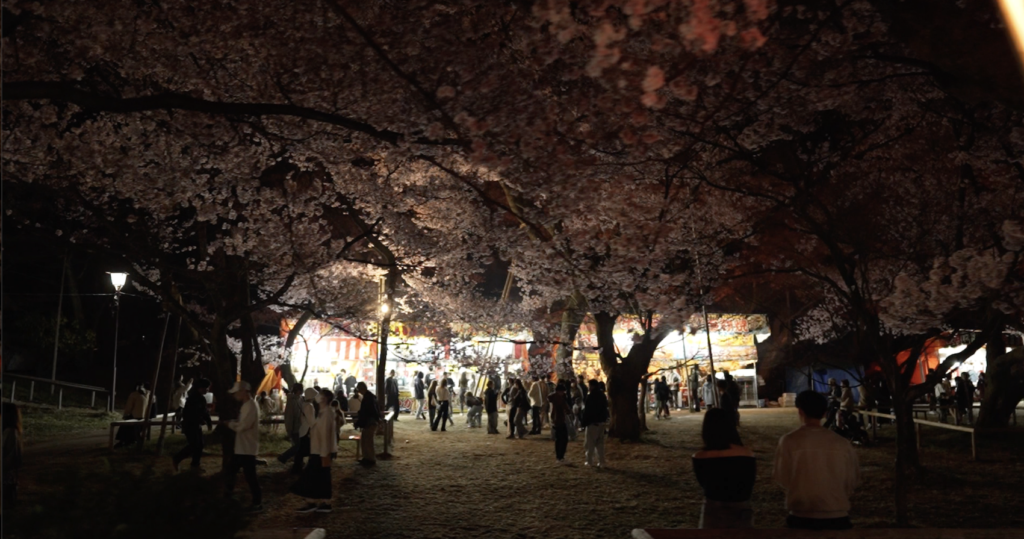
Photo: Ninomaru at night.
The food stalls are lively and full of visitors.
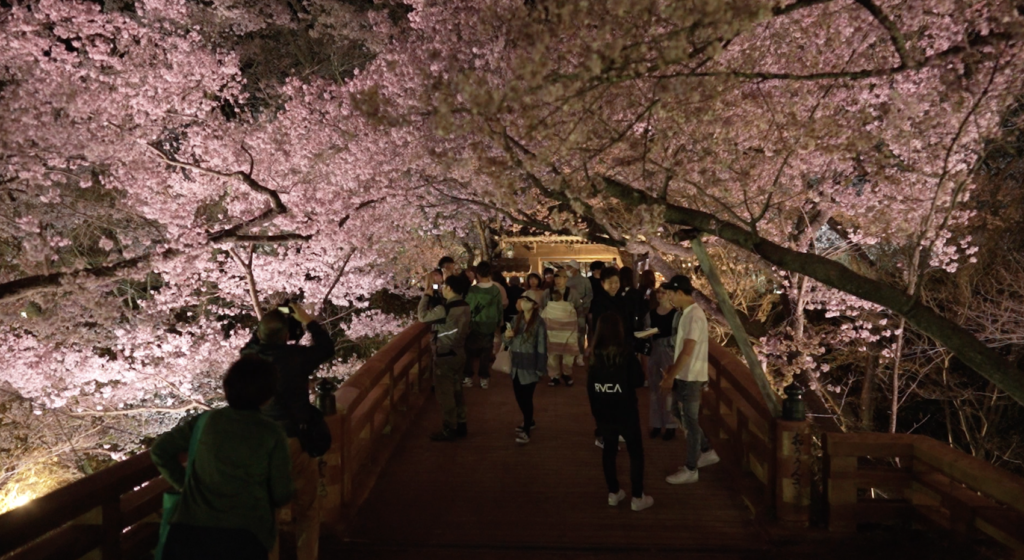
Photo: Oun Bridge.
One of the park’s most popular photo spots at night.
Photo: Oun Bridge reflected in Kagami Pond.
A beautiful night view. The sound of frogs makes the atmosphere even more peaceful.
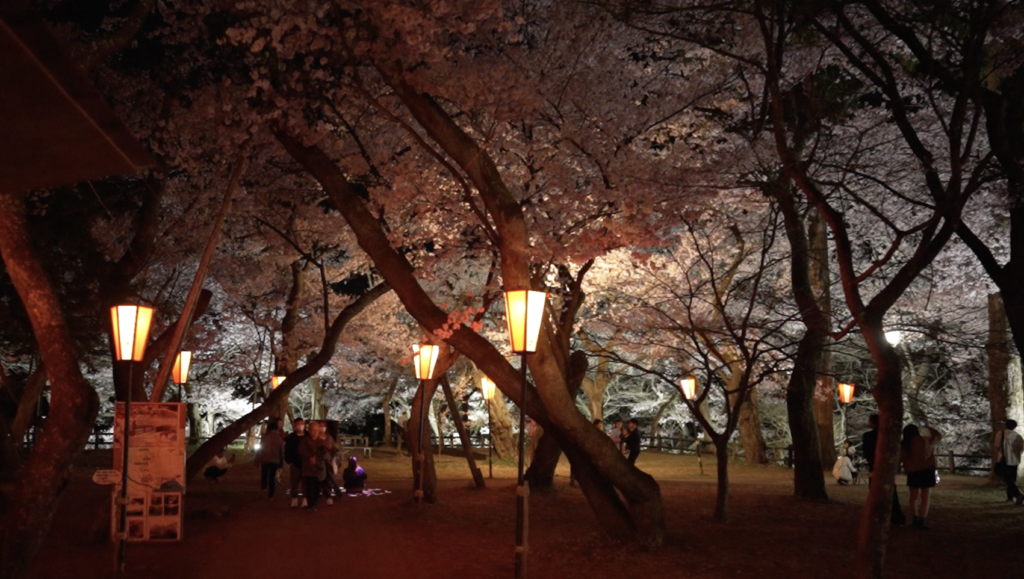
Photo: Minami Kuruwa (South Bailey).
The illuminated cherry blossoms create a magical atmosphere.
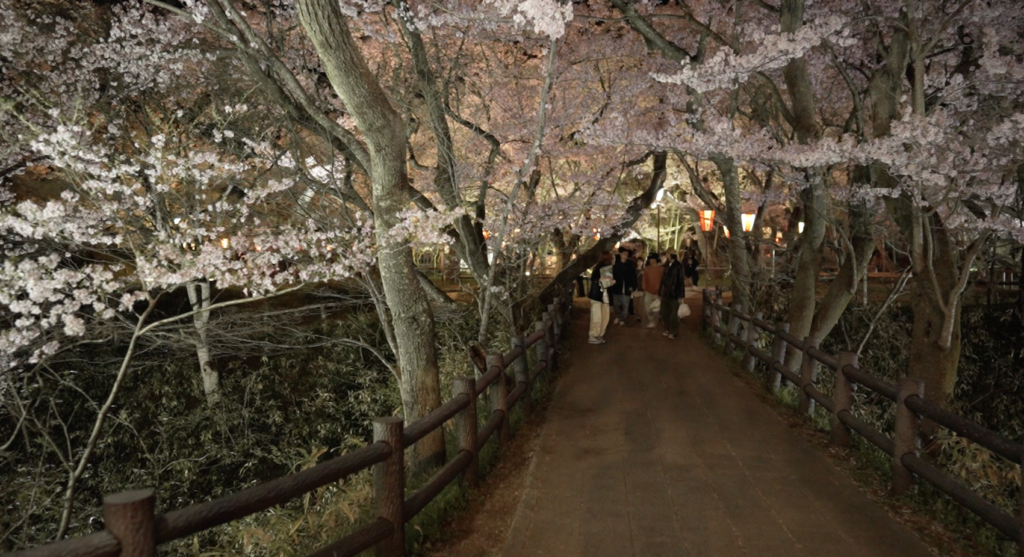
Photo: Crossing the bridge to Honmaru.
This bridge leads from Minami Kuruwa to the main bailey.
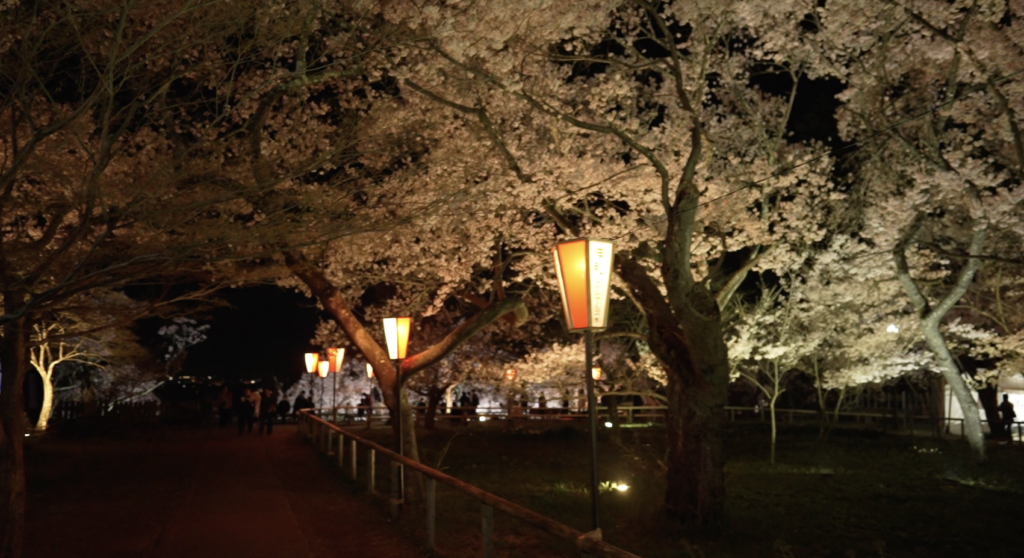
Photo: Honmaru (Main Bailey).
The cherry blossoms look completely different after dark.
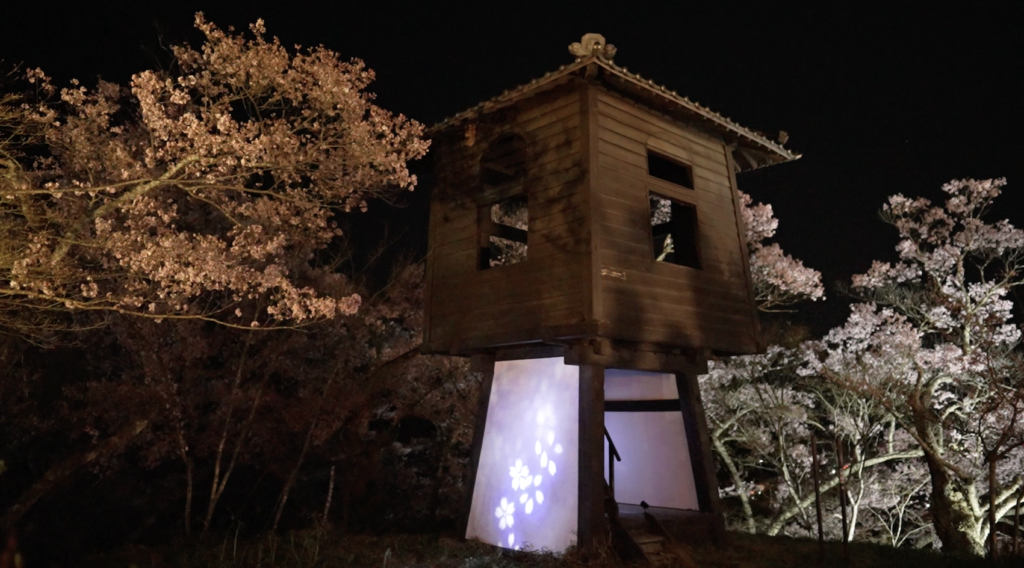
Photo: Taiko Yagura.
Moving cherry blossom projections are displayed on the tower. Be sure to watch the video to see the full effect.
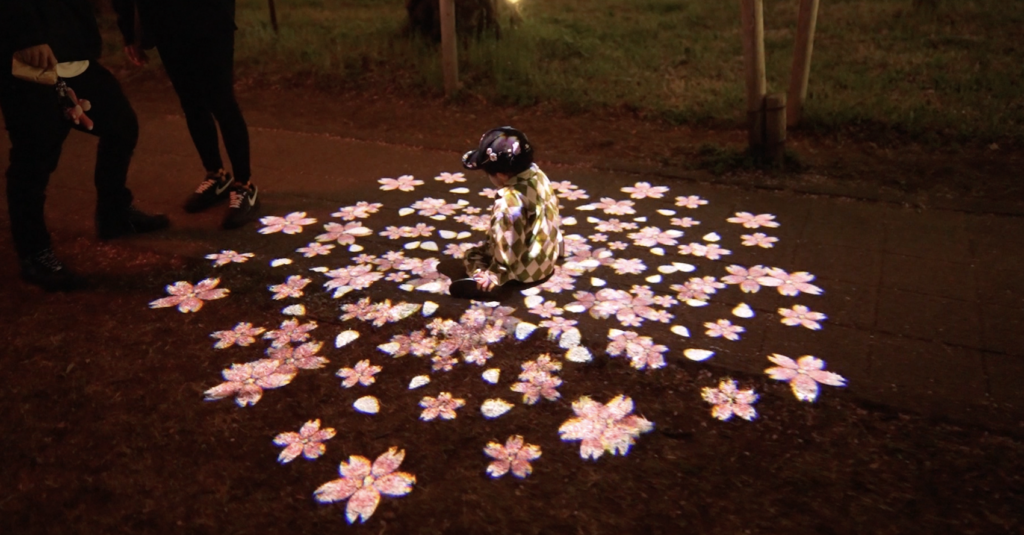
Photo: Another cherry blossom projection.
The animated lighting is much better in motion than in photos.
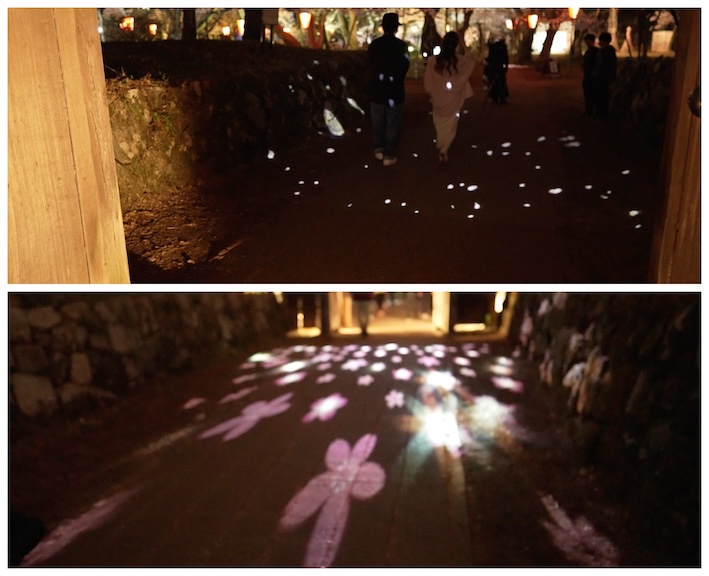
Photo: Tonyamon Gate.
The projected patterns change throughout the evening.
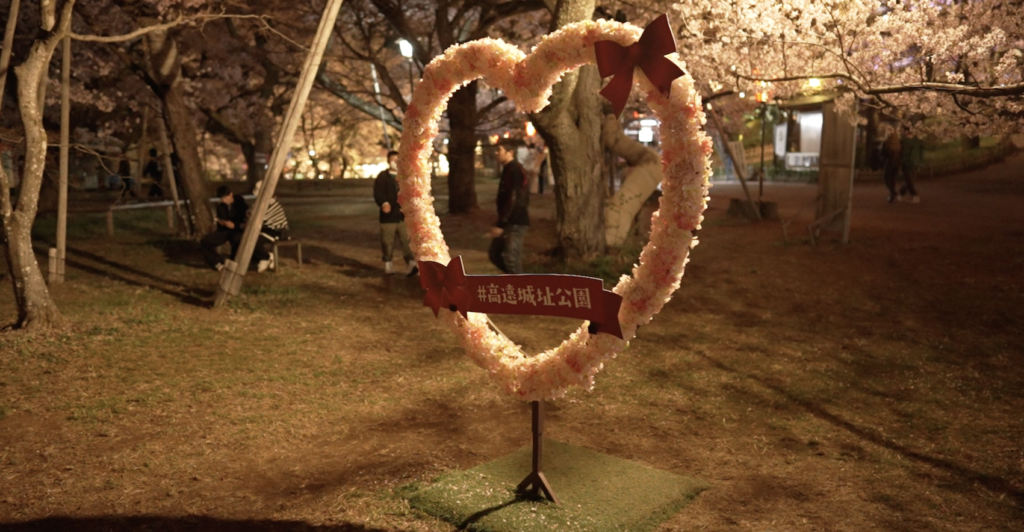
Photo: Heart-shaped photo spot.
A popular place for couples to take photos.

Photo: Returning to the North Gate.
Walking around the park at night took about 40 minutes.
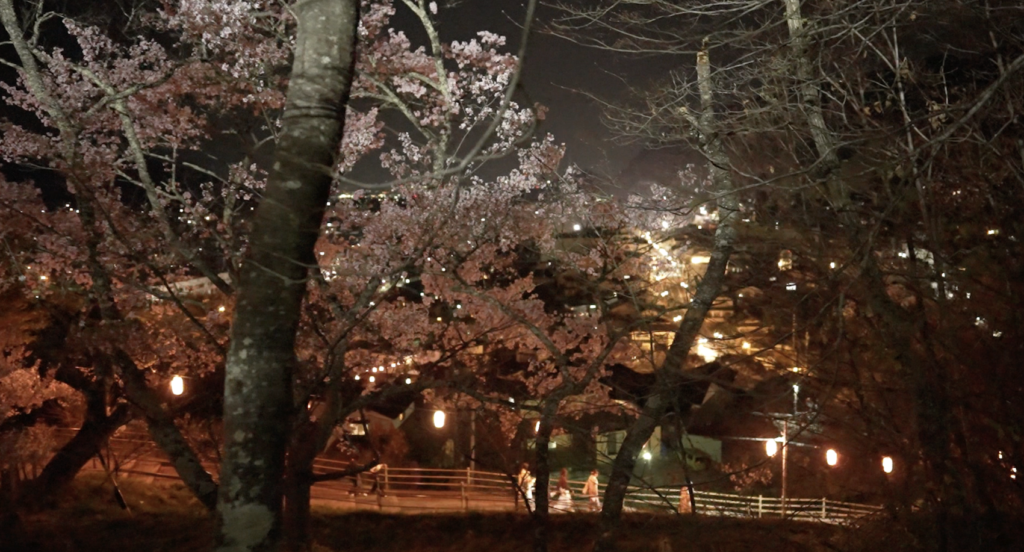
Photo: Walking down Jibun-zaka.
The lights of the castle town look beautiful from here.
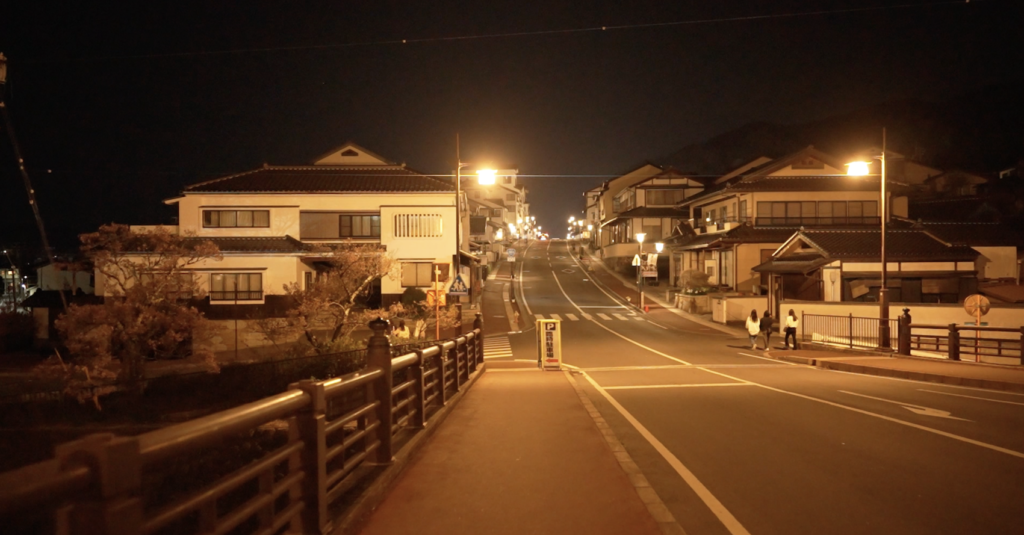
Photo: The quiet castle town at night.
The peaceful walk back is the perfect ending to the visit. Returning to P1 took about 1 hour and 20 minutes in total.
Local Food
Takato Manju
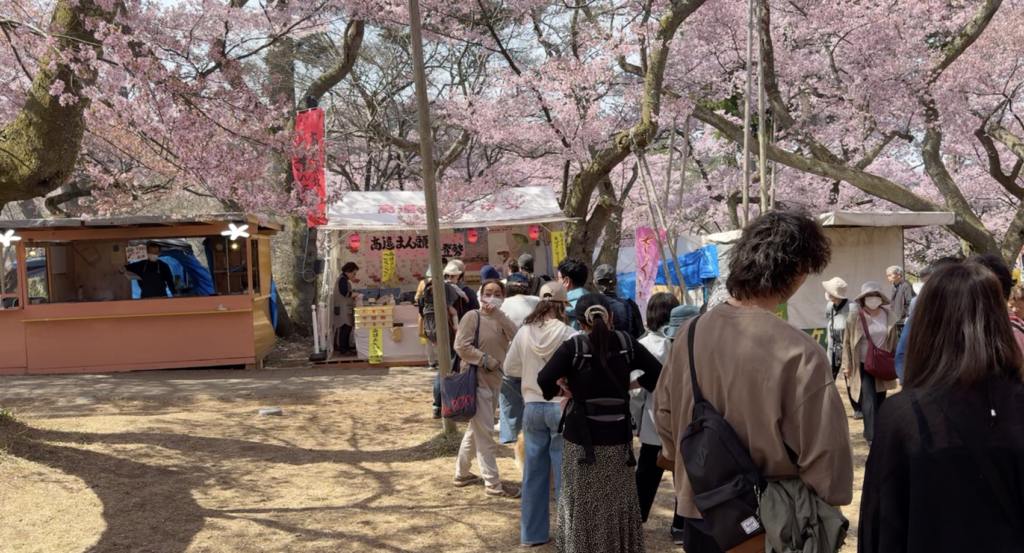
Photo: There are many food stalls inside the park, and plenty of restaurants nearby, so finding something to eat is easy. If possible, I recommend trying some local specialties.

Photo: The line was for the sakura mochi stall, while I could buy Takato Manju without waiting. It tasted like a simple traditional Japanese steamed bun.
Takato Soba (Irinoya)
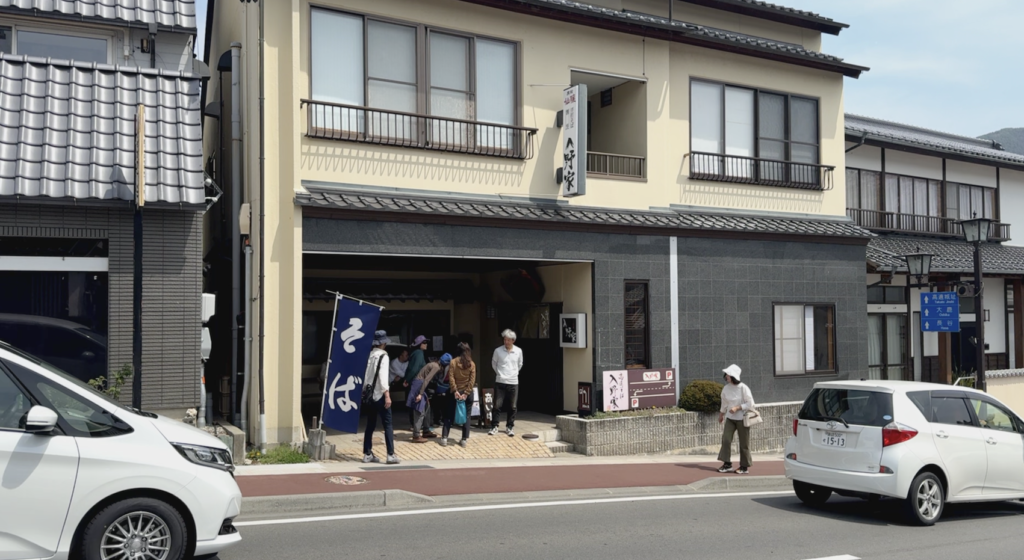
Photo: This is Irinoya, a popular soba restaurant along National Route 361. Around lunchtime during the cherry blossom festival, long lines are common.
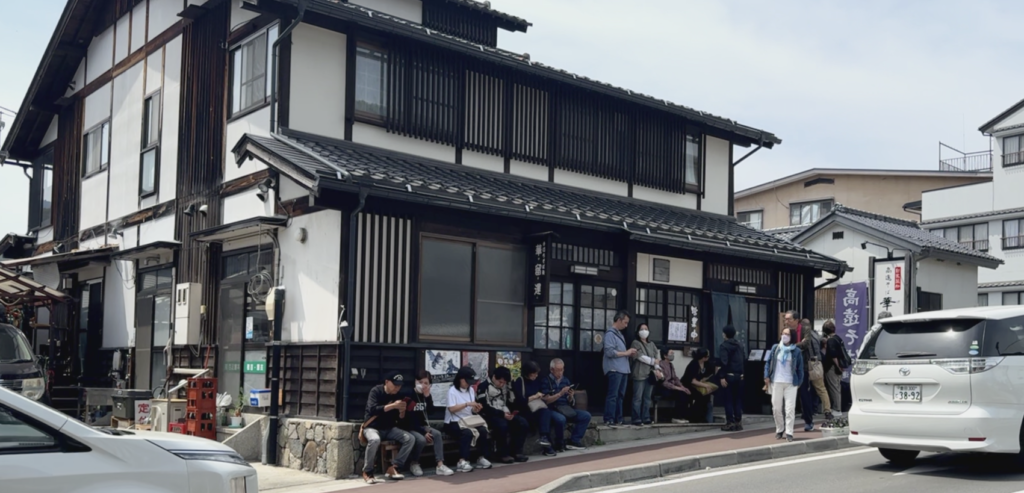
Photo: Another popular restaurant, Karuun, also attracts long queues. If you want to avoid waiting, arrive before the official opening time. Some restaurants open earlier than their listed business hours during the festival.
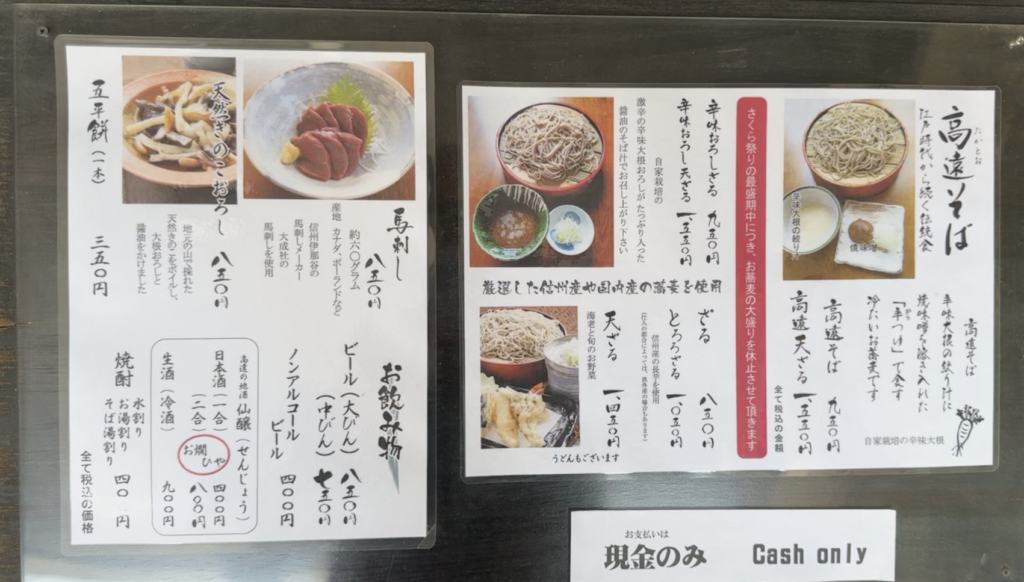
Photo: Here’s the menu at Irinoya. I ordered horse sashimi and Takato Tenzaru Soba.
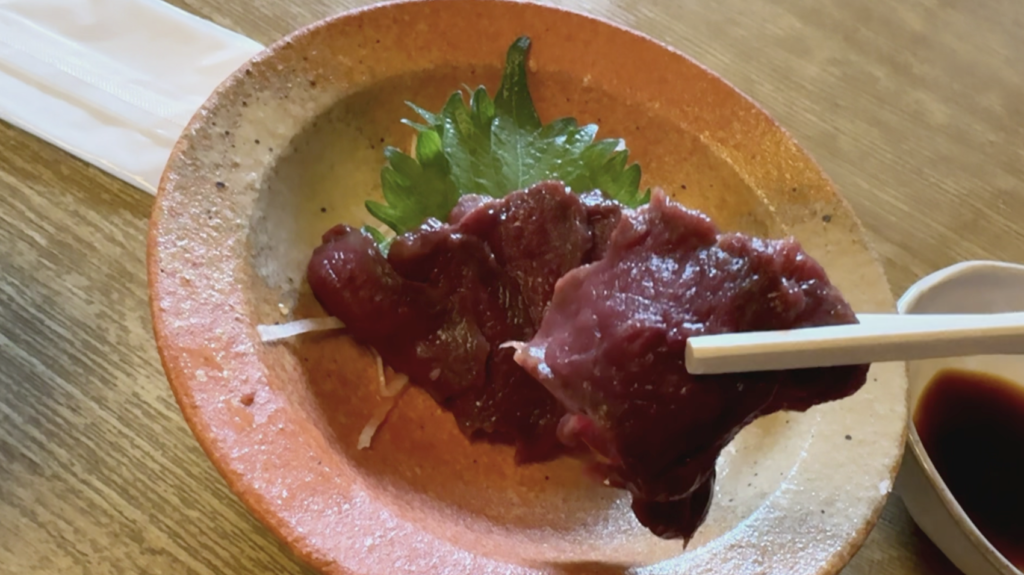
Photo: The horse sashimi was slightly expensive, but the quality was excellent.
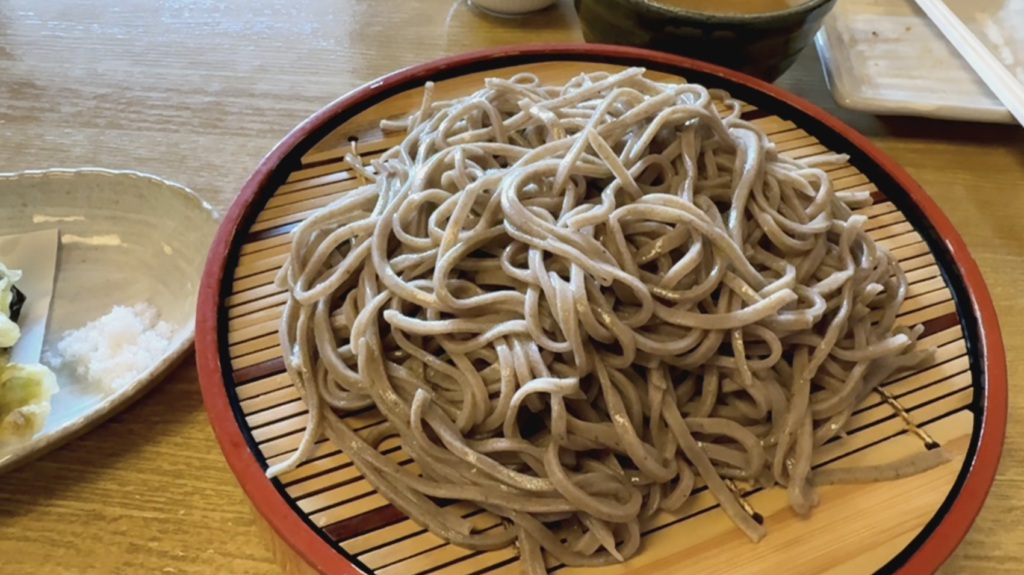
Photo: This is Takato Soba. It looks like ordinary cold soba, but the way it’s eaten is unique.

Photo: Takato Soba is served with a special dipping sauce made from grated spicy daikon juice mixed with roasted miso.
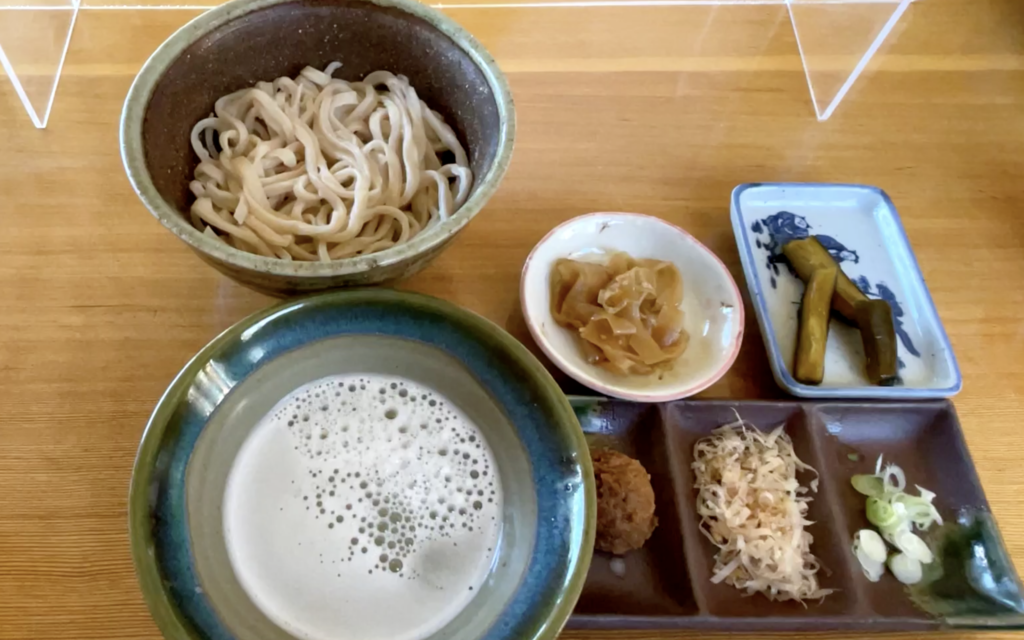
Photo: A similar local dish can be found in Sakaki Town, Nagano, where “Oshibori Udon” is also eaten with spicy grated daikon and miso.
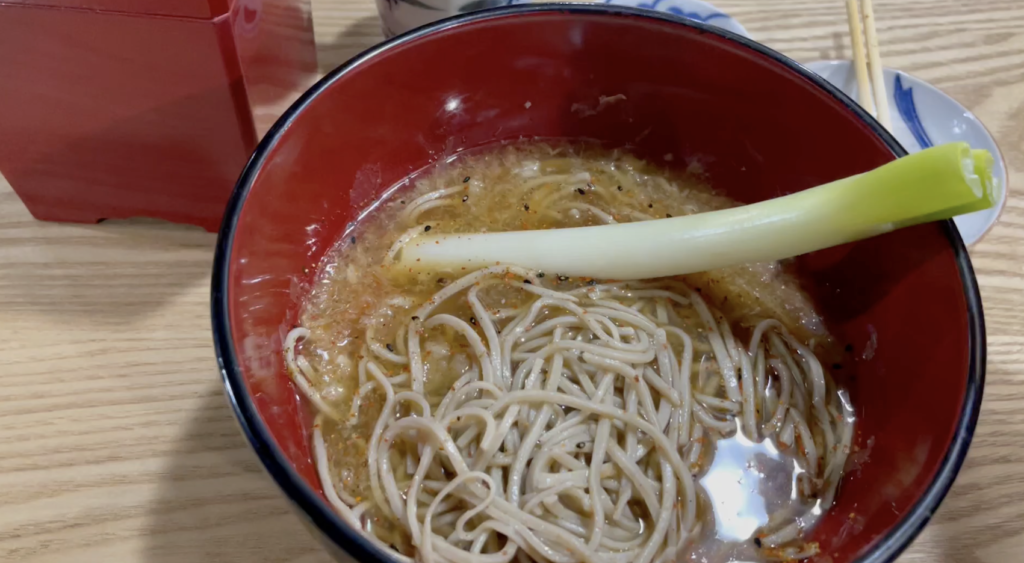
Photo: In Ouchi-juku, Fukushima, Misawaya serves Takato-style soba eaten with a whole green onion instead of chopsticks. This tradition spread after Lord Hoshina Masayuki and many Takato retainers moved to the Aizu region.
Related Historic Sites
Tamonsan Kyuhouji Temple
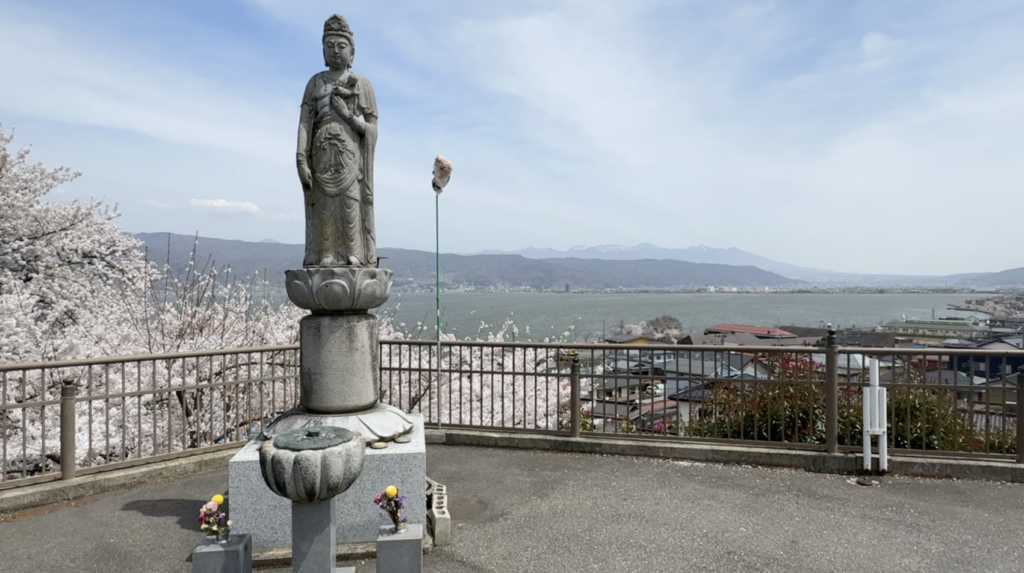
Photo: Located in nearby Okaya City overlooking Lake Suwa, Tamonsan Kyuhouji Temple is worth visiting if you have extra time.
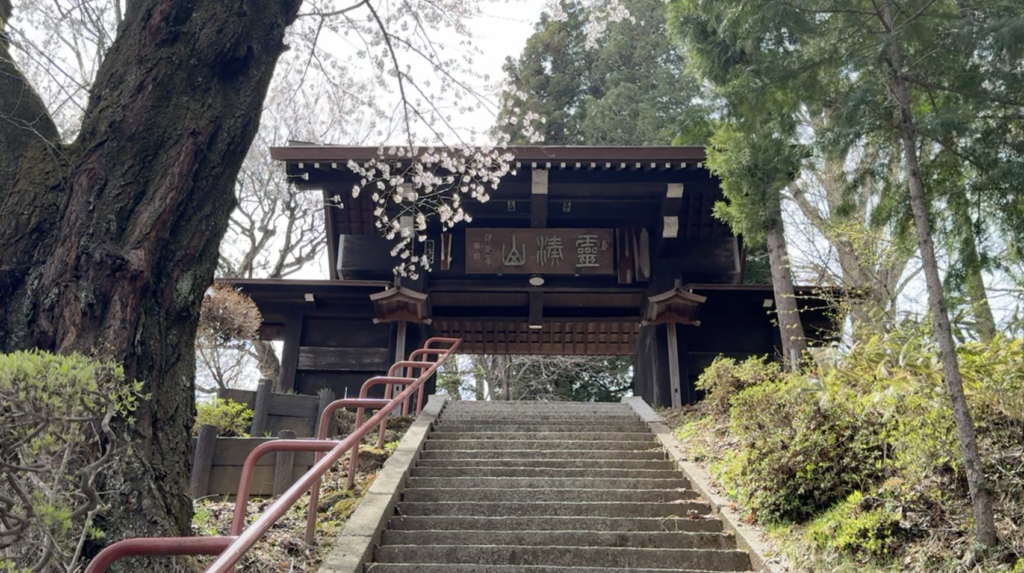
Photo: The temple gate was relocated from Takato Castle’s former rear gate (Karamete Gate), making it an important historical structure.
More Cherry Blossom Spots in Ina
Ina Park
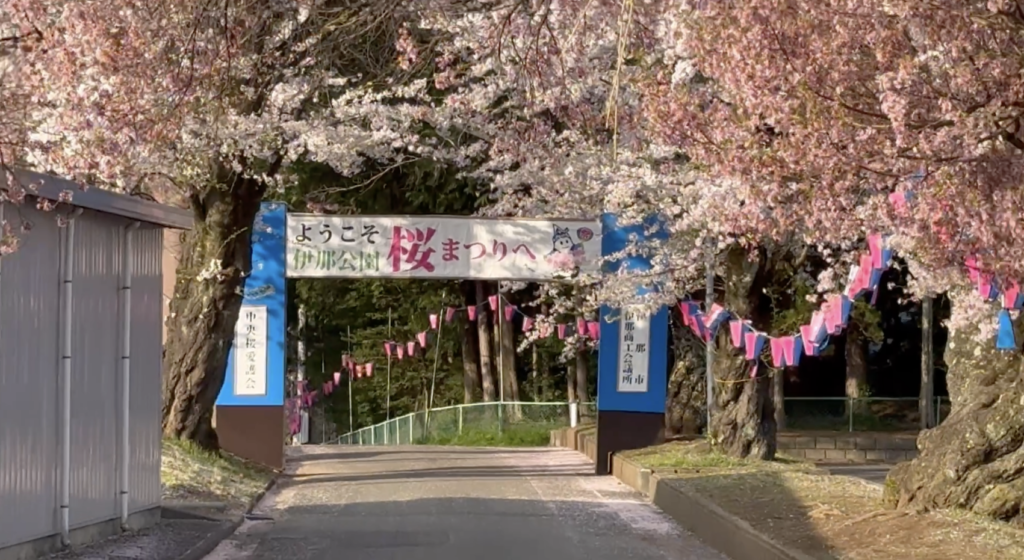
Photo: Takato’s cherry blossoms are world-famous, but Ina City has other beautiful cherry blossom spots as well.
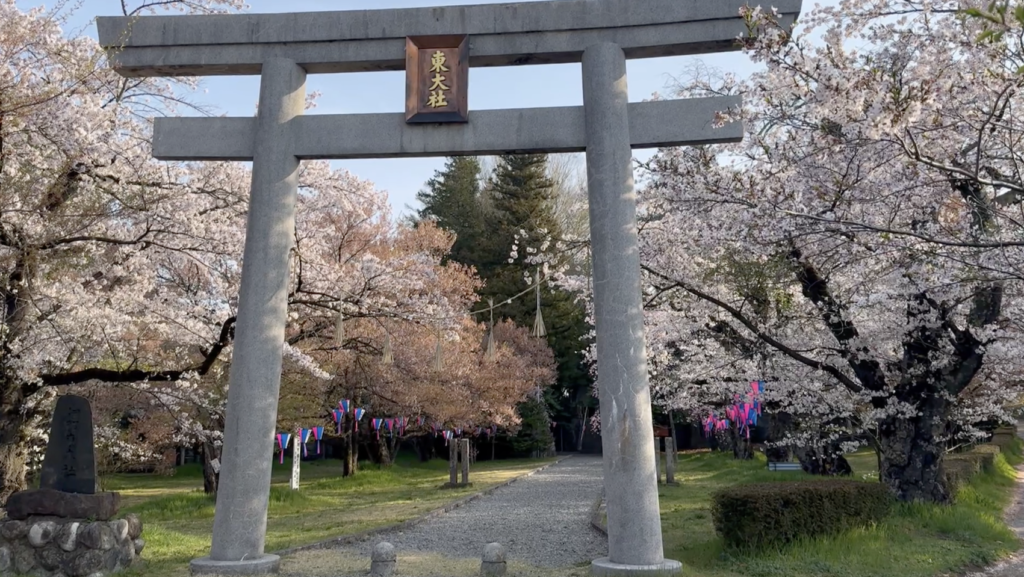
Photo: Ina Park is one of them. Ina is known as the town of cherry blossoms, soba, and stone craftsmanship. Yoshino cherry trees bloom beautifully here, and you can also see the rare green-flowered Gyoiko cherry trees later in the season.
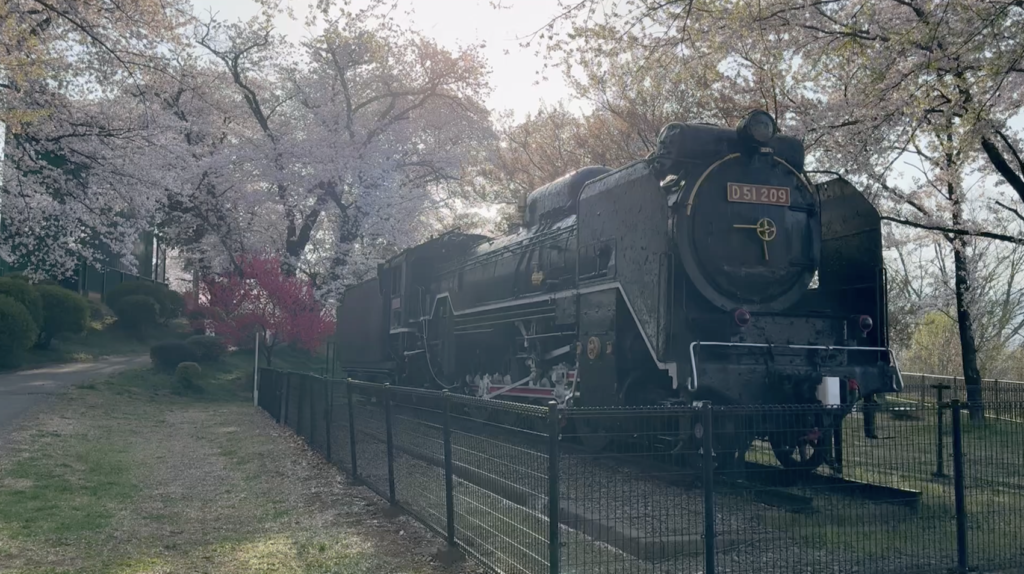
Photo: Does this steam locomotive framed by cherry blossoms look familiar? Cherry blossom enthusiasts may recognize this famous composition.
YouTube Video
I’ve also uploaded a YouTube video of this visit. Some scenery is easier to appreciate in motion, so feel free to watch it if you’re planning a trip.
Visit Information
Number of Visits: 2
Last Visited: April 15, 2024
All photos in this article were taken during my own visit. Parking conditions, walking times, and travel tips are based on firsthand experience and may vary depending on the season and time of day.
コメント