Everything You Need to Know Before Visiting Kitakami Tenshochi: Access, Parking, Walking Time, Admission, Pets, and Nearby Attractions
What is Kitakami Tenshochi?
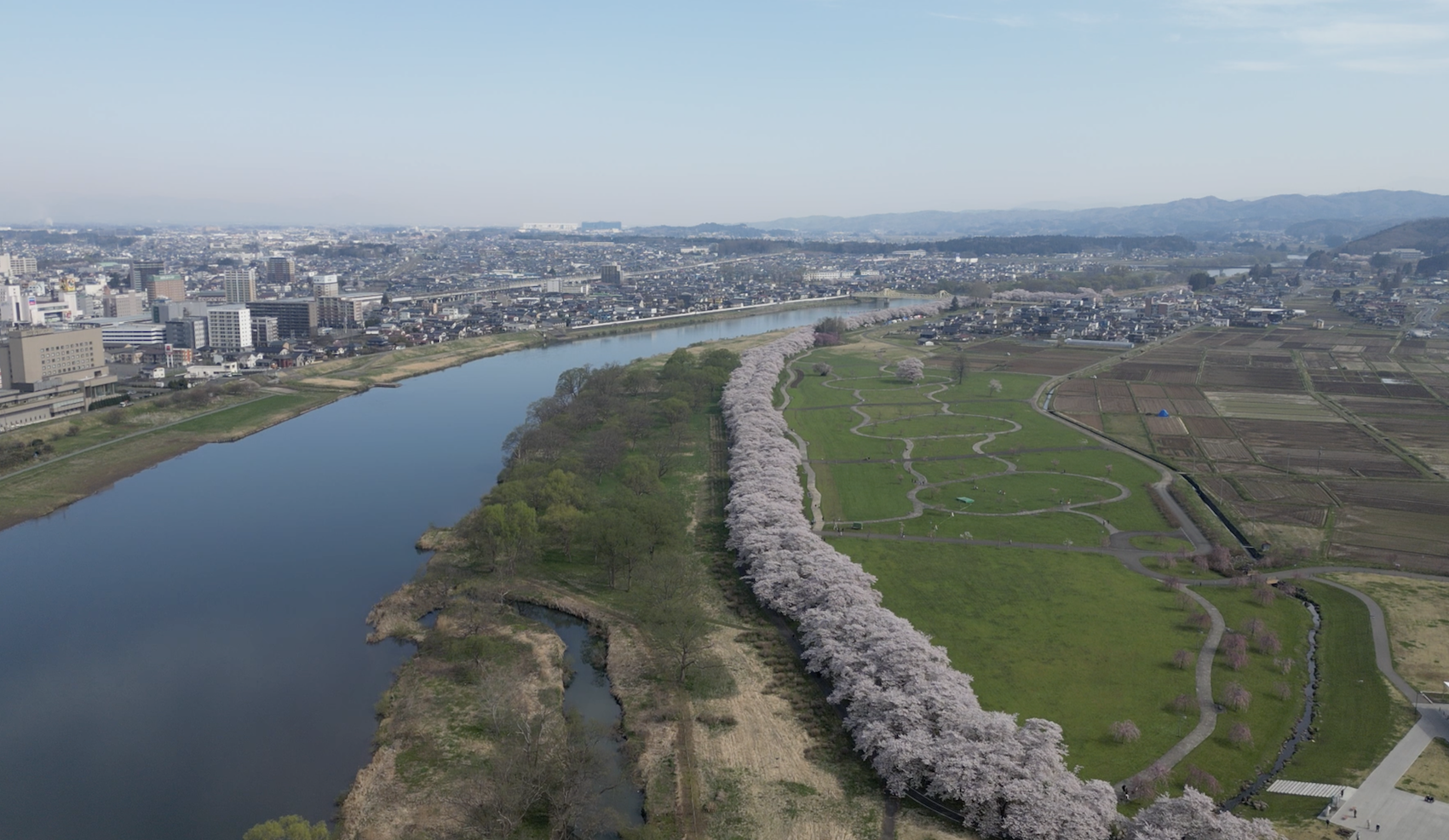
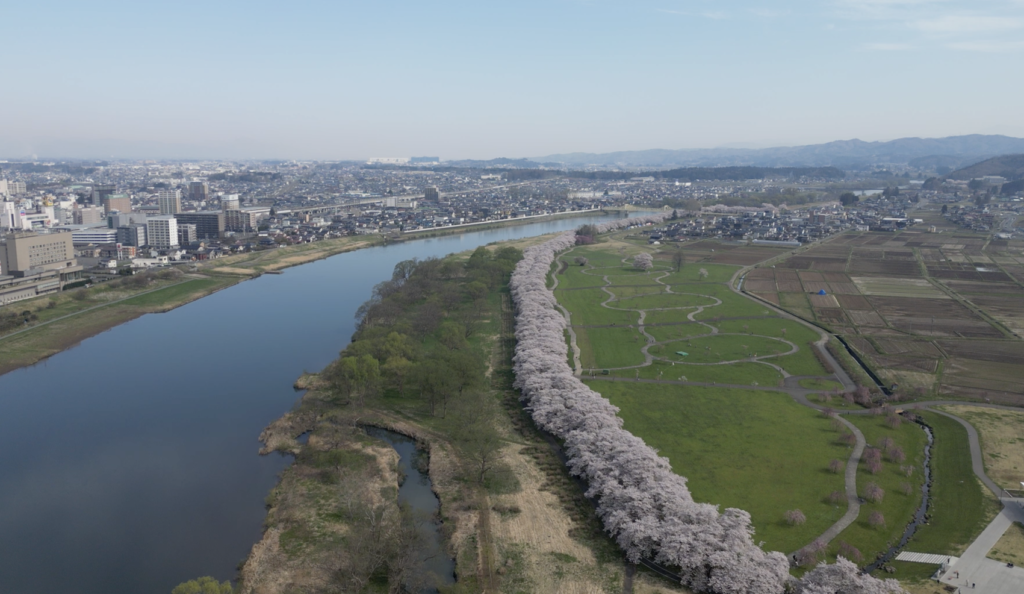
Located in Kitakami City, Iwate Prefecture, Kitakami Tenshochi is one of Japan’s most spectacular cherry blossom destinations.
The park has been selected as one of Japan’s Top 100 Cherry Blossom Spots and is also considered one of the Three Great Cherry Blossom Spots of Michinoku, together with Hirosaki Park in Aomori Prefecture and Kakunodate Samurai Residences in Akita Prefecture.
Every spring, approximately 10,000 cherry trees from around 150 varieties bloom throughout the park, creating a breathtaking cherry blossom landscape along the Kitakami River.
The highlight of Kitakami Tenshochi is its famous 2-kilometer-long cherry blossom avenue, where visitors can enjoy a peaceful walk beneath a beautiful tunnel of flowers.
Access
Map
Directions & Parking
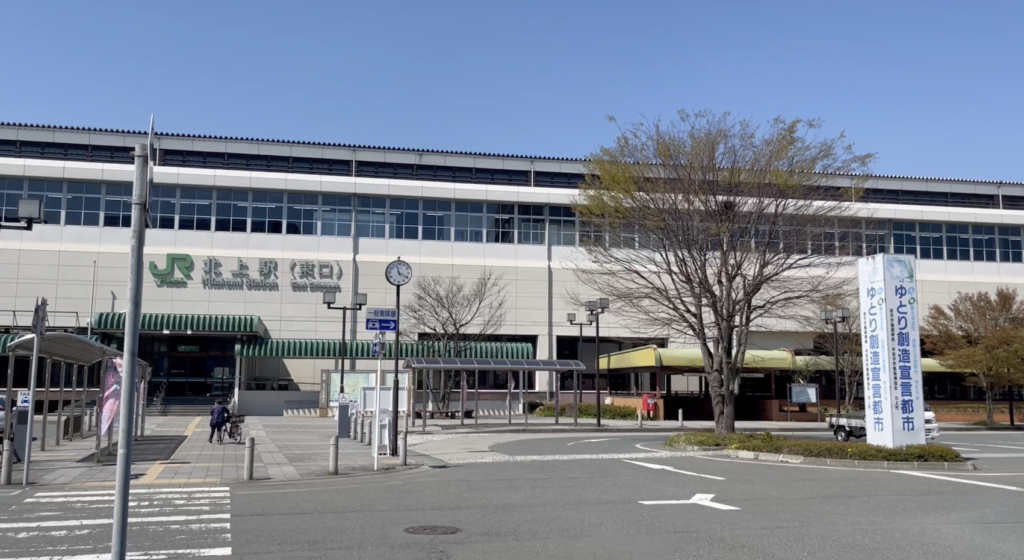
Photo: JR Kitakami Station and Kitakami Tenshochi are only about 200–300 meters apart in a straight line, separated by the Kitakami River. However, since you need to cross the river via Sango Bridge, the actual walking distance is approximately 2–3 km.
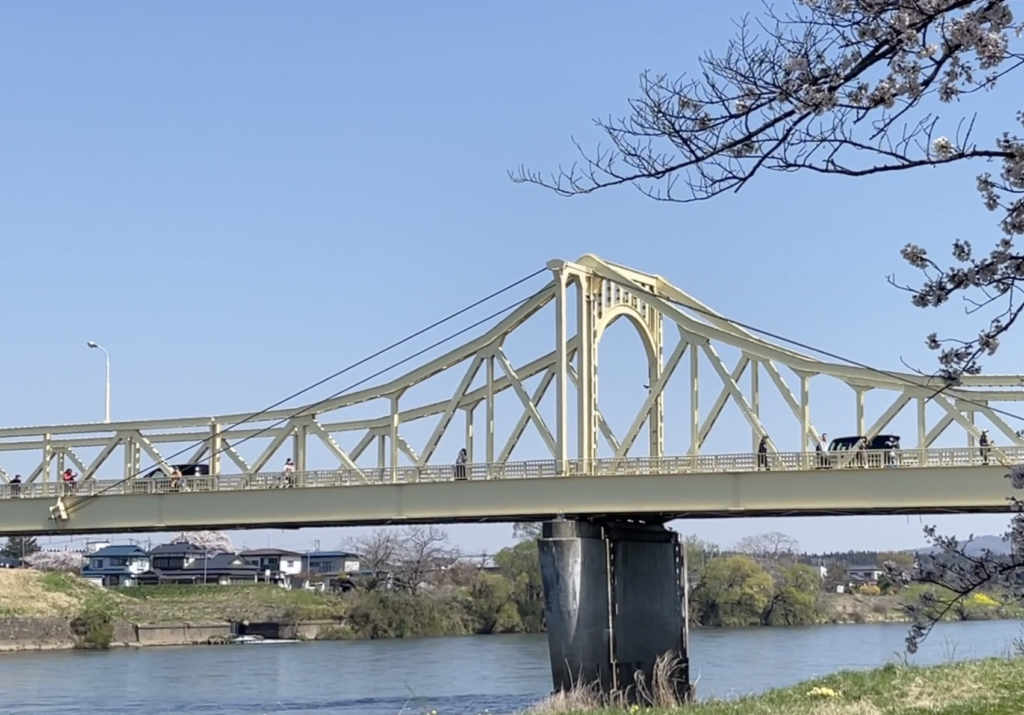
Photo: Although 2–3 km may sound like a long walk, it is still easily walkable. Since Kitakami Tenshochi itself stretches for about 2 km, you’ll reach the park soon after crossing Sango Bridge. The people walking across the bridge in this photo are all coming from JR Kitakami Station.
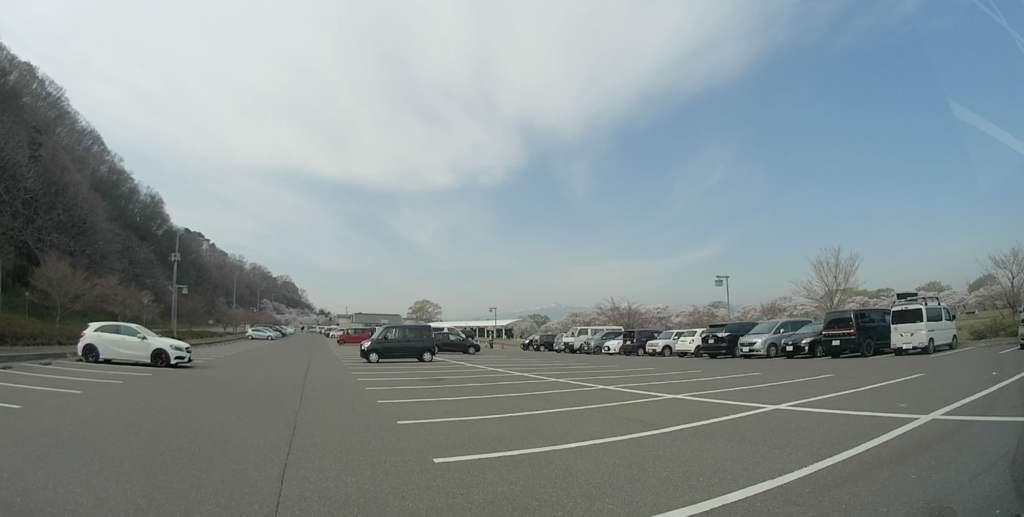
Photo: This is the Third Parking Area at 8:23 AM. Parking costs ¥500. At this time, there were plenty of empty spaces, but by around noon, the parking lot is almost full.
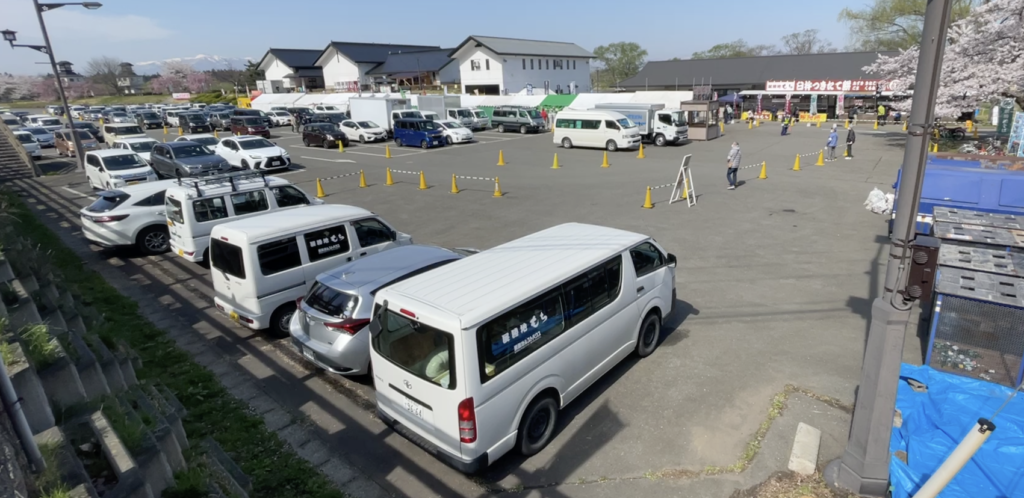
Photo: There is also a First Parking Area in front of the Rest House, but the Third Parking Area has a much larger capacity and is usually the better choice during the cherry blossom season.
Clothing, Walking Time & Admission
Clothing
Kitakami Tenshochi is located at an elevation of just 54 meters, so normal seasonal clothing is all you need. The park’s walking paths are well maintained, and a comfortable pair of sneakers is perfectly suitable.
How Long to Spend
I spent about 1.5 hours walking around the entire park without taking breaks or stopping for food.
If you’re visiting with children or plan to enjoy the food stalls, take photos, or simply relax under the cherry trees, you can easily spend half a day here.
The famous cherry blossom avenue alone stretches for about 2 km, and the park itself is very spacious, so you can enjoy it at your own pace.
Admission
入Admission is free.
Parking is available for ¥500 during the cherry blossom season.
Pets
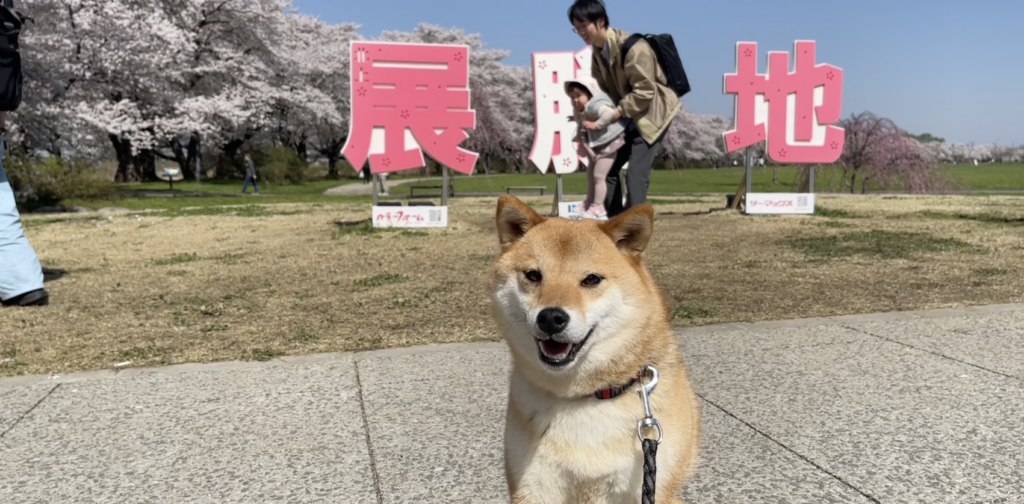
Dogs are welcome at Kitakami Tenshochi. In addition to the beautiful cherry blossom avenue, the park features large open lawns where dogs have plenty of space to walk and play.
Restrooms
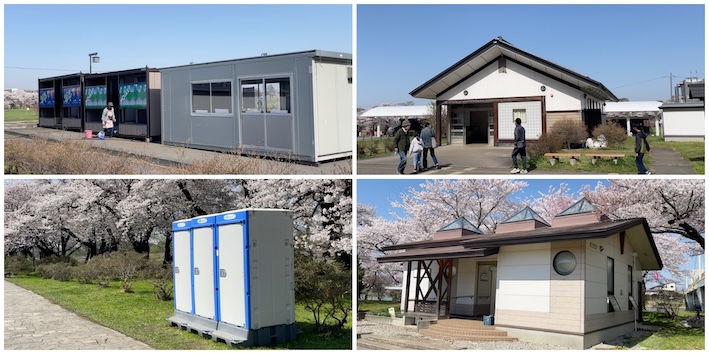
Restrooms are located throughout the park. Additional portable toilets are installed during the cherry blossom season, but the permanent facilities are plentiful, so you shouldn’t have any trouble finding a restroom.
Introduction
Arrive Early to Avoid the Crowds
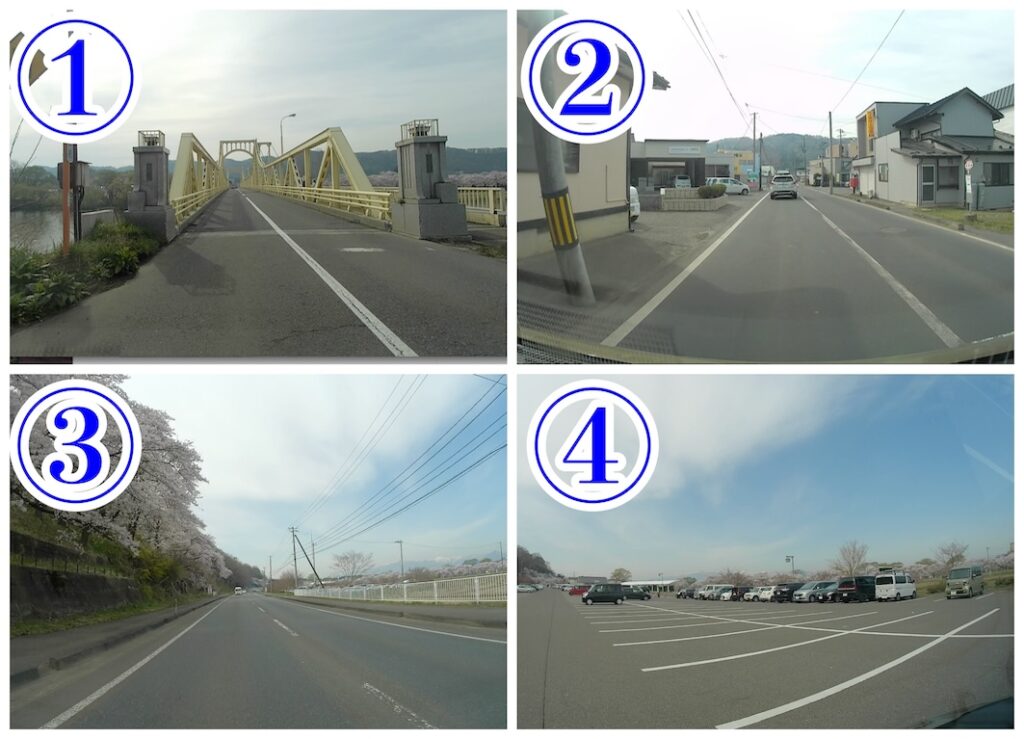
These photos were taken at around 8:20 AM. At this time, there was no traffic congestion at ① Sango Bridge, ② the road after crossing the bridge, or ③ Prefectural Route 14 in front of Kitakami Tenshochi.
The ④ Third Parking Area was also still quiet, allowing me to arrive and park smoothly without any delays.
Traffic Conditions After 11:00 AM
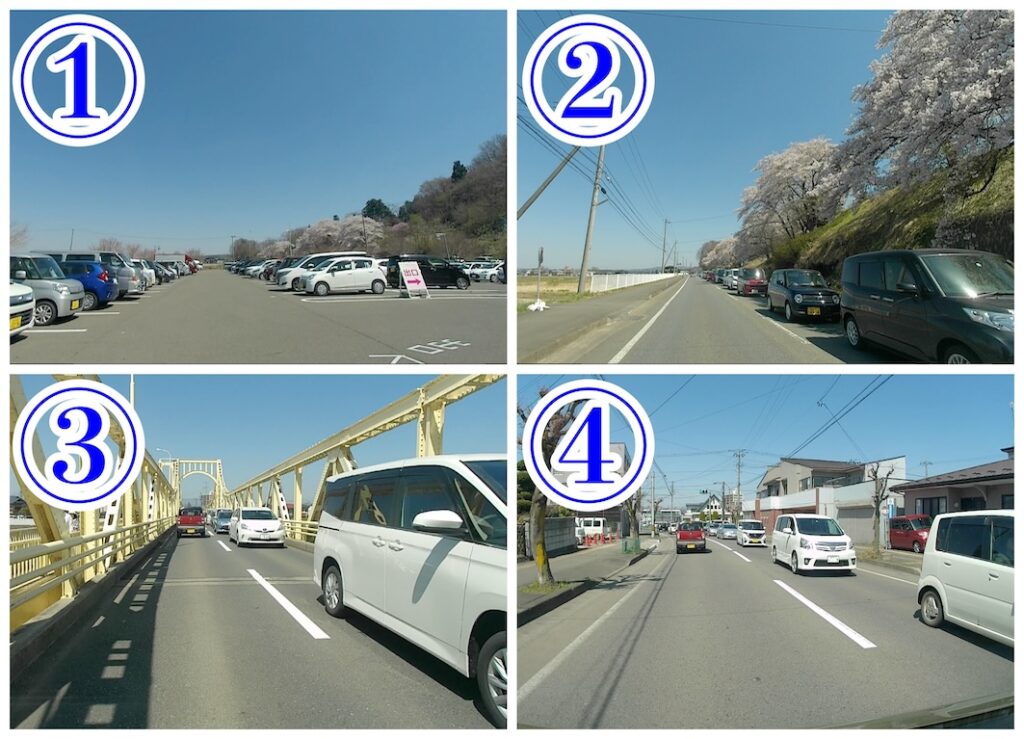
These photos were taken after 11:00 AM. The situation was completely different from the early morning.
① The Third Parking Area was almost full.
② On Prefectural Route 14 in front of Kitakami Tenshochi, cars were lined up in a long queue.
③ Traffic was still congested even near Sango Bridge.
④ The congestion continued even after crossing Sango Bridge and entering the city area.
If you are planning to visit Kitakami Tenshochi during cherry blossom season, arriving early in the morning is essential.
Traffic jams can stretch for several kilometers, so I recommend arriving by 10:00 AM at the latest, and ideally around 9:00 AM or earlier.
The traffic situation shown in my video is much worse than what photos can show. To avoid spending your valuable travel time stuck in traffic, try to arrive as early as possible.
Exploring Kitakami Tenshochi
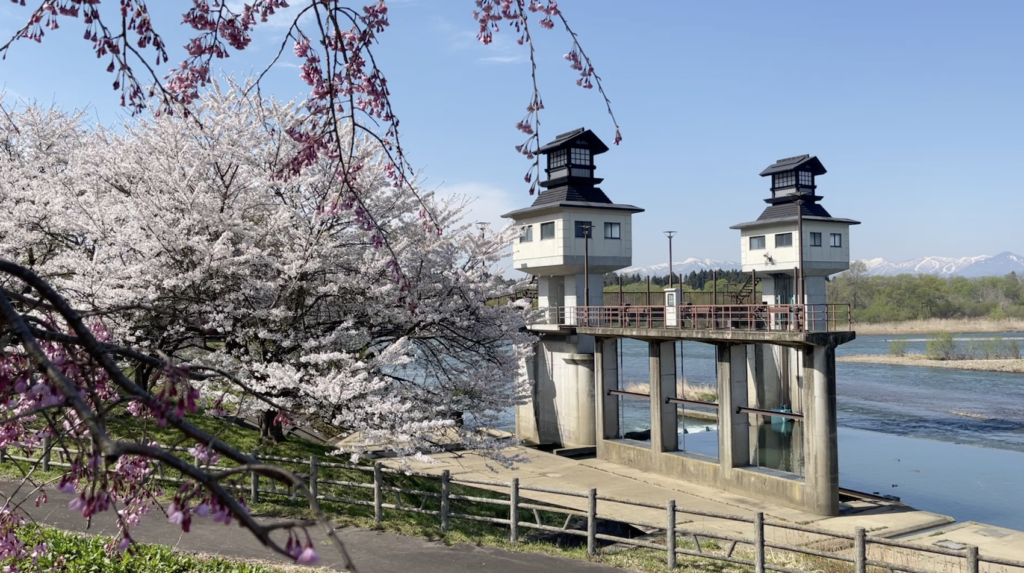
Photo: Let’s begin exploring from the southern end of Kitakami Tenshochi.
Located near the southern edge of the park is the Tachibana Headworks, the intake facility for the Ozeki Irrigation Canal.
While Kitakami Tenshochi is recognized as one of Japan’s Top 100 Cherry Blossom Spots, Tachibana Headworks is also listed among Japan’s 100 Selected Irrigation Heritage Sites.
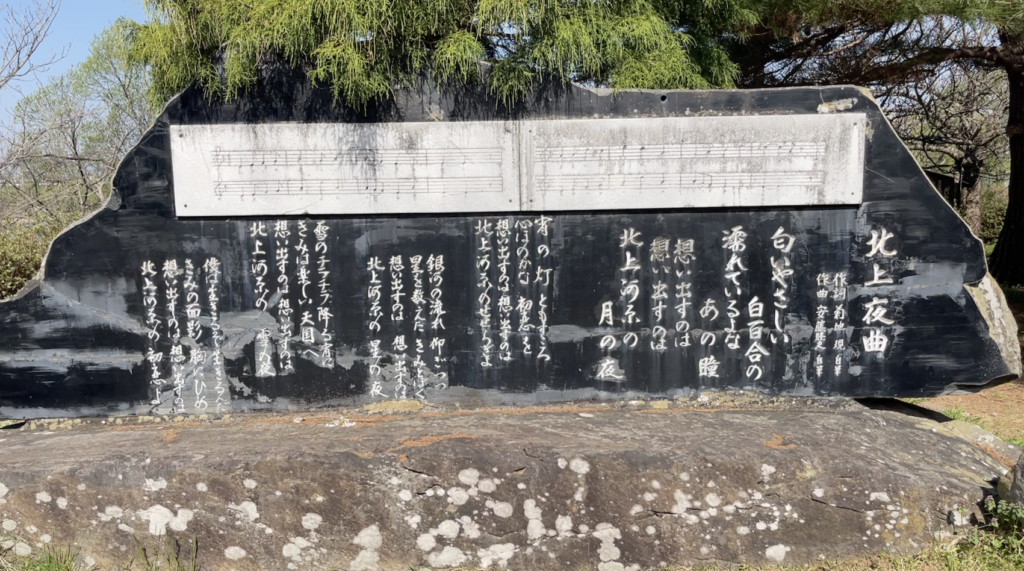
Photo: Located north of the Tachibana Headworks and south of the Rest House is the monument for the famous local song “Kitakami Yakyoku.”
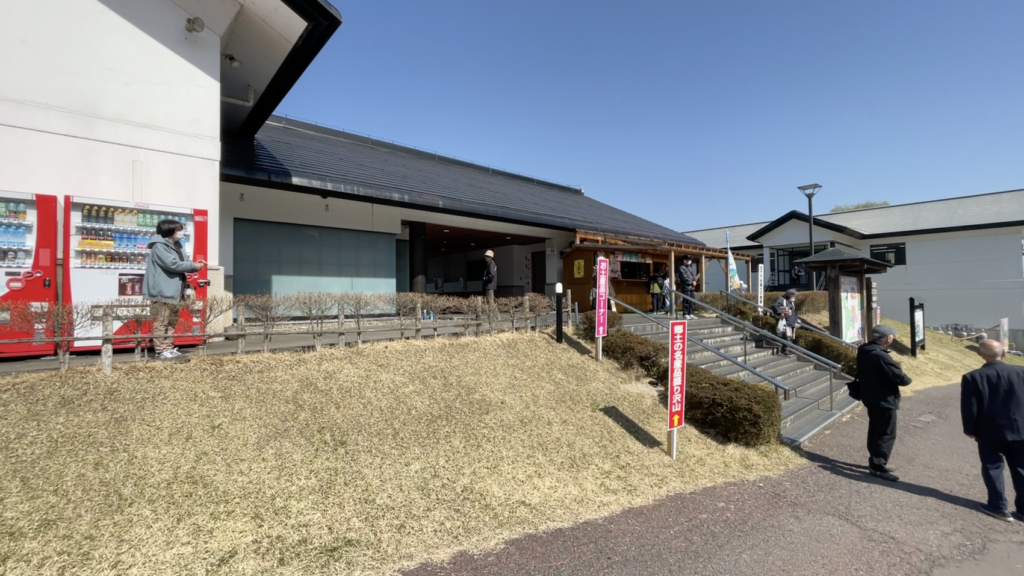
Photo: As shown on the sign, the Rest House offers a souvenir shop and a selection of local specialties from the Kitakami area.
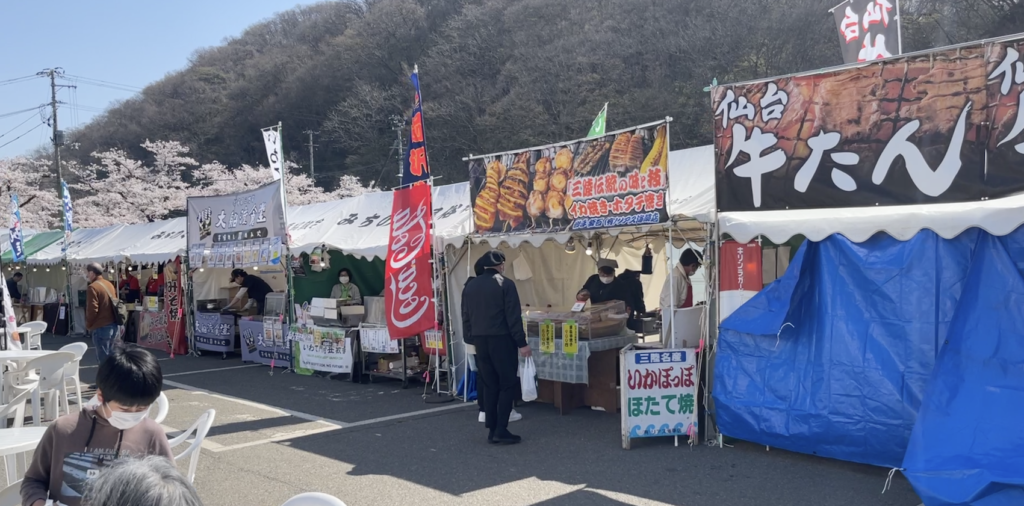
Photo: During the cherry blossom season, food stalls line the area, so visitors will have plenty of options for local snacks and meals.
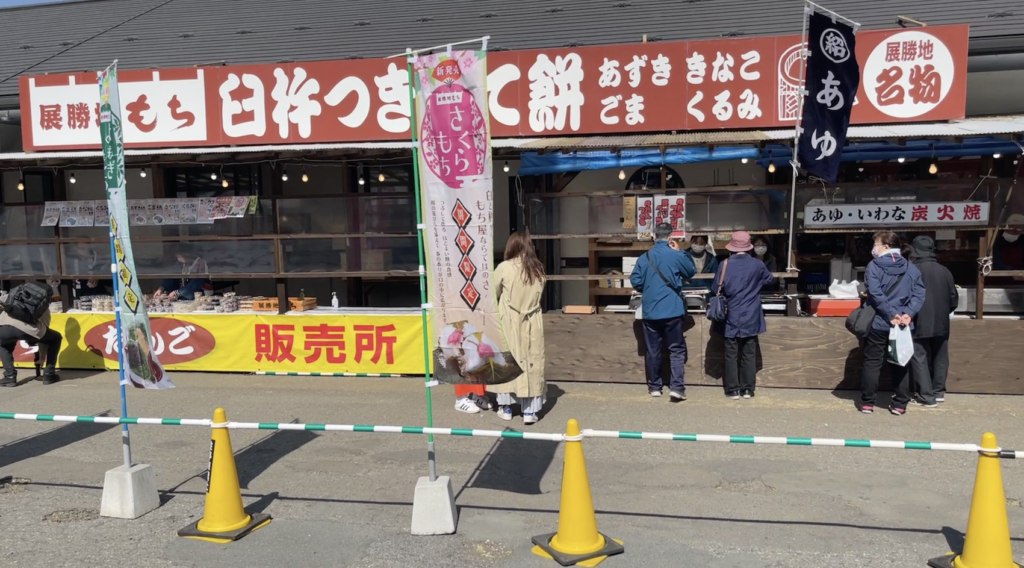
後になって筆者は食べておけばよかったと後悔したんですが、このようなご当地グルメの展勝地もちの販売などもあります。
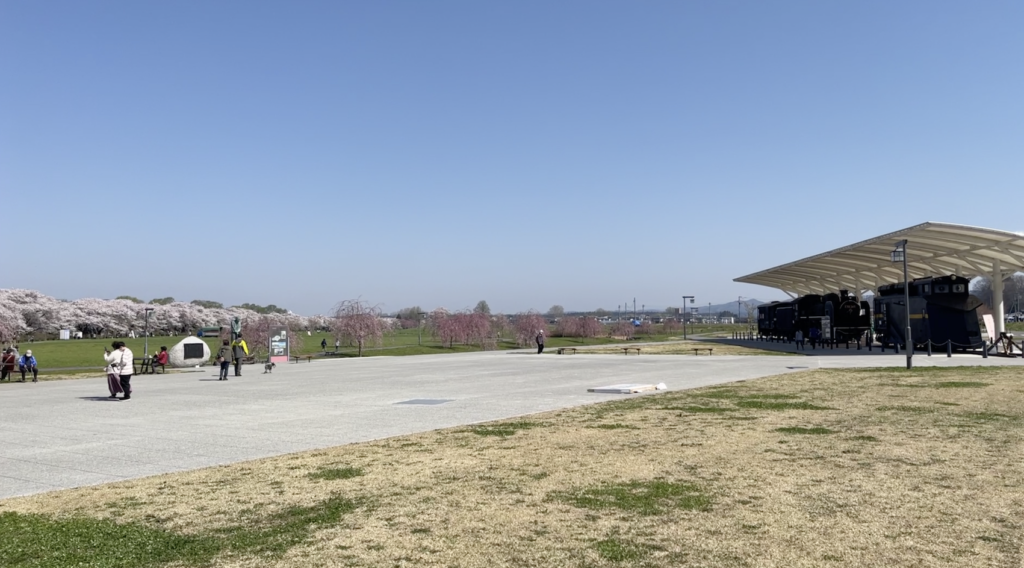
Photo: I later regretted not trying it, but one of the local specialties available here is Tenshochi Mochi, a traditional treat that is popular among visitors.
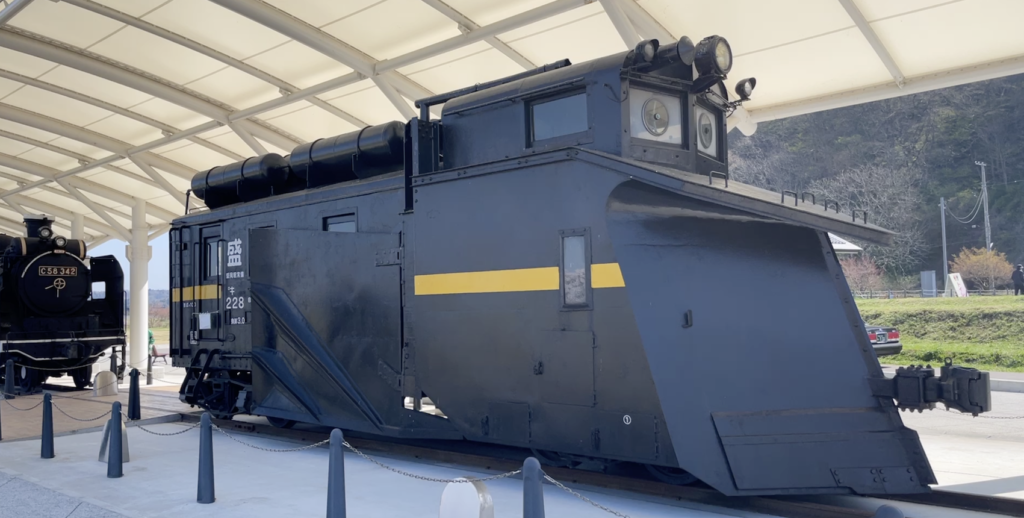
Photo: On the eastern side of the open plaza, you can find a preserved SL steam locomotive on display.
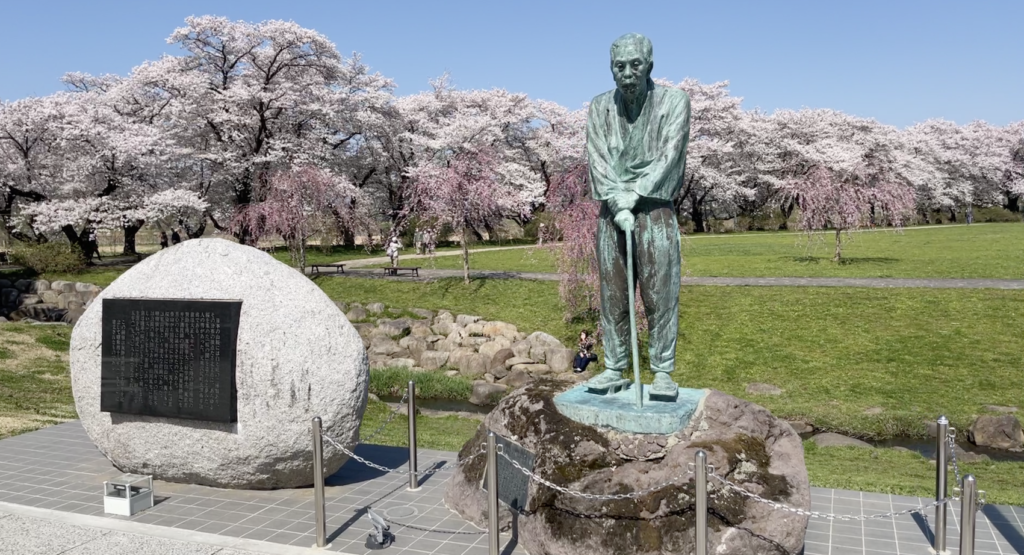
Photo: A statue of Koji Sawafuji, known as the “Father of Kitakami Tenshochi.”
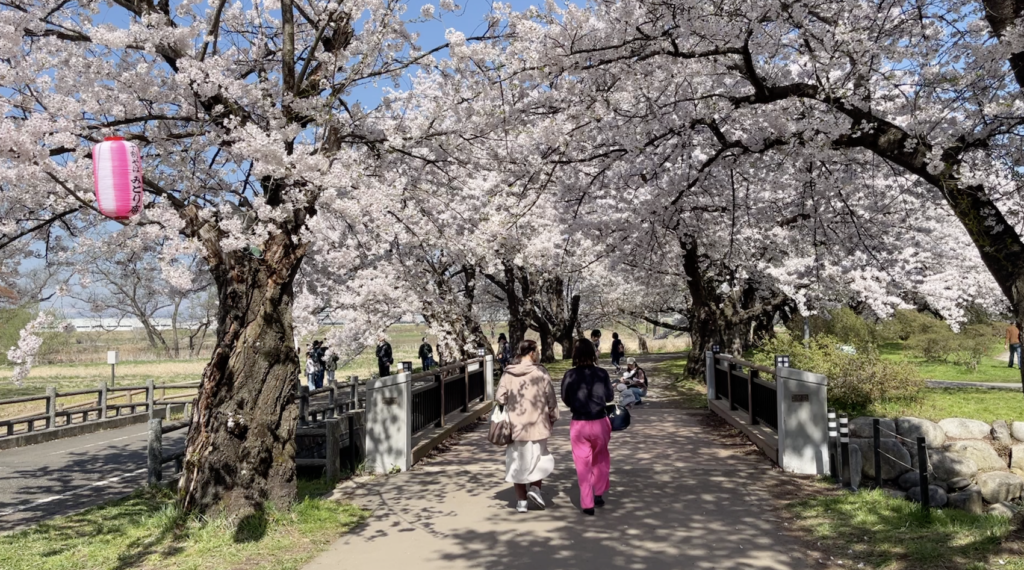
Photo: Now, let’s cross Yoshikiribashi Bridge and head toward the famous cherry blossom avenue.
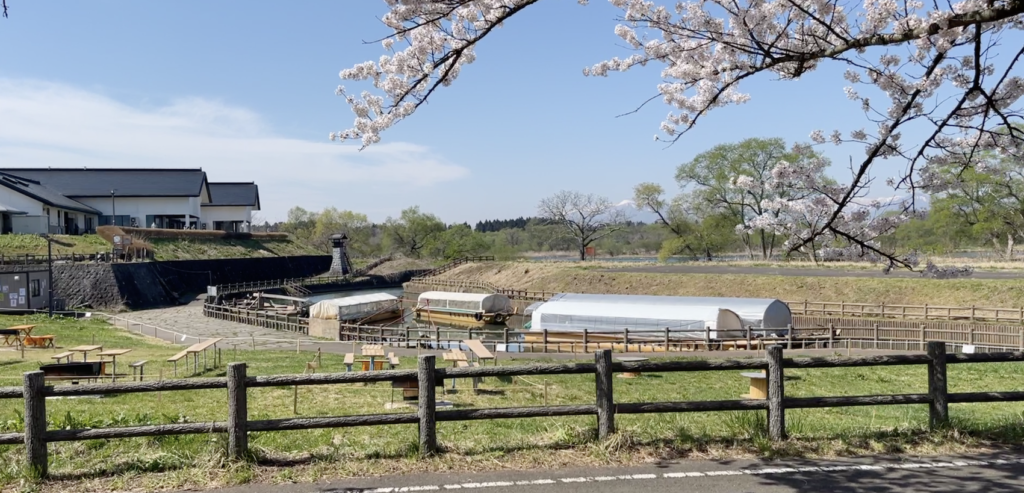
Photo: On the southern side of the bridge, traditional yakata-bune sightseeing boats are moored along the river.
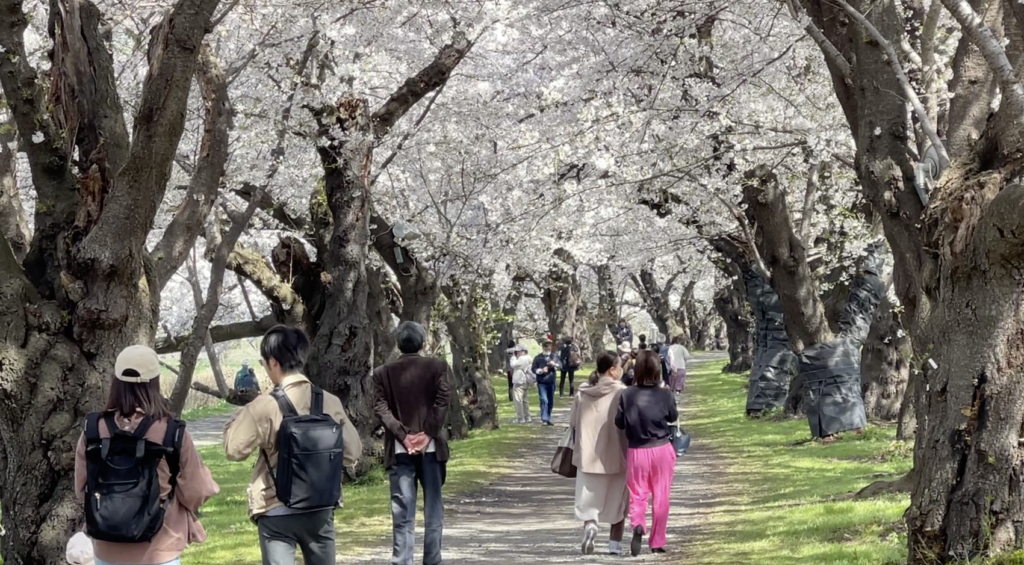
Photo: This spectacular cherry blossom avenue stretches for approximately 2 km all the way to Sango Bridge, creating one of the most impressive sakura views in Kitakami Tenshochi.
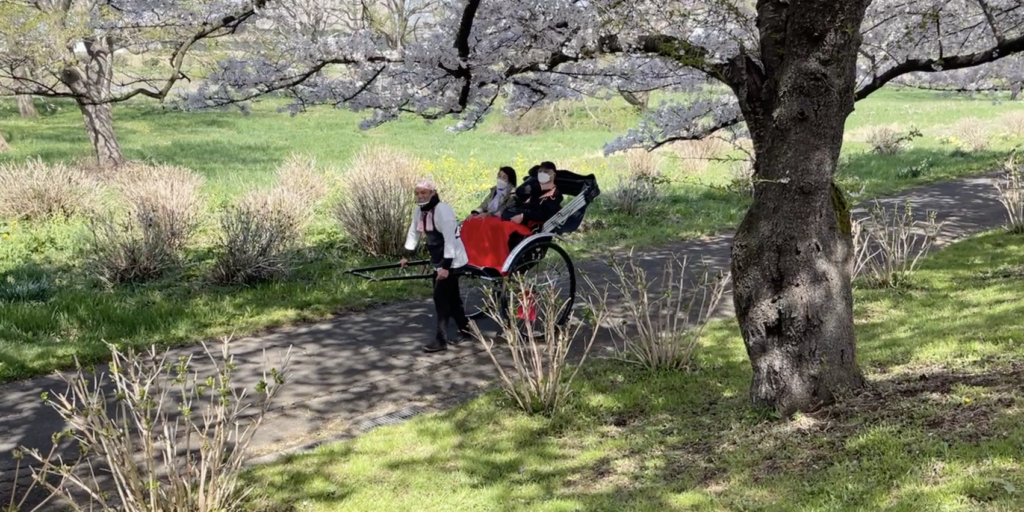
Photo: The road on the western side of the cherry blossom avenue is a cycling path, and visitors can also enjoy rides on traditional rickshaws while viewing the blossoms.
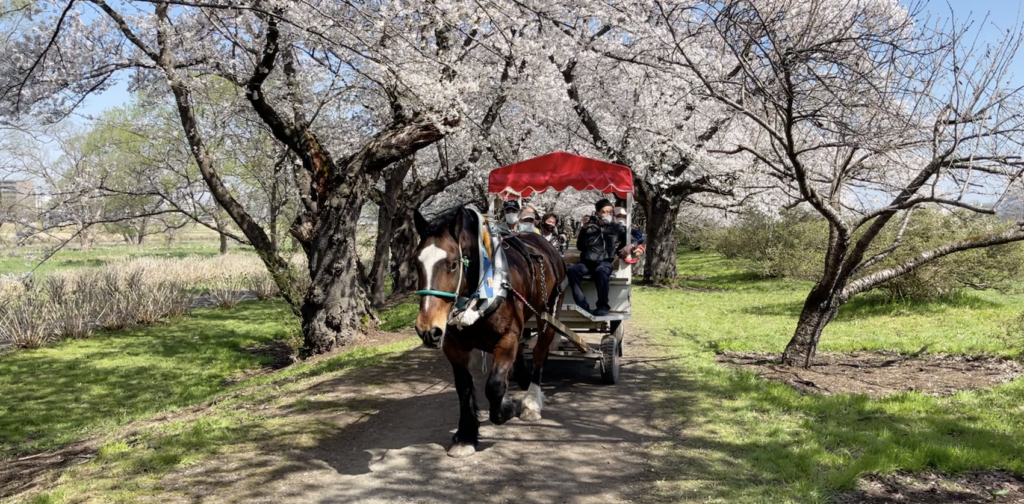
Photo: During the cherry blossom season, horse-drawn carriages occasionally pass through the avenue, adding to the traditional Japanese spring atmosphere.
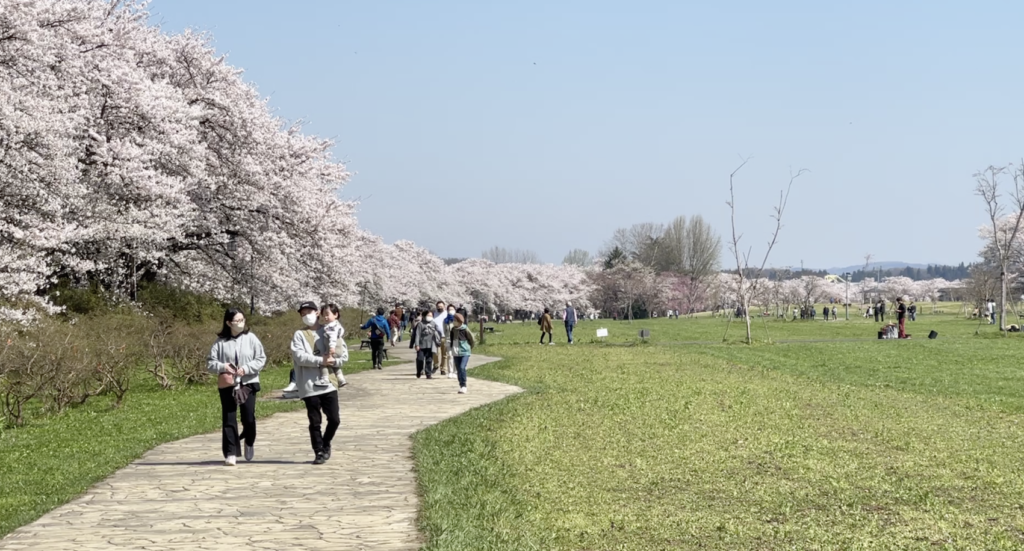
Photo: The path through the cherry blossom avenue is unpaved, but a paved walking path runs along the eastern side. This allows visitors to enjoy the cherry blossoms from both inside and outside the avenue.
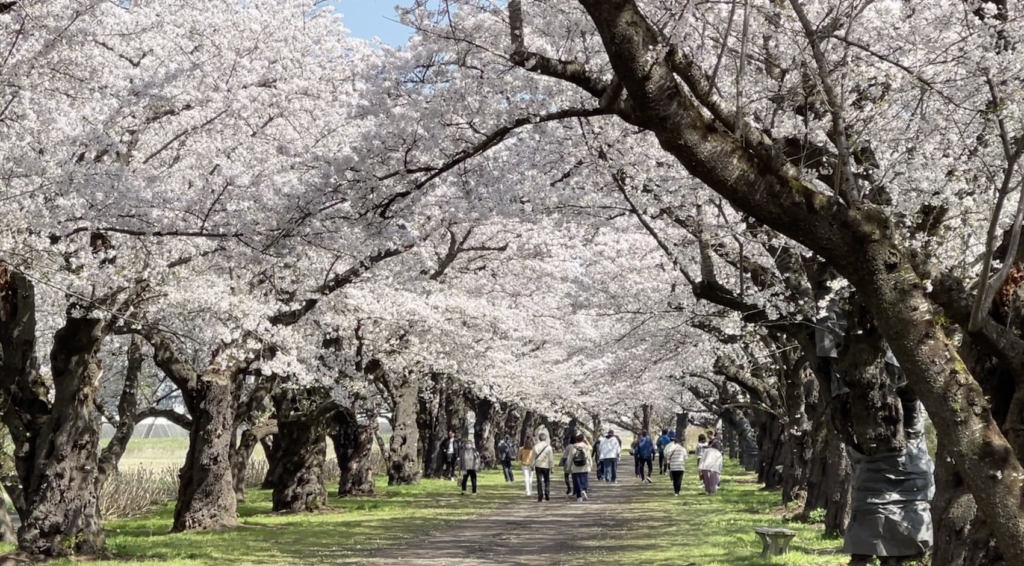
Photo: As you can see from these photos, the cherry blossom viewing areas at Kitakami Tenshochi do not feel overly crowded.
Even when the parking lots are full, the park’s enormous size helps spread visitors out, allowing you to enjoy a relaxed walk among the cherry trees.
Compared with the other two famous cherry blossom destinations of the Michinoku Three Great Cherry Blossom Spots—Hirosaki and Kakunodate—Kitakami Tenshochi feels much more spacious and less crowded.
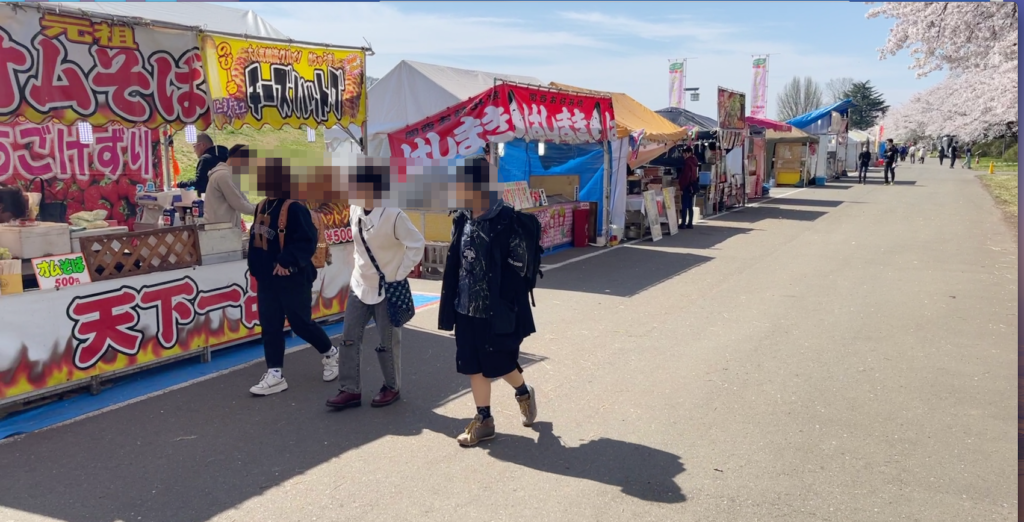
Photo: Food stalls are also lined up near the parking area on the northern side of the park.
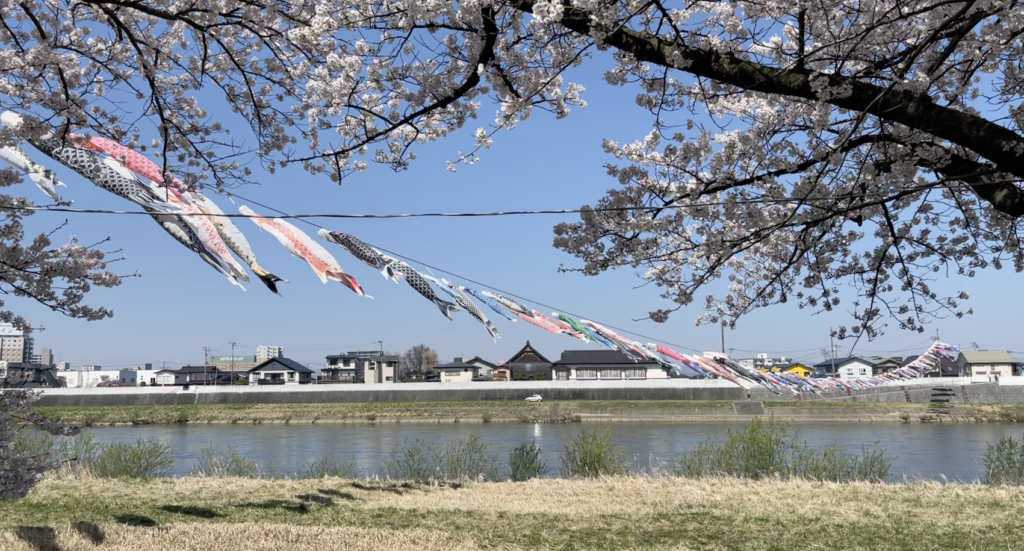
Photo: This is one of the most popular photo spots at Kitakami Tenshochi, where around 300 carp streamers (koinobori) fly above the Kitakami River.
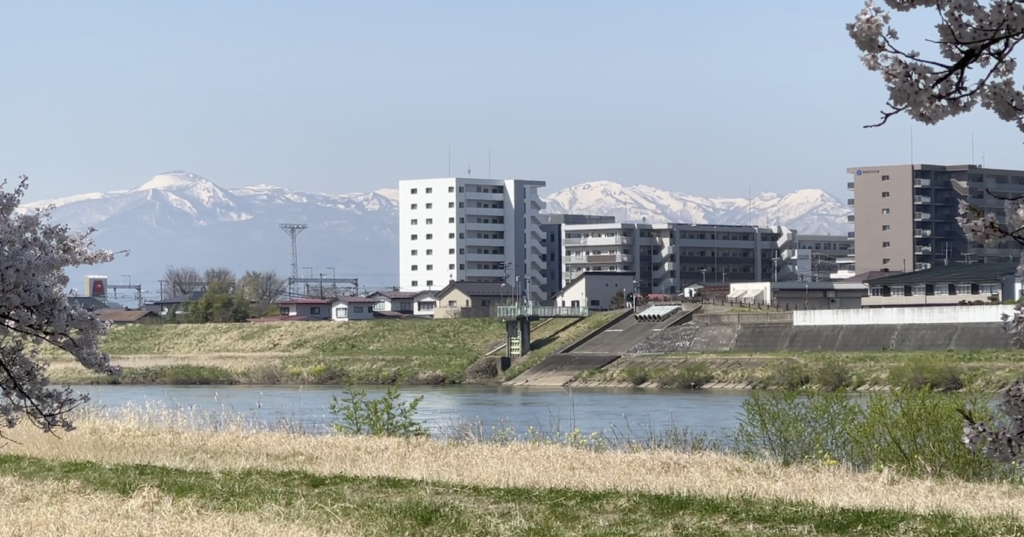
Photo: In the distance beyond the river, a beautiful mountain range with snow still remaining on the peaks creates a stunning backdrop.
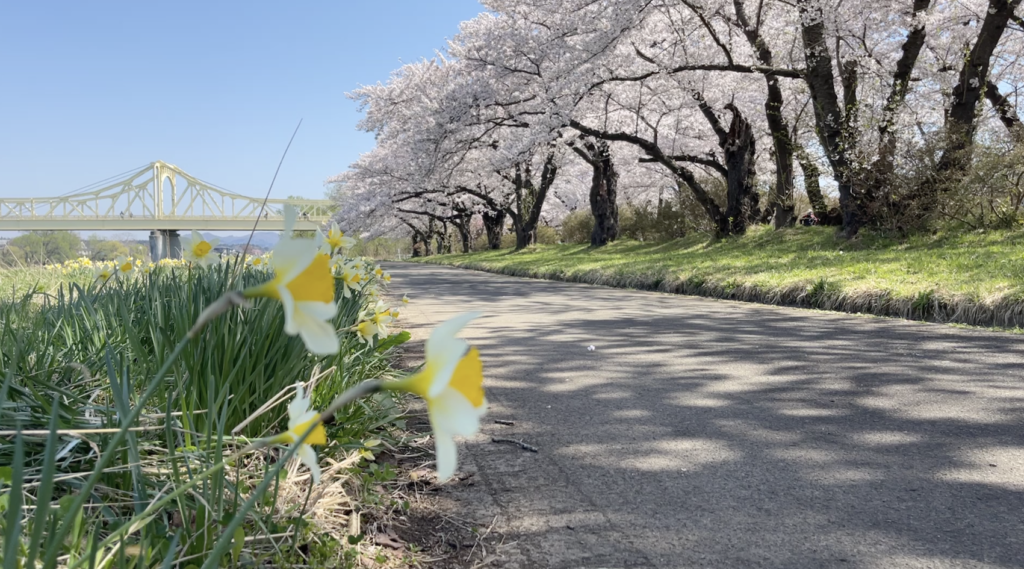
Photo: Sango Bridge is now coming into view, marking the end of the cherry blossom avenue walk.
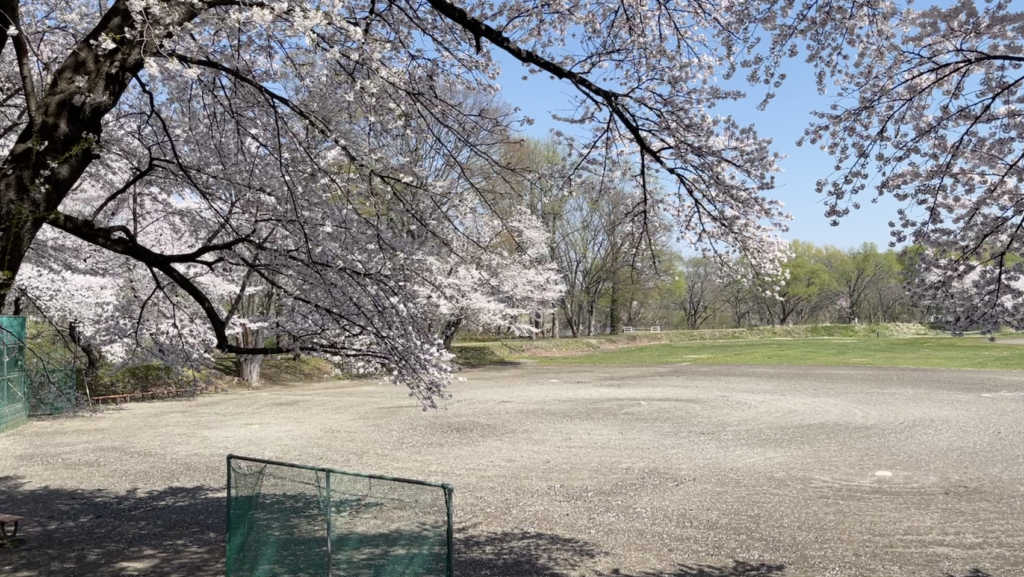
Photo: North of Sango Bridge is the Tenshochi Ground, which includes a baseball field and marks the northern end of the cherry blossom avenue.
From here, I turned around and headed back south through the park.
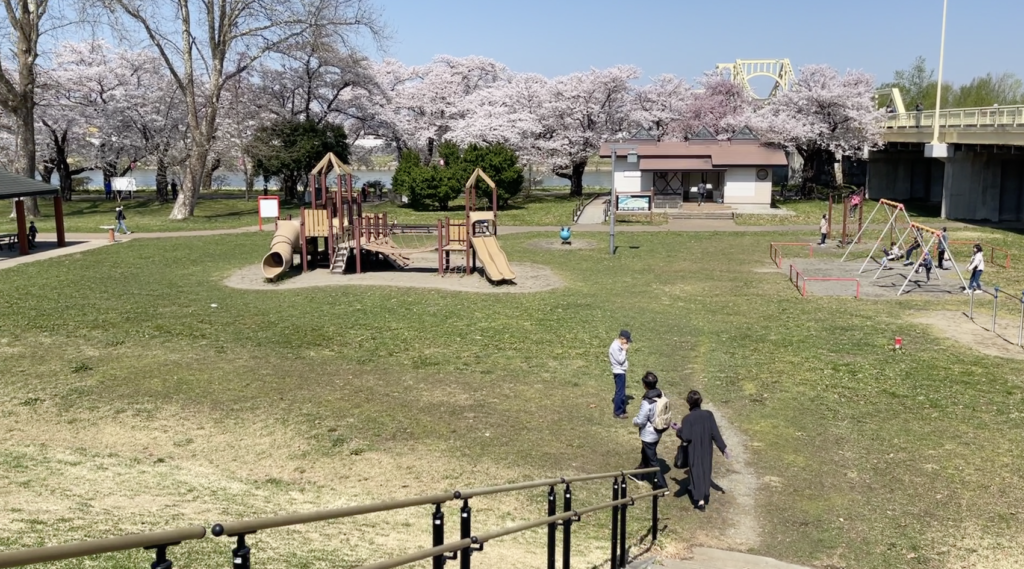
Photo: Located at the foot of Sango Bridge is the Tenshochi Children’s Park.
It is a great place for families, with children enjoying the playground area. Restrooms and a gazebo are also available, making it a convenient spot to take a break after walking along the cherry blossom avenue.
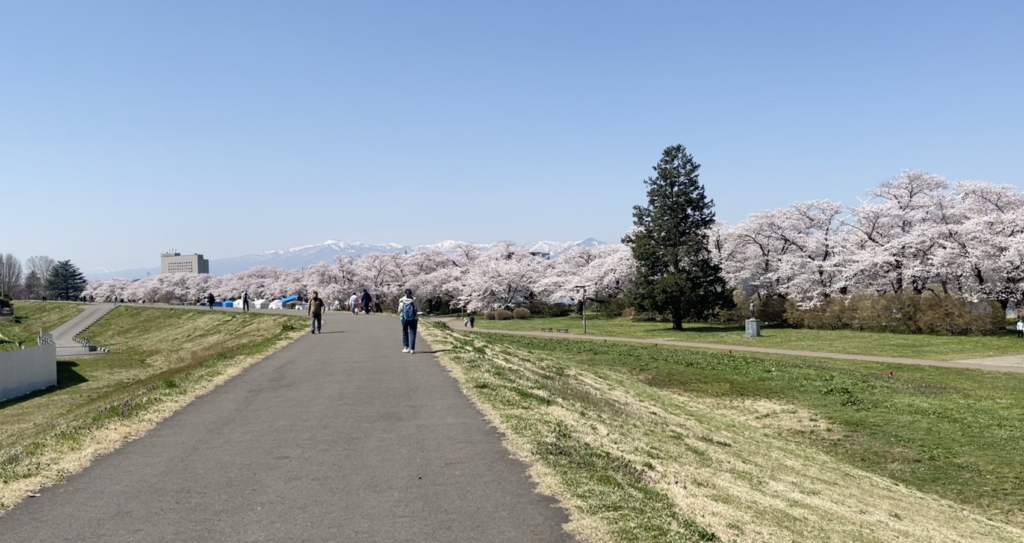
Photo: After turning back at Sango Bridge, I headed south toward the entrance.
Instead of following the cherry blossom avenue, I walked along the paved path that runs through the park, offering a different perspective of Kitakami Tenshochi.
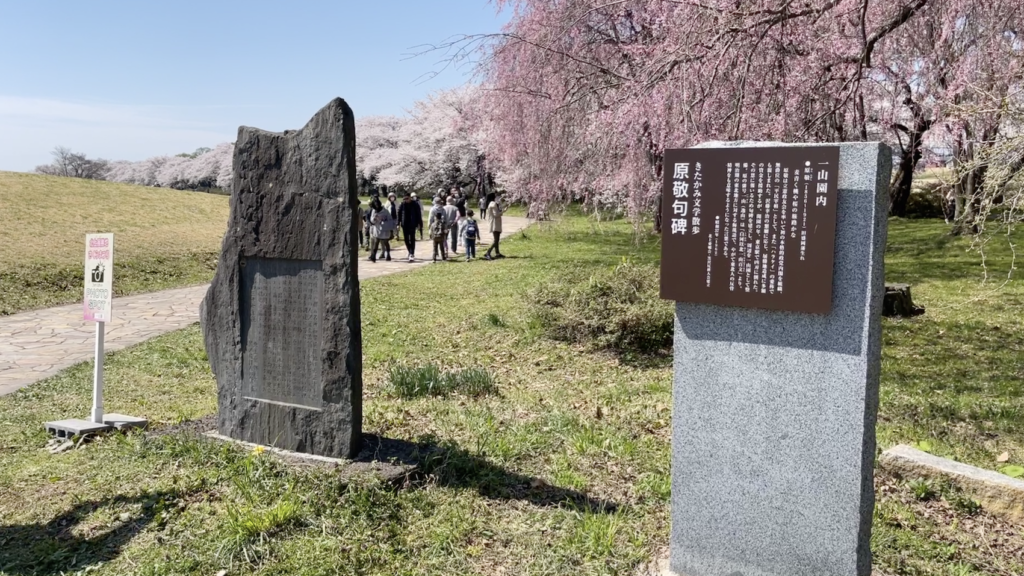
Photo: This is another popular photo spot: the Hara Takashi Monument, featuring a haiku written by Takashi Hara, a former Prime Minister of Japan.
The poem reads:
“Green wheat fields,
peach blossoms and cherry blossoms along my journey.”
The area around this monument is called Ichizan-en, named after Hara Kei’s pen name “Ichizan.”
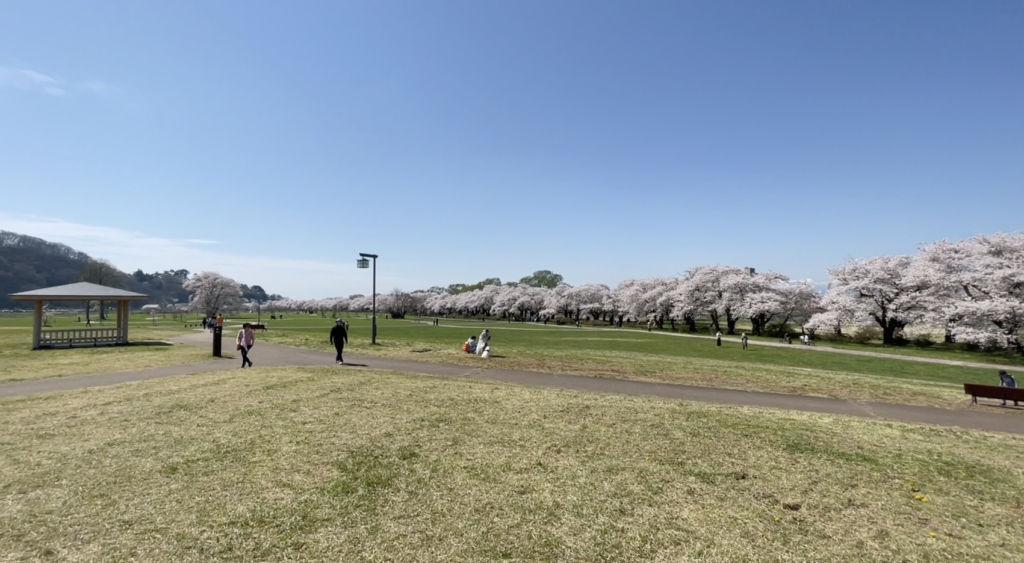
Photo: This park is truly vast. It offers plenty of open space where families with children, as well as visitors with dogs, can relax and enjoy themselves freely.
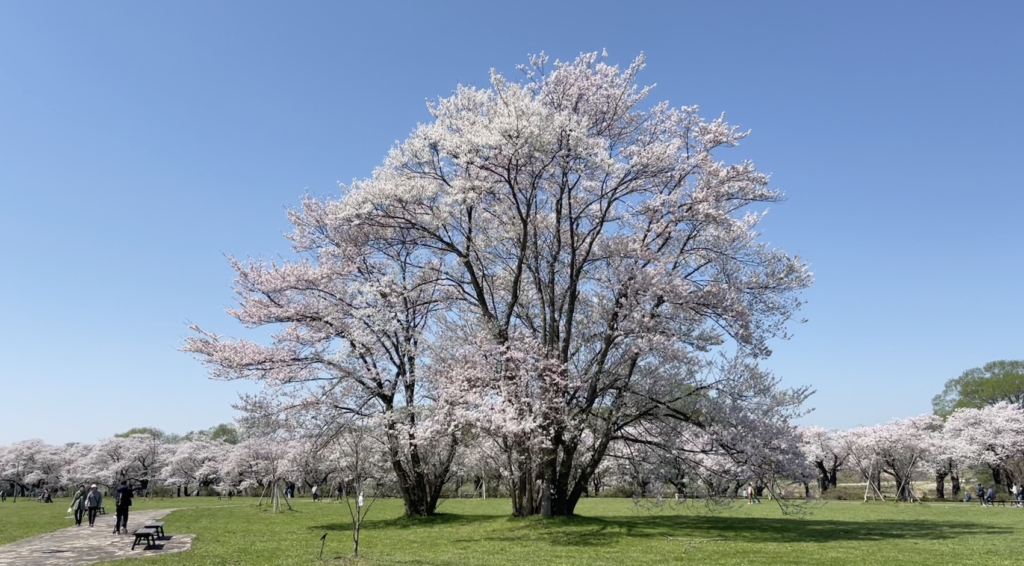
Photo: Inside the park, you can also find enormous cherry trees like this one.
Their impressive size becomes even more apparent when you compare them with the visitors walking along the nearby path.
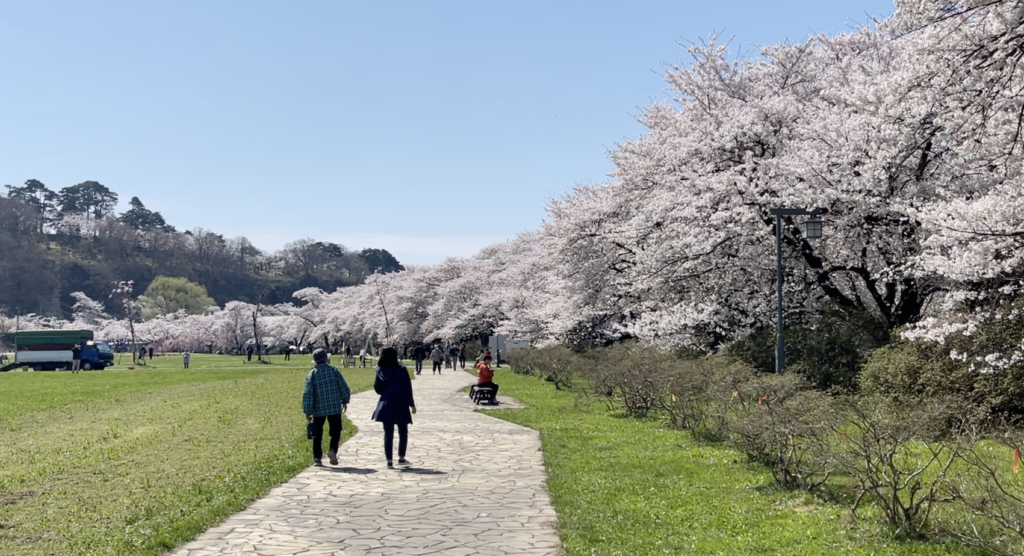
Photo: At this point, the walk through Kitakami Tenshochi is gradually coming to an end.
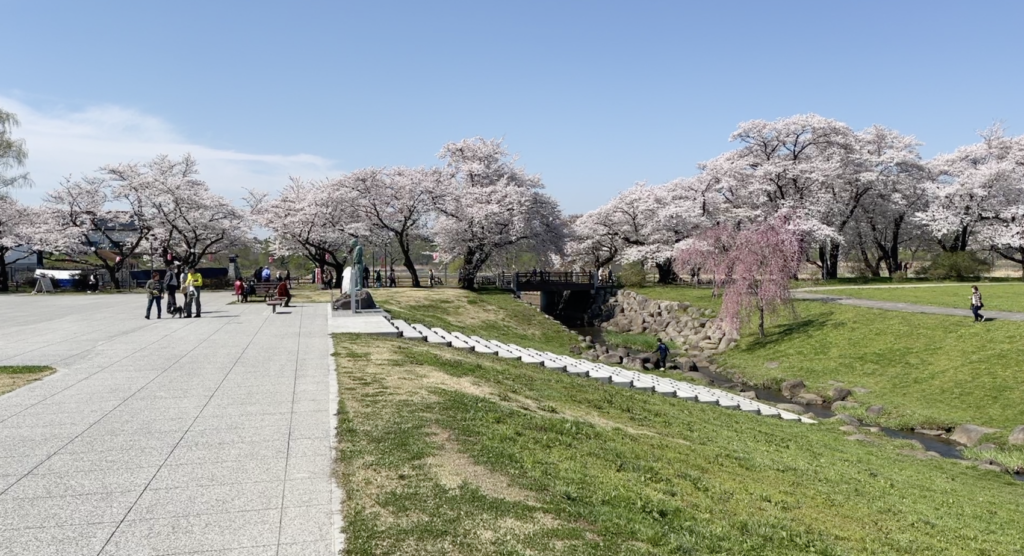
Photo: I have now returned to the small stream flowing beneath Yoshikiribashi Bridge.
The round trip from Yoshikiribashi Bridge through the cherry blossom avenue and back took approximately one hour.
Nearby Attractions
Michinoku Folklore Village
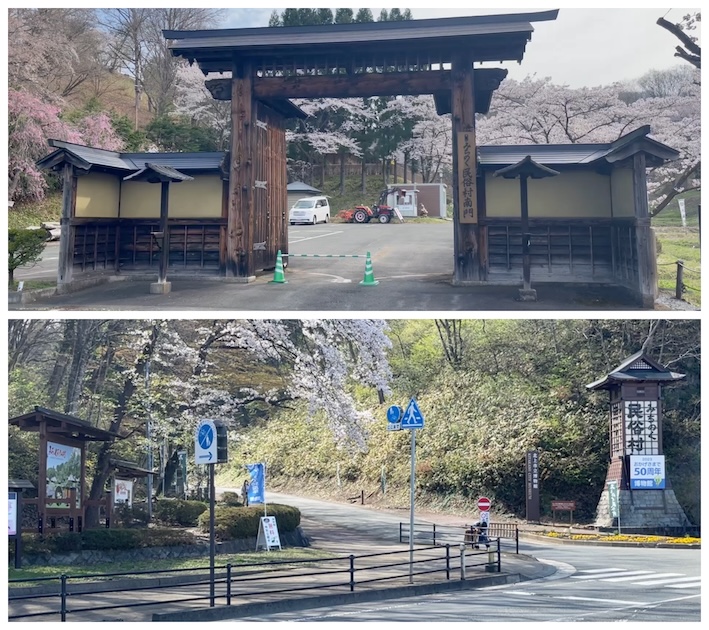
Photo: Located just across the road to the east of Kitakami Tenshochi is Michinoku Folklore Village.
This open-air museum features traditional old houses and exhibition facilities where visitors can learn about the historical lifestyle of the Kitakami region.
It is truly within walking distance from the cherry blossom park, making it a great place to visit if you have extra time after enjoying the sakura.
Esashi Fujiwara Heritage Park
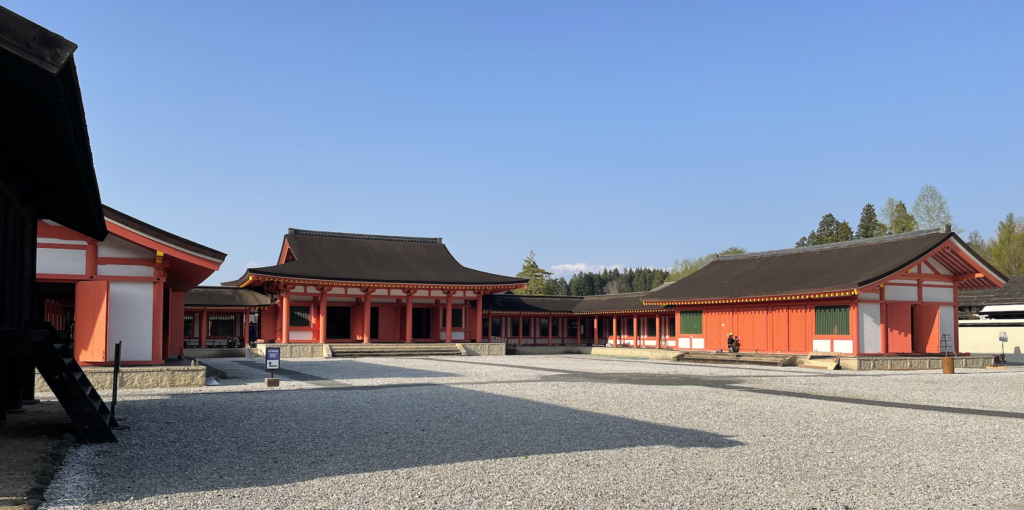
Photo: About a 30-minute drive from Kitakami Tenshochi, in neighboring Oshu City, you will find Esashi Fujiwara Heritage Park.
This is one of my top recommended historical theme parks in the area, offering visitors a chance to experience the atmosphere of Japan’s Heian period.
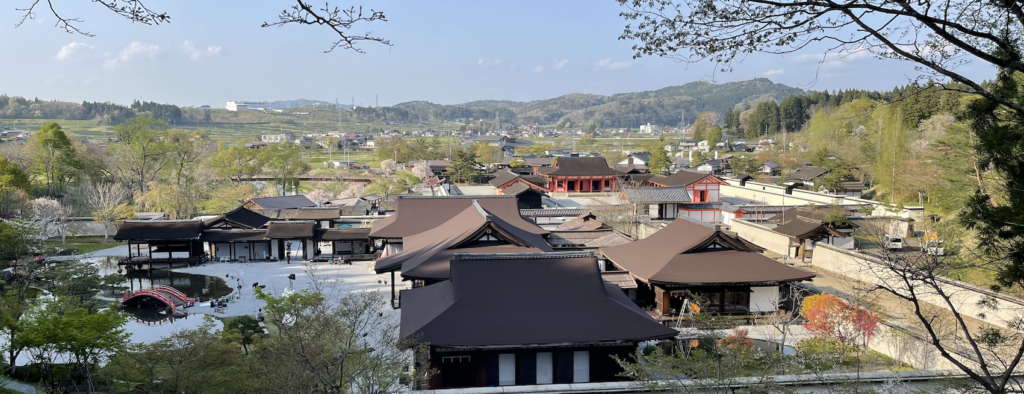
Photo: This vast park has been used as a filming location for many Japanese TV dramas, including historical Taiga dramas.
Its expansive grounds are filled with the atmosphere and elegance of Japan’s Heian period, allowing visitors to experience the romance of ancient Japan.
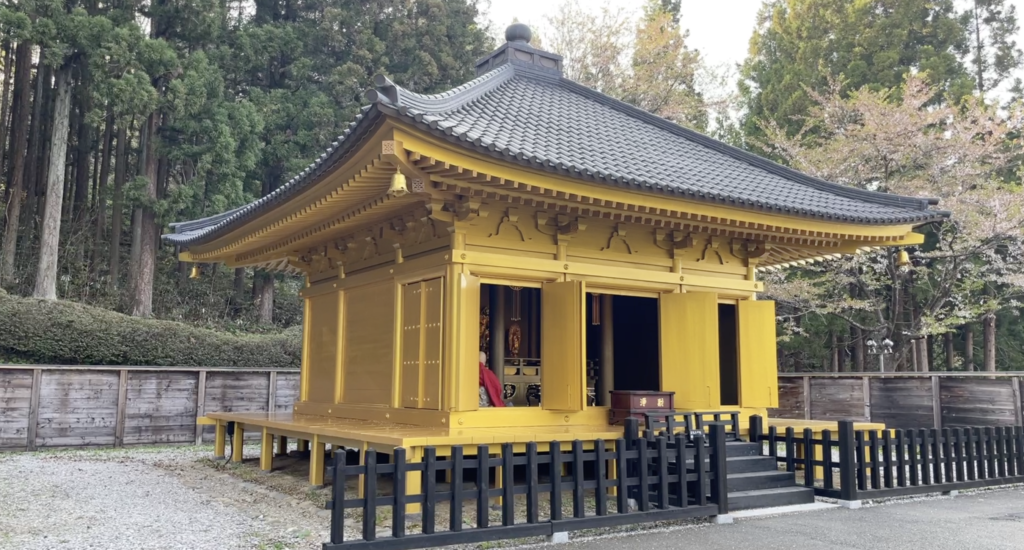
Photo: The real Konjikido (Golden Hall) at Chuson-ji Temple in Hiraizumi does not allow photography, but the replica here at Esashi Fujiwara Heritage Park can be photographed. (A nice bonus for visitors!)
This is such a fascinating place that I highly recommend visiting at least once in your lifetime. Don’t just visit if you happen to have extra time—make time for it. It is truly worth the trip.
Esashi Fujiwara Heritage Park YouTube Video
I have uploaded a YouTube video introducing Esashi Fujiwara Heritage Park.If you would like to see more of the park’s atmosphere, buildings, and scenery, please check out the video as well.
YouTube Video for This Article
I have also uploaded a YouTube video covering this visit to Kitakami Tenshochi.
Some aspects of the park, such as its vast scale, walking paths, and overall atmosphere, are difficult to fully understand through photos and text alone. Watching the video will give you a better sense of what the experience is really like.
Visit History
Number of visits: 1
Last visited: April 10, 2023
コメント